

Executive Summary
An ASX200 listed (A$3.5B MCAP / A$5B EV) Indonesian based Nickel Producer inverting into a heavy positive cashflow phase, guiding at levels on the latest earnings call that the “JPM Head of Metals” couldn’t even follow.
On the frontier of Indonesian Nickel and in bed with the Chinese & Indonesians that helped build two Industrial Park’s that put almost every other Nickel mine on Care & Maintenance.
Market values this like a high debt miner, but it’s now a vertically integrated high grade Nickel producer, achieving spot LME grades and selling battery metal precursors.
Key plant ‘ENC’ in commissioning with first MHP out of the new ENC plant on 21 July. First nickel cathode on 11 August. Full nameplate in Early 2027.
Fairly obvious pathway to SP appreciation and multiple expansion via paying down the existing debt, cashflowing the assets and returning capital to shareholders.
Leverage ratio should drop dramatically, and fast.
The register looks bad, but advantageous for retail. Two Chinese/Indonesian giants own 42%, with L1 Capital in at 10%.
Checkered history having to re-invent itself to adapt to Nickel Concentrate shipping bans, multiple raises and multiple cap raises to adapt their business.
All yours for a mere ~3x EV/EBITDA with a 20 year mine life, massive earnings acceleration, a completely broken Nickel market, with poor sentiment. (What could be more Ironic?)
Potential for ASX100 inclusion post the earnings inflection, debt pay down, and small multiple improvement.
For the lazy NIC management there’s a section at the bottom called “Message to Management” you should read.
Long NIC.
Introduction
What, you thought I was going to pick something easy like the wreckage from the SaaSpocalypse1? As for another Oil E&P, not sure I’m the guy to pick an oil stock2 in peak Hormuz?
This time I’ve gone deep into Nickel Industries, a slightly off the radar quasi Australian/Indo/Chinese Nickel Miner turned downstream refiner. No one wants Nickel exposure, especially a foreign one, and that is part of what makes this one brilliant.
Bulk miners are typically below average quality businesses. Australia is blessed with bulk resources & miners that have nailed the economics which make our bulk miners above average quality businesses. The same thing has now happened in Indonesia, the new “Saudi Arabia of Nickel”.
Nickel Industries (ASX:NIC, $NIC) was originally a small bulk Nickel miner in Indonesia, shipping concentrate, until shipping raw ore got banned only refined products were allowed to be exported. The Indonesian government forced local refining/smelting of Nickel, and so NIC had to adapt and play downstream. This is where it got tangled up with Chinese funding/engineering and heavy Indonesian investment.
The current state of NIC is a smorgasbord of Nickel equity holdings that are initially quite confusing.
Background
Indonesia is blessed with nickel laterites, a form of weathered nickel ore in which nickel is concentrated in a limonite (oxide-rich) layer upon a saprolite (silicate-rich) layer3.
These ores are generally low grade and require processing to produce a nickel product.
The saprolite is processed through RKEF (Rotary Kiln Electric Furnace) to produce nickel pig iron (NPI) or ferronickel.
Limonite is processed through HPAL (High Pressure Acid Leach) to produce an intermediate suitable for conversion into nickel sulphate.
By contrast, many of the world’s traditional nickel mines are nickel sulphide deposits, where nickel occurs primarily in sulphide minerals and can be concentrated through flotation before smelting and refining.
Indonesian nickel processing was initially centred on saprolite, the higher-grade ore found in the lower layers of nickel laterite deposits. It is processed through RKEF (Rotary Kiln Electric Furnace) to produce relatively low-margin NPI (Nickel Pig Iron; high in Nickel and Iron) used primarily in creating stainless steel.
More recently, Chinese-backed investment has enabled the large-scale processing of the lower-grade, shallower limonite portion of Indonesia’s laterite resources through HPAL (High Pressure Acid Leaching). HPAL itself was not a fundamental scientific breakthrough, the underlying technology has been tried across the western world since the late 90’s, with generally poor results and large cost blow outs.
In 2012, Rami “NiCO” 32ktpa HPAL in PNG was successfully built for ~$2B by a Chinese SOC (China Metallurgical), and seems to be the first large-scale successful HPAL. The supposed “breakthrough” isn’t clear, but it seems like large-scale Chinese engineering, management and construction was ready for prime time. The Chinese have recently built these plants in Indonesia with a construction price cap guarantee.
This new HPAL supply unlocked vast quantities of previously difficult-to-process limonite, dramatically expanded Indonesia’s economically recoverable nickel resource and, in doing so, fundamentally reshaped the global nickel market.
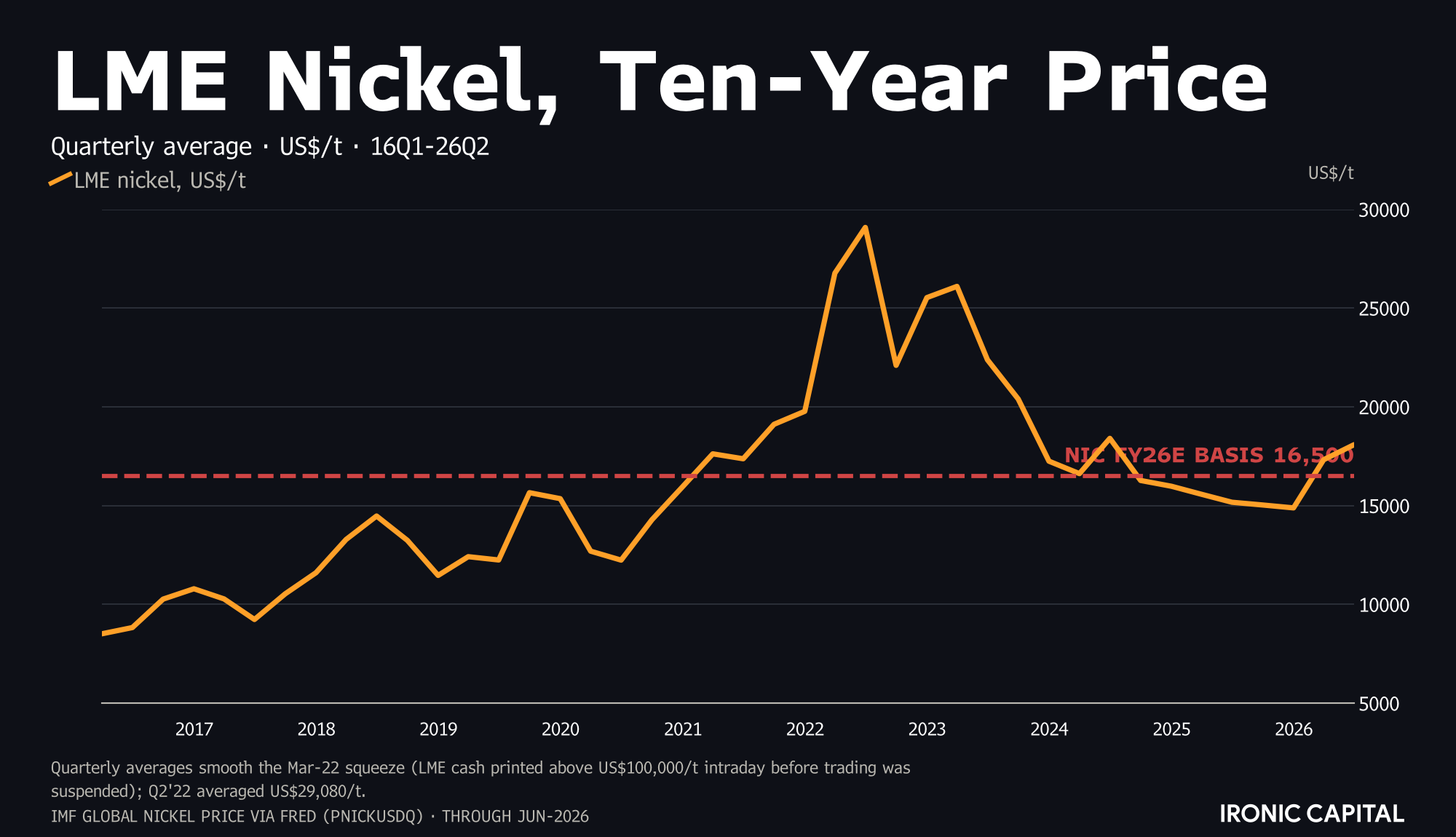
This revolution in Nickel processing and build out has also unsurprisingly affected the Nickel price, plunging the spot price into 5 year lows.
Not dissimilar to what’s happened with EV’s, Chinese enterprises all swarm and compete in the same market, a quasi survival of the fittest4, and the end result is an absolute revolution. The ‘Archepelago’ has two huge industrial parks, plus other satellites which house collectively hundreds of Nickel Smelters ranging in sizes, grouped largely into two processes: RKEF and HPAL.
The scale is comical. At IMIP alone there are 54 RKEF refineries, and IWIP is based on a mirror of IMIP.
The HPAL plants across IMIP and IWIP are more notable, they are larger and more consolidated. There are 9 in operation, 12 in Construction or Permitted with another 12 proposed for future builds.
The important distinction here is that the Indonesian government has stepped up to protect their Nickel industry and has dramatically slowed the roll out of new smelters via permits and production quantities via quotas.
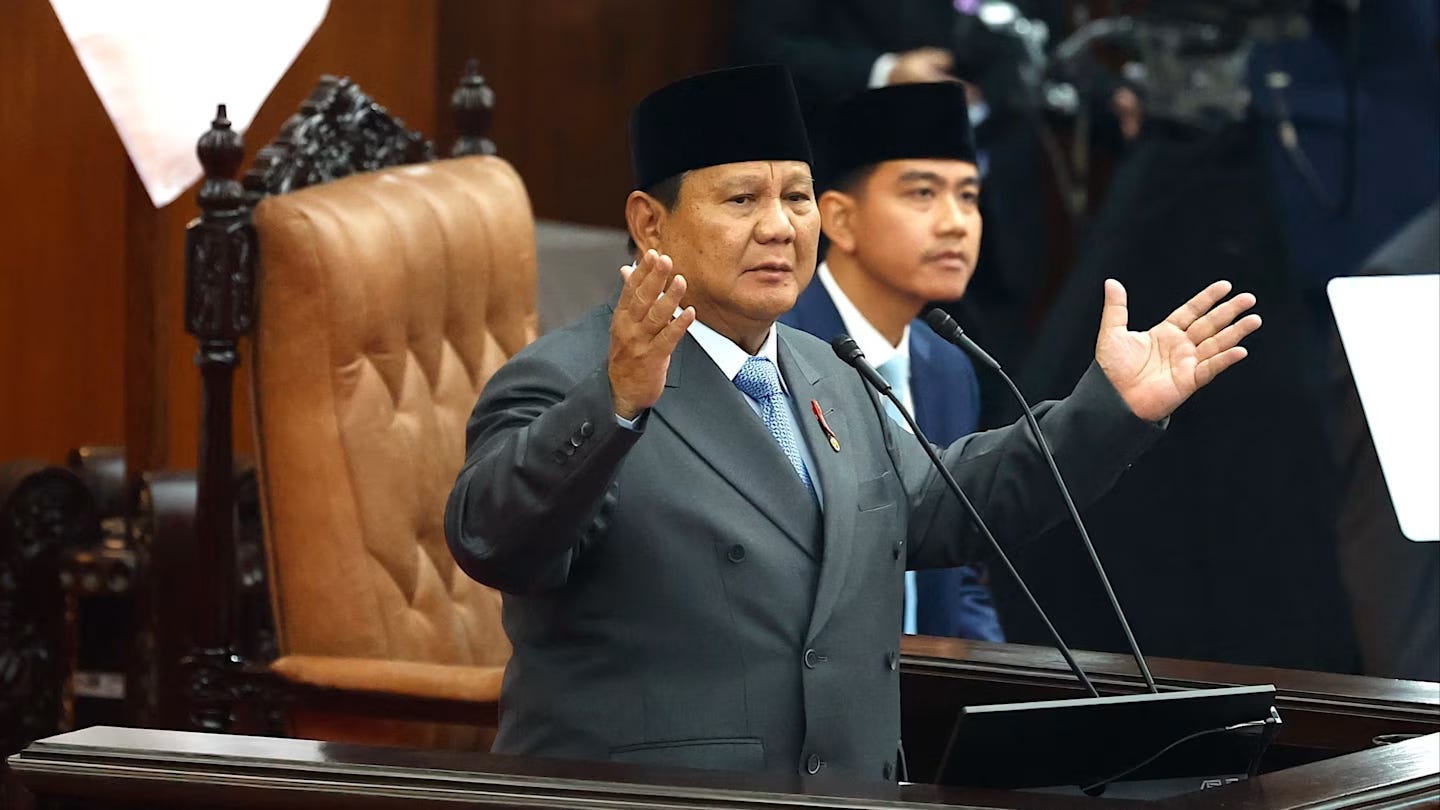
There’s a large element where the President is controlling Nickel supply at a level economic to Indonesia, but enabling a cost structure that is lower than everywhere else in the world. It’s analogous to OPEC.
In addition to having extreme scale in resource, processing and low cost chinese capital, the cheap indonesian labour and local propensity for low cost coal power plants funds backs up the economics such that no other mine will globally come close to completing5. Not to mention the wider environmental impact.
Current generation HPAL wins on the higher sale price and the break-even processing cost is lower than other processing methods (inc RKEF).
The products NIC produce are:
Nickel Pig Iron (NPI) is a mix of Nickel and Iron, ideal for Stainless Steel. Offtake is largely to Tsingshan, the world’s largest Stainless Steel Manufacturer.
Nickel Matte, a semi-refined intermediate grade of Nickel, to Glencore.
Nickel Mixed Hydroxide Precipitate (MHP), a battery precursor chemical consisting of ~40% Nickel and 4% Cobalt. Offtake is to ‘global customers’, presumably Chinese/Korean battery/chemical companies.
Nickel Cathode, a very high grade plate of Nickel. Typically a 1m2 sheet out the back of electrowinning/electrorefining.
The politics are also pretty hairy:
Indonesian:
Very large economic contributor, ca 11% of Indonesian GDP.
Large employer.
Production/Trade Dominance globally.
President continually changing terms of Nickel Production levels and influencing global pricing.
Restrictions by Ore quantity, product type, refinery type and count.
Country seen as a high risk Jurisdiction for Corruption.
Chinese Side:
Huge capital, labour and technology flows from China.
Large equity ownership of large Chinese POE’s.
Implicit Chinese State backing and Funded.
Large Source of the demand for end products. (Steel / Batteries)
Environmental
Mining Tails disposal has been contested, and artisanal miners have dumped into the Ocean6. Emissions are high, and this part of the world will be forever turned into the world’s Nickel factory.
Disposal of the HPAL circuit waste products is questionable. Heavy battery metal sludge.
The current state of Indonesian Nickel Production Controls are such that:
Raw ore banned to export. Full ban on unprocessed nickel ore since Jan-2020.
Price of Nickel Ore is set by the Indonesian Government, via the Mineral Benchmark Price (HPM)
New RKEF banned. Explicit moratorium since Aug-2024 (ESDM), now codified in PP No. 28/2025 (risk-based licensing, Nov-25): no new permits for smelters producing only NPI, FeNi or nickel matte.
New semi-refined banned. The same PP 28/2025 blocks “intermediate-only” plants.
New HPAL’s are not receiving licences. (Nothing official in law?)
Ore mining quota (RKAB). Annual ore-extraction caps per mine. 2025 approved ~379Mt; 2026 cut roughly a third to ~260–270Mt.
There’s nothing more ironic than all these coal powered, lax environmental standards, cheap labour driven refineries/smelters & mines producing toxic waste and environmental displacement to make batteries for your nice clean EV, in your beautiful town producing no emissions with your “Climate Action Now” bumper sticker on the back.
Yeah I joke in-jest, but know what you own and where things come from. Everything is a trade off. Dozens of people have died in Indonesia’s Nickel operations, and one contractor at Hengjaya.
History
Firstly, a bit more about the history of NIC. Why is there an Australian company tangled in this sprawling mess of Indonesian Nickel? Let’s run through the key asset milestones of the company (not focusing on the financing just yet):
2012: Acquired 80% interest in the Hengjaya Mine in Central Sulawesi, Indonesia (20% with the local Wijoyo family).
2014: Indonesia banned ore exports. NIC was no longer able to ship concentrate, halted production, and negotiated local offtake.
2015: Production started again after NIC secured local ore sales to Tsingshan’s nearby IMIP operations.
2017: Collaboration & Subscription Agreement with Tsingshan (via Shanghai Decent). Committed to the first RKEF projects, HNI and RNI.
2018: IPO at $0.35 to raise $200M.
2019: HNI RKEF and RNI RKEF begin NPI production. Increased equity interest in RNI RKEF from 17% to 60%.
2020–21: Bought 80% of ANI RKEF and 80% of ONI RKEF.
2022: ONI RKEF online. ANI RKEF online.
2023: Acquired a 10% interest in the HNC HPAL project. FID on ENC HPAL ($2.3B).
2024: Acquired a 60% interest in the Sampala project.
2025: ENC HPAL under construction.
2026:
Sphere Korea (SNC) acquired a 10% equity interest in the ENC HPAL project from Decent Resource, with Nickel Industries holding a 46% interest.
Agreed to acquire a 36% interest in the CNE HPAL project by swapping an 18% interest in the Sampala project, which reduced its stake in Sampala from 60% to 42%.
Agreed to acquire a 17.5% interest in the TMI HPAL project,
ENC HPAL Commissioning.
To be blunt, the resultant assets held of all the above transactions are a complete mess.
NIC even does a full asset roll call at the start of each quarterly report in case you missed the last transaction or two. They even give them all little codes in earnings releases to understand7.
The regular word salad looks like this:

The Current Asset base is8:
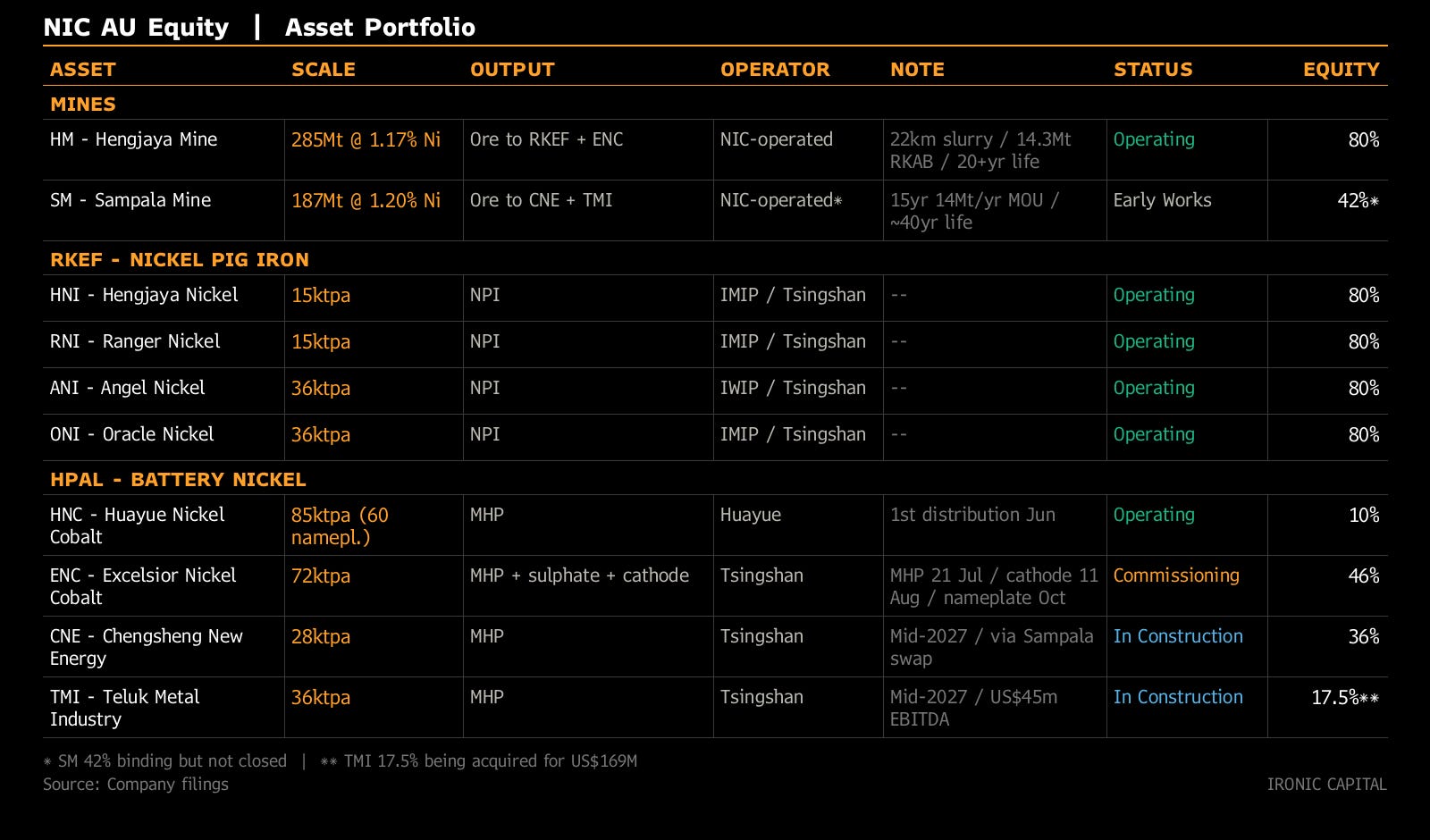
A mess of 8 different Non-Operated Smelting/Refining operations. With Tsingshan as a partner, financier, builder and operator on all of them except for HNC means Tsingshan has enormous leverage over NIC. If Tsingshan needs something, there’s only going to be a single question from NIC: “How much do you need”?
Keep in mind this NIC is essentially only a financing shell with about 20 employees on Hunter St in Sydney.
NIC is basically a patchwork of sloppy seconds from Tsingshan.
This patchiness is both a weakness and a bit of a hidden strength. The complexity makes my eyes glaze, not to mention the lack of control over the operations. But on the other hand the operational history is smooth, the plants are presumably near identical within types and generations and the operating challenges don’t seem to be big enough to prompt much discussion in the earnings releases. The supply chains into the area for spare parts and labour would be excellent given the neighborhood.
Assets (in Detail)
NIC’s operational assets are all located in central Indonesia across two large islands; Sulawesi and North Maluku.
The Islands are formed from Volcanoes and are mostly steep, rugged rainforests and the climate is hot and humid.
Both islands sit in the “Pacific Ring of Fire” and are highly earthquake prone.
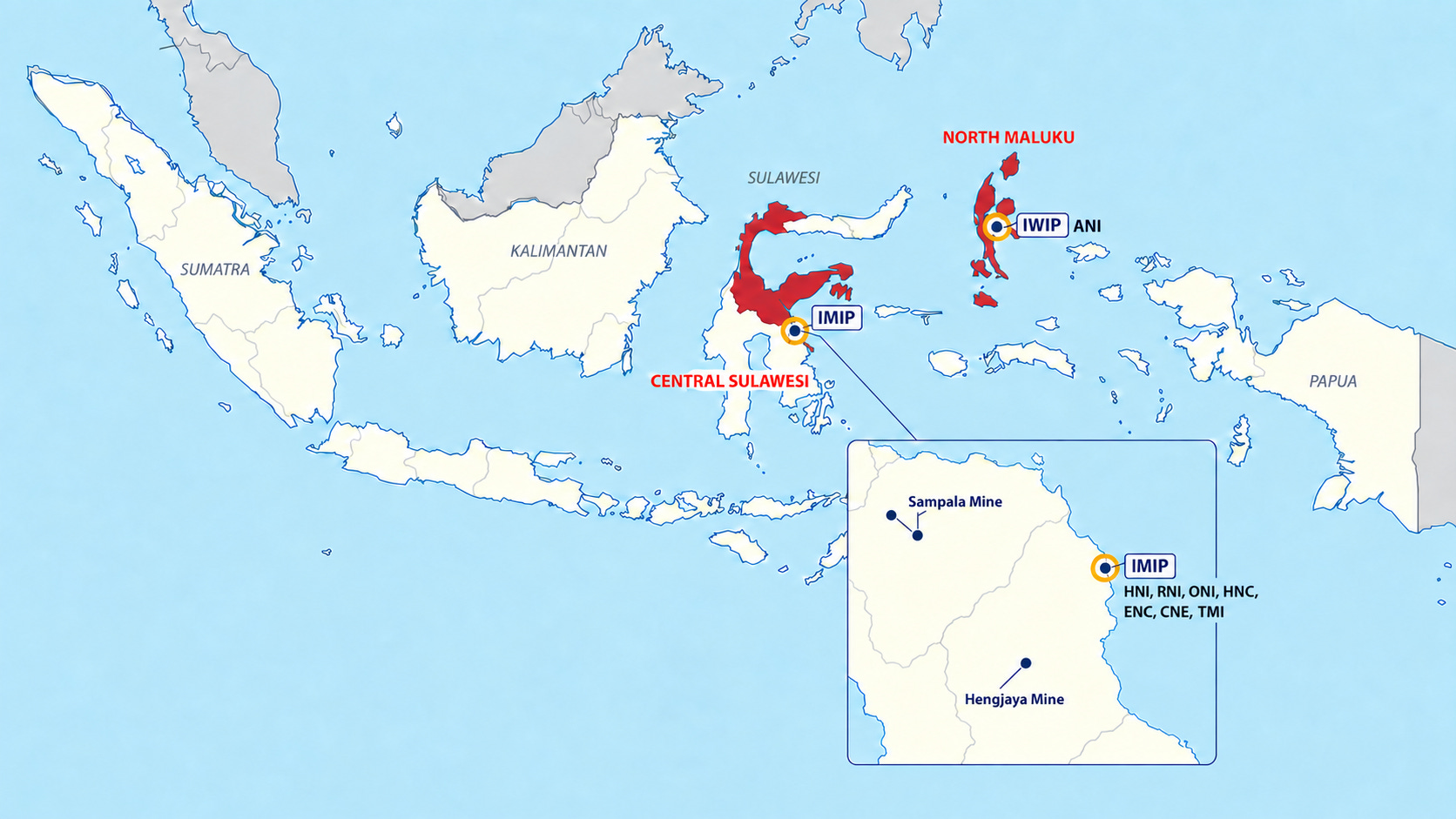
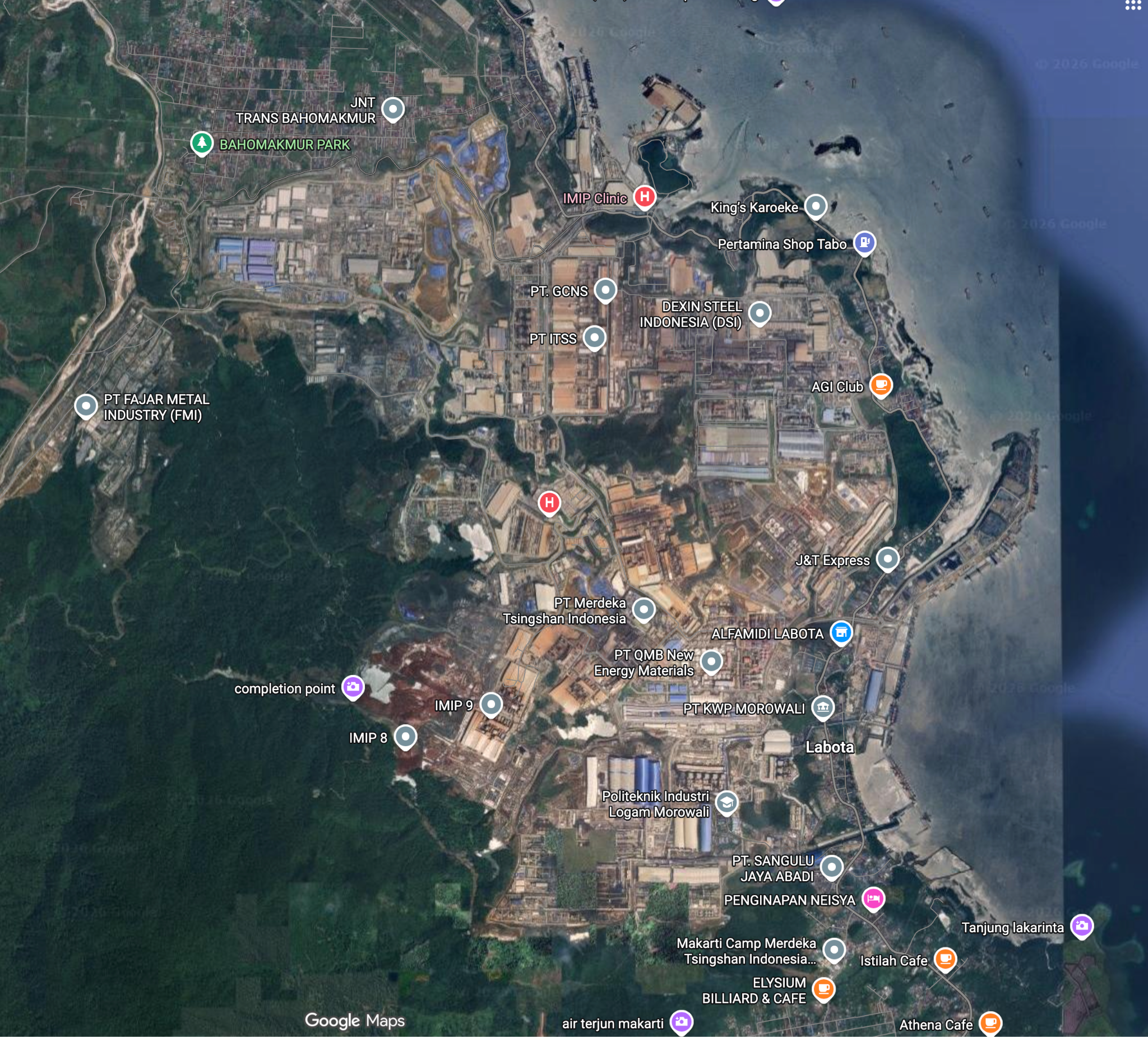
On Central Sulawesi there are the two mines plus 7 of 8 of their processing assets in the Indonesia Morowali Industrial Park (IMIP) near Morowali. Morowali is a coastal strip on the east coast of Sulawesi with hills rising immediately behind it. The hills are a natural catchment, feeding fresh water into IMIP, a flatter area on the coast.
IMIP itself is a monster of an industrial park ~20km2 and is completely focused on Nickel processing. The scale here is beyond words, it’s a continuous strip consisting of furnaces, refineries, power stations, ports and stockpiles where a fishing coastline used to be. IMIP contains ~53 RKEF lines, the HNC/ENC/QMB HPAL trio, stainless and carbon-steel mills, two dedicated ports, and nearly 100,000 employees.
Nickel arrives in via Barge, Pipeline and Haul Trucks. The park runs on huge quantities of imported coal and sulfur. IMIP is so hungry for ore, it’s even importing small quantities from The Philippines.
Power is largely all generated on site, as each asset has its own powerplant. No outside dependence on power. There is something like 15GW of generation across 72 Coal Units. Glorious Stuff. For the ESG boys, there’s 200MW of Solar capacity going in.
On North Maluku to the east, NIC owns a single RKEF Smelter at the Weda Bay Industrial Plant (IWIP). IWIP is adjacent the world’s largest Nickel Mine (Weda Bay9).
IWIP
IWIP is a sister plant to IMIP which is around 5 years behind in development and growing fast. IMIP appears much better planned, with a more logical layout, centralised power with more logical grouping of plants. IWIP is more focused on the battery metal market vs IMIP being primarily Stainless Steel precursor focused. IMIP employs 80,000 people. There’s even some solar in there somewhere. Again, great for demonstrating IWIPS commitment to the environment and investor presentations.
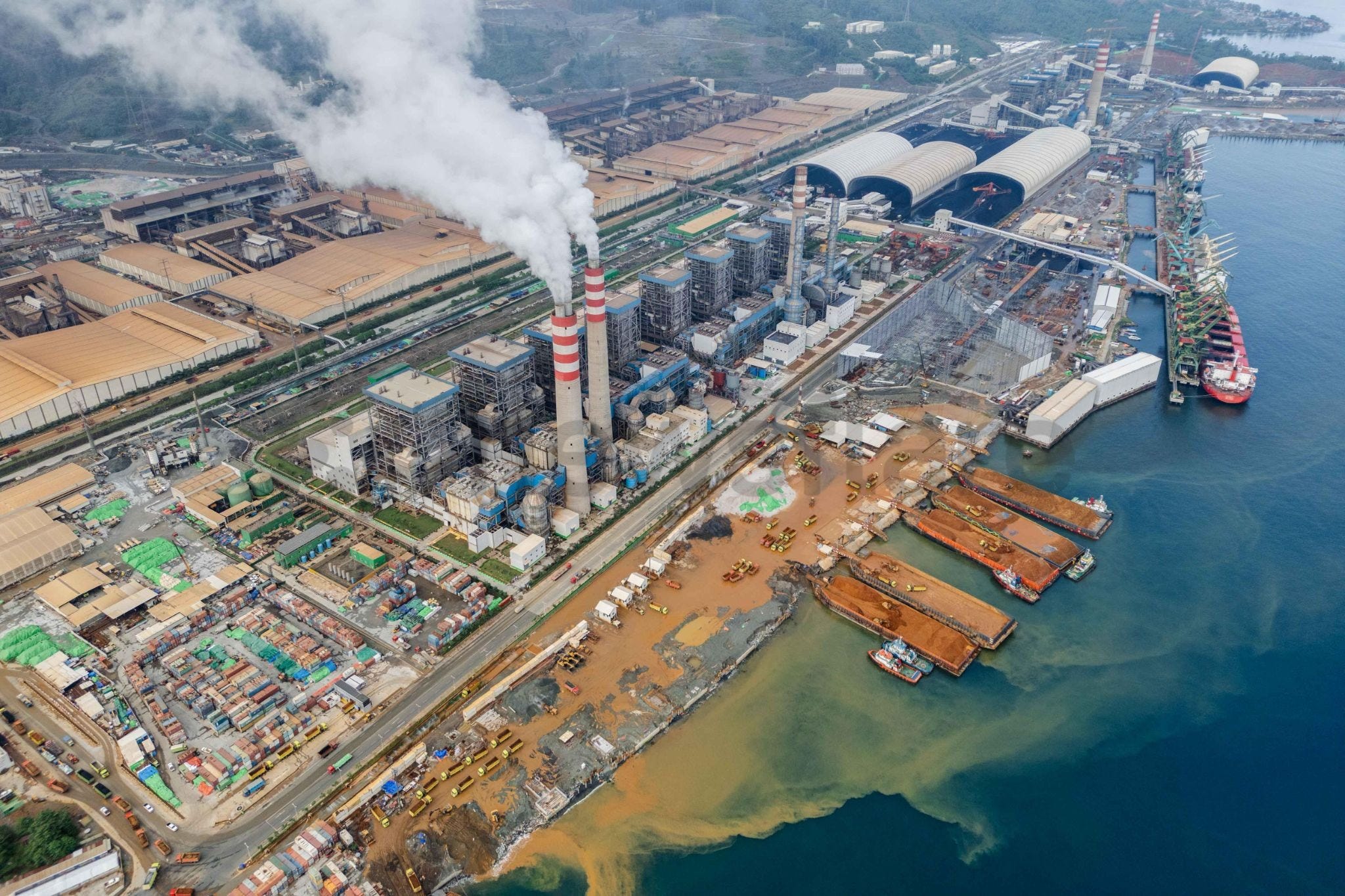
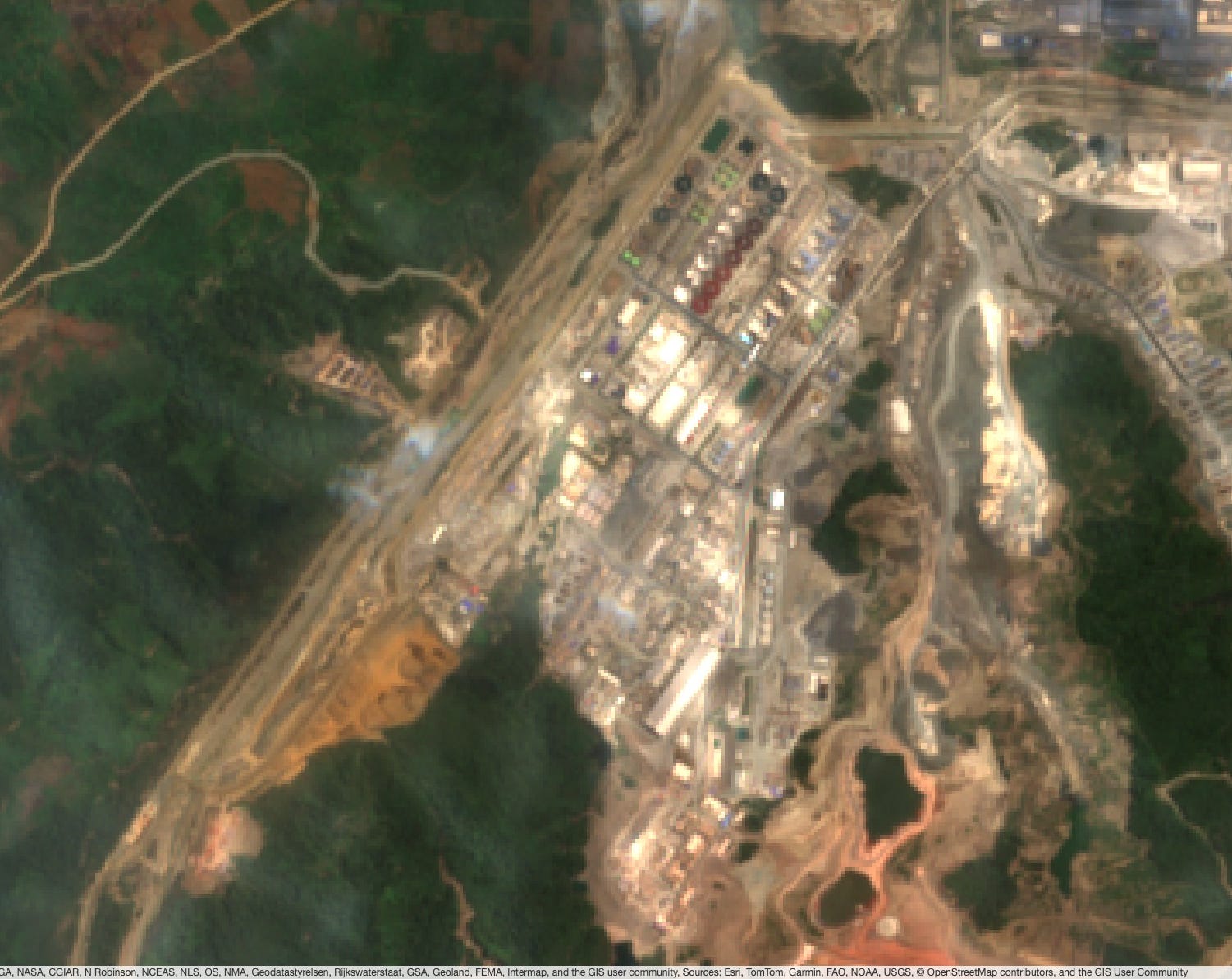
The best imagery I can find of IWIP is from the Sentinel-2 Satellite, north is up. The Only NIC Asset here is ANI RKEF, which I believe is the west most plant in the bottom row behind the coal plant. Closest to the waters edge10.
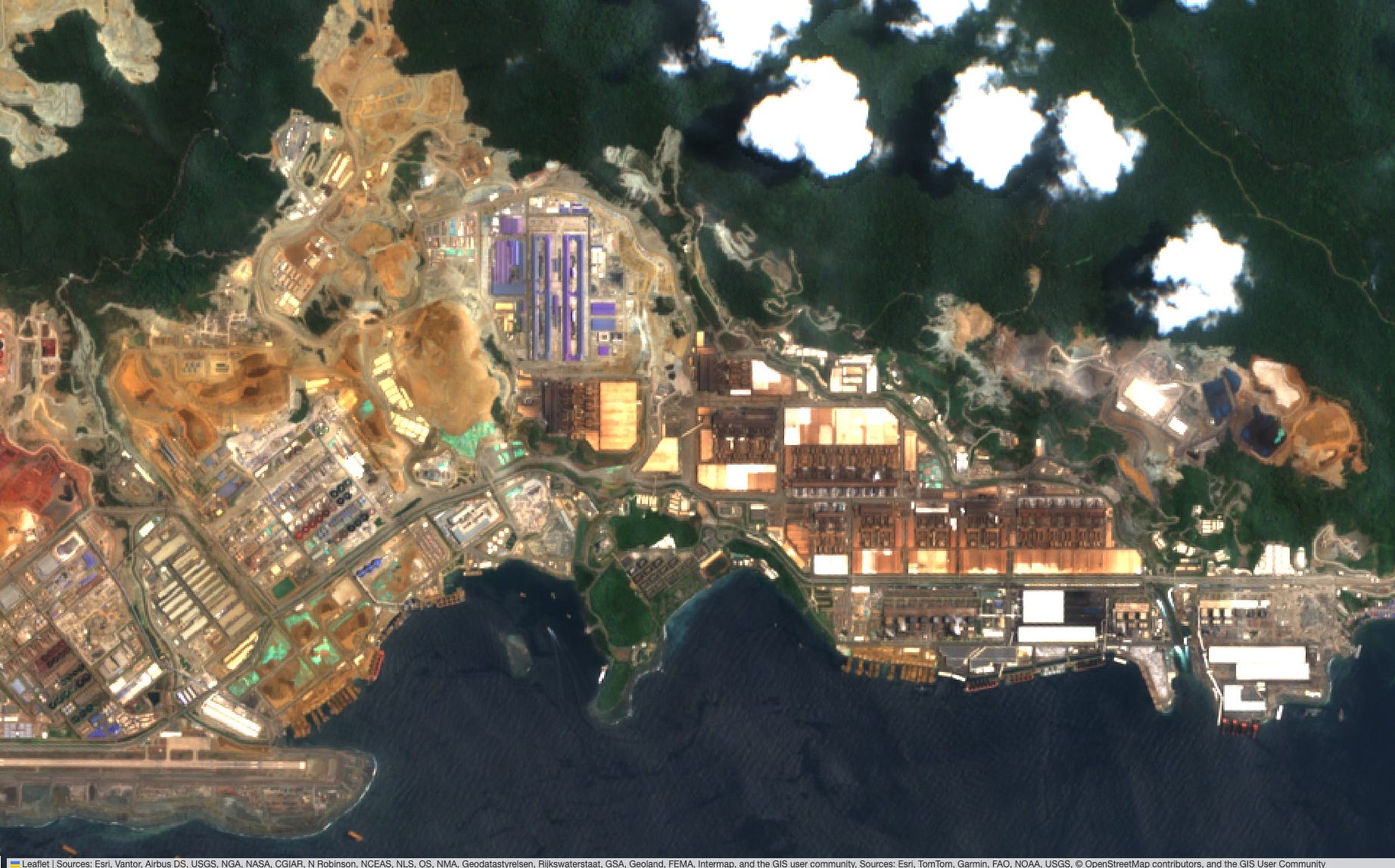
Big thanks to the Environmental Groups for the aerial imagery. Unfortunately Google Maps still shows the original rainforest.
If only we had Drones back in the 19th Century to document the build out of the USA, Europe and Australia.
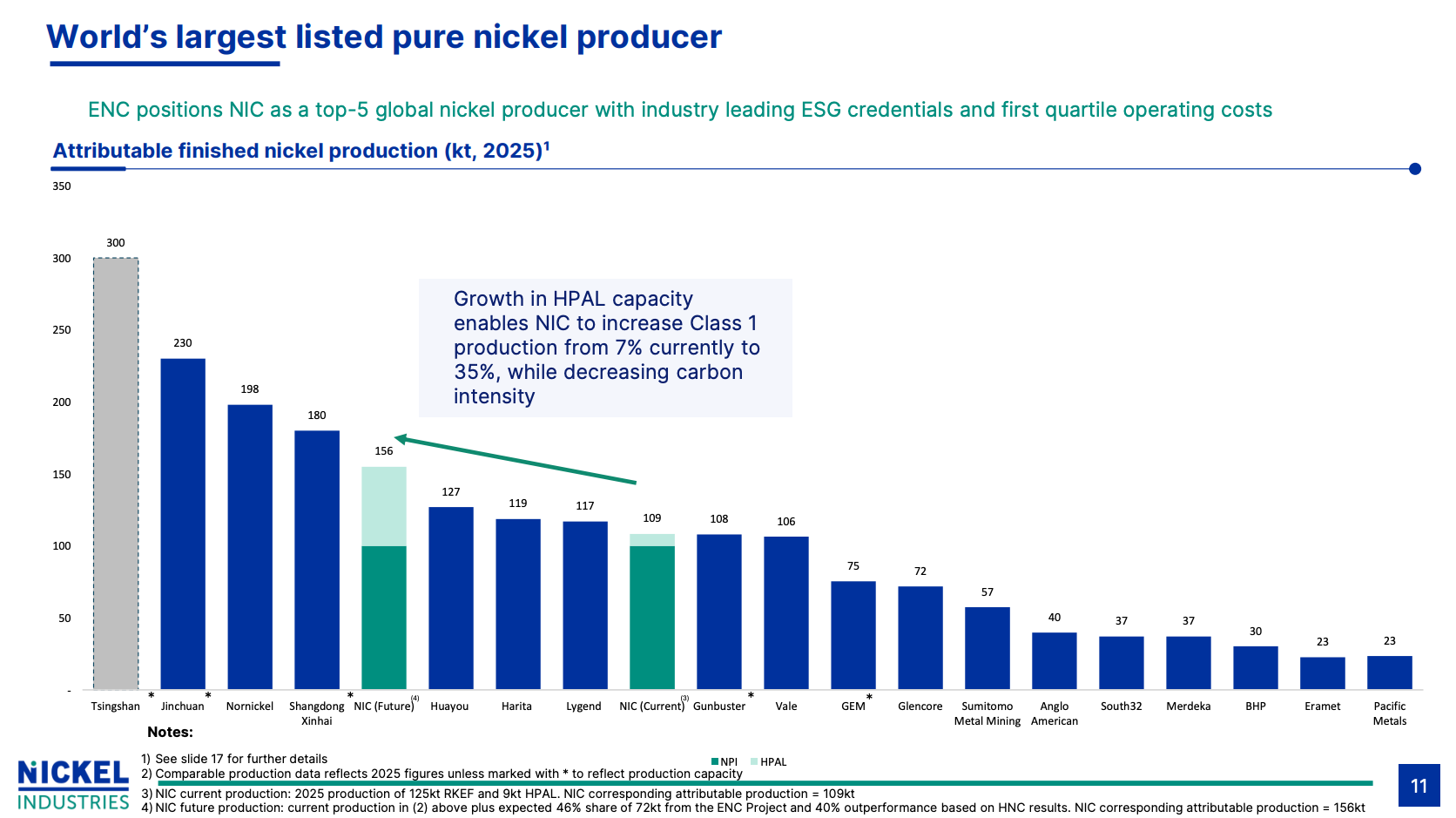
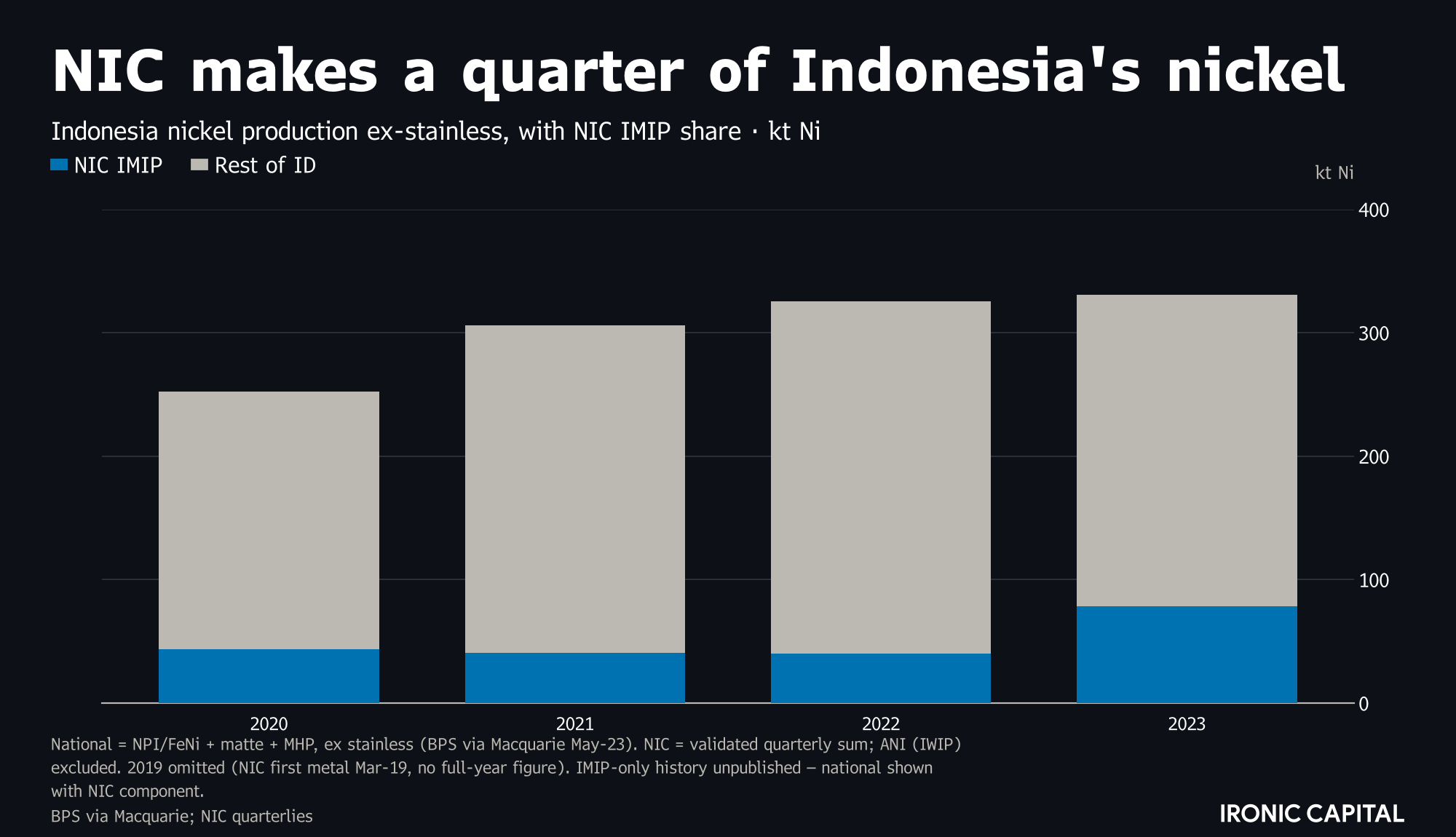
Bringing this all back together before I go further into each asset, let’s look at where NIC compares to global peers. NIC’s own investor materials are fairly good at demonstrating their size. NIC will imminently be the 5th largest player in Nickel.
They are among behemoths in the mining world and pretty much the only western name in that list with volume of any significance11. Not bad for essentially just a financing shell sitting in Sydney12.
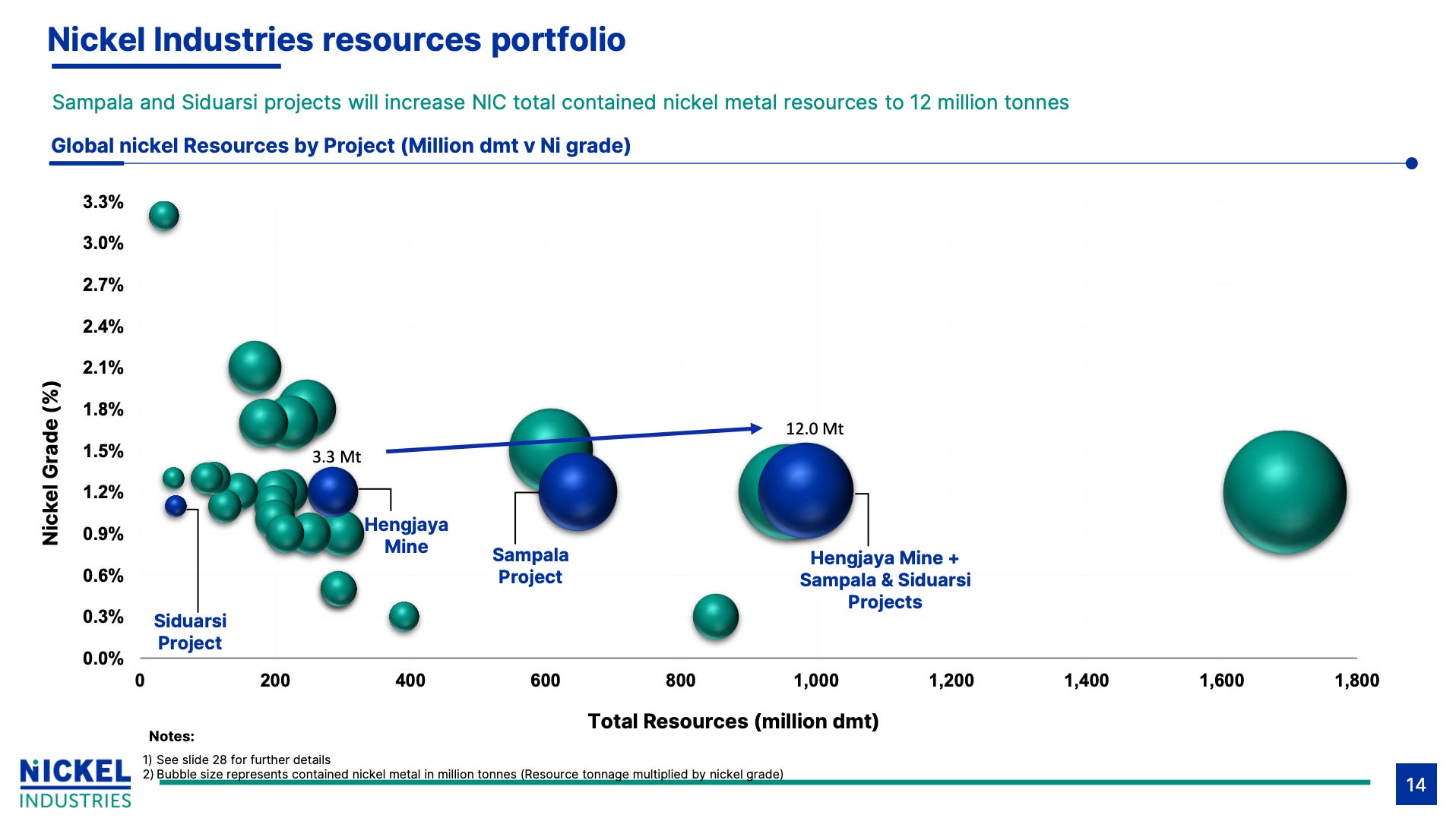
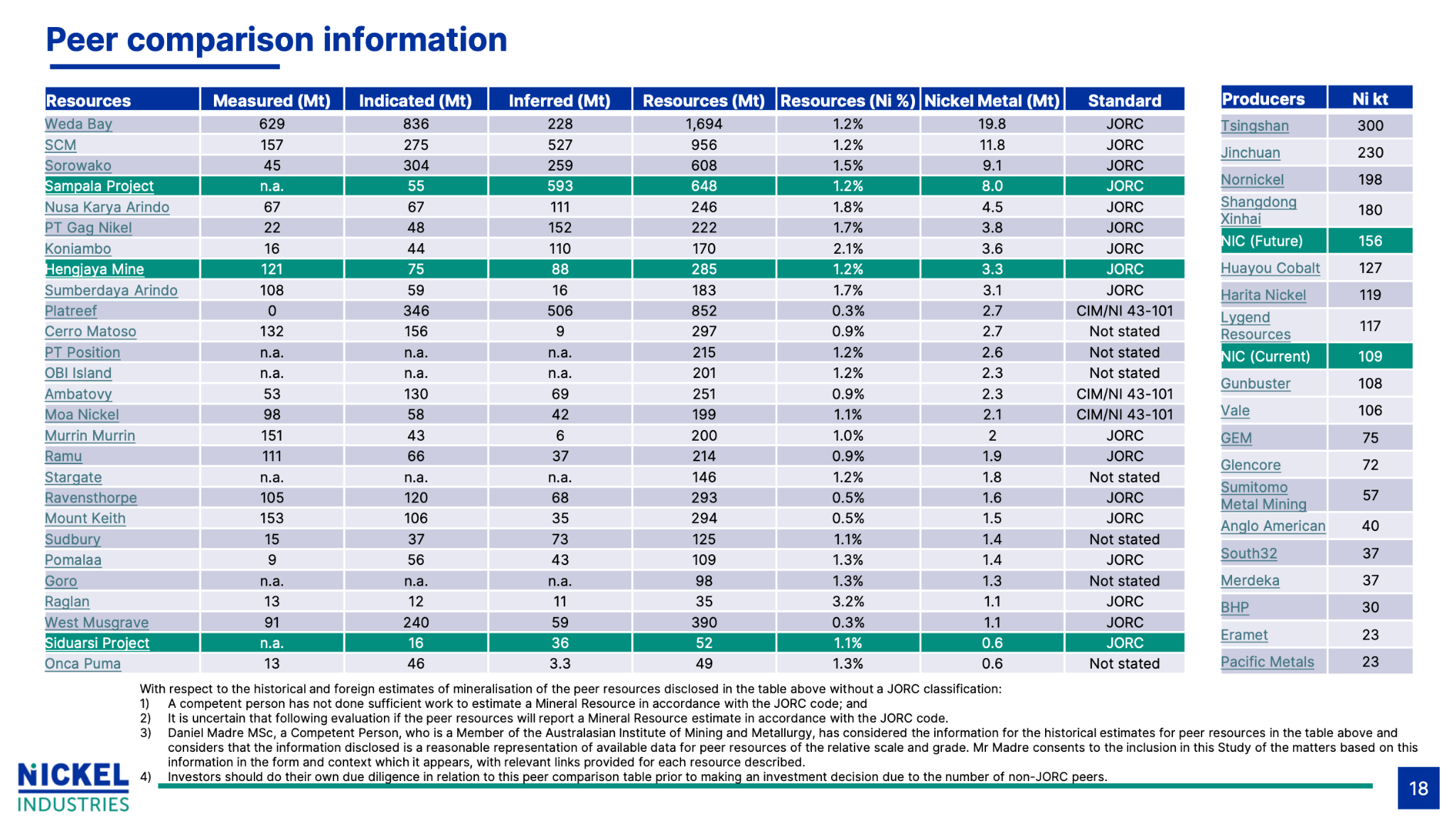
Here’s a similar chart broken down by project with the NIC owned assets in Blue.
Hengjaya Mine
Hengjaya was the original asset of NIC13 and the reason the company exists at all. The deal was agreed in December 2009, completed March 2012, and the first ore left in 2013.
Ownership: 80% (NIC), 20% Wijoyo family (via PT Hengjaya Sukses Pratama).
Cost: Acquired for ca ~US$12M in 2009, Pre-IPO.
Asset Book Value: US$202M (100% Basis, 2026 Value). Cost base + Capex.
Operator: PAMA, (PT Pamapersada Nusantara) a wholly-owned subsidiary of PT United Tractors Tbk
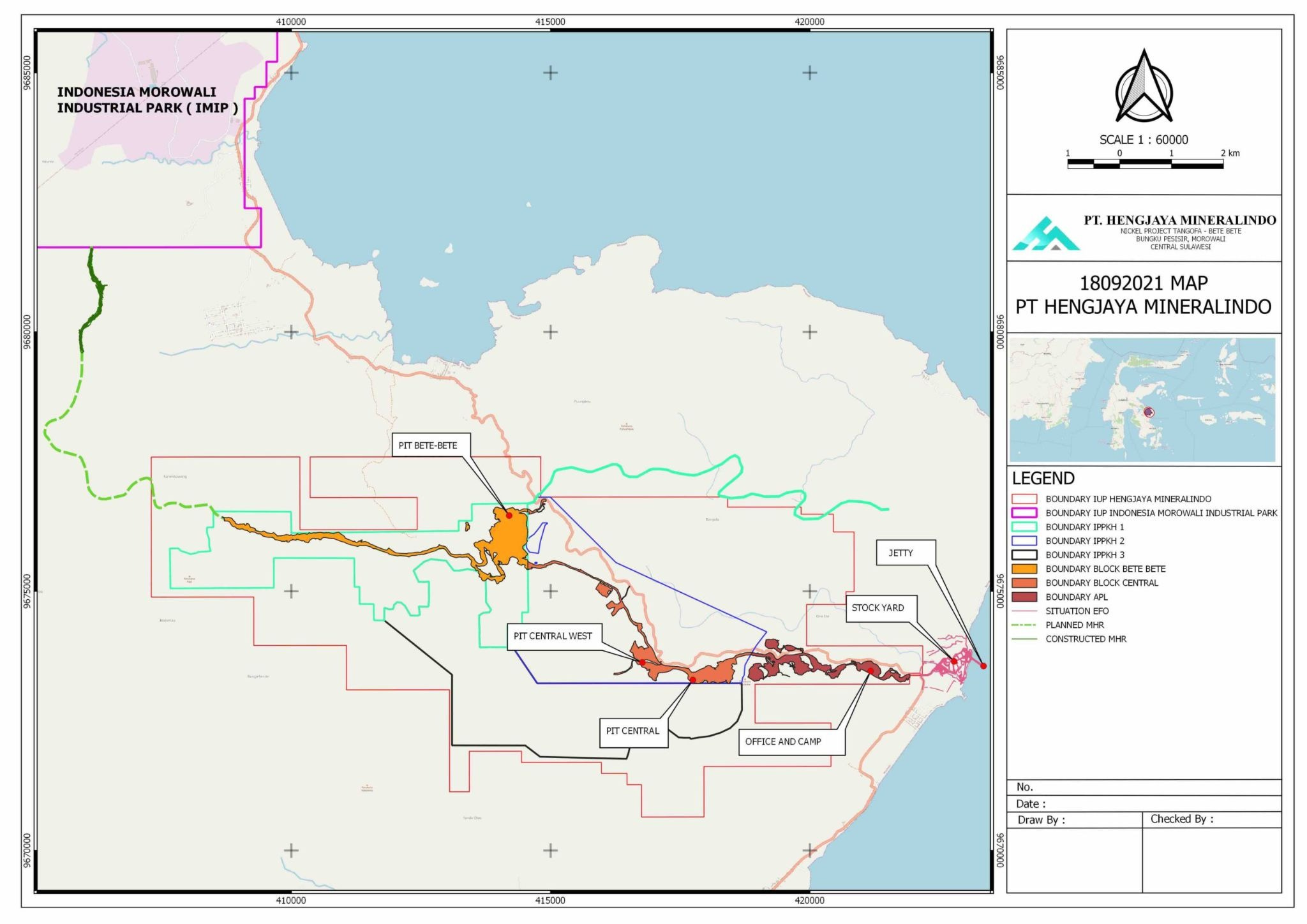
Location: -2.952, 122.289 (Morowali Regency, Central Sulawesi)
~20km SE of IMIP. Visible on Satellite Imagery.Resource / reserves: 285Mt at 1.17% nickel = 3.3Mt contained (JORC). Measured 121Mt, Indicated 75Mt, Inferred 88Mt.
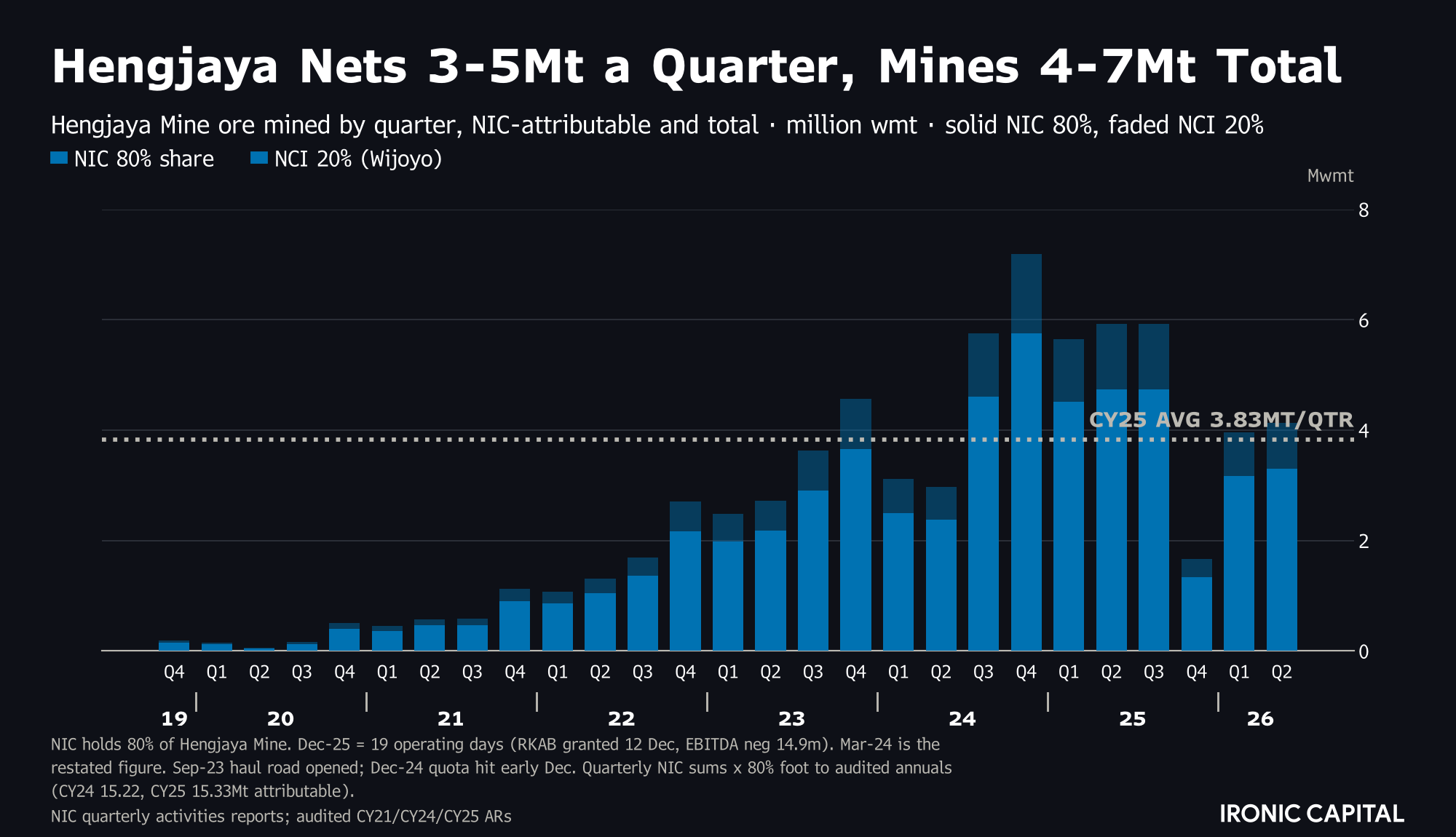
Production Rate (avg): ~4Mt/quarter (100% Basis) 3.2Mt/qtr Attributable.
Sales Rate (avg): ~3Mt/quarter (100% Basis), 2.4Mt/qtr Attributable)
Mine Life: ~25 years of feed at current rates.
Mine Type: Open cut, free dig. No drill-and-blast. The laterite comes out of the ground with excavators and trucks, straight from the surface.
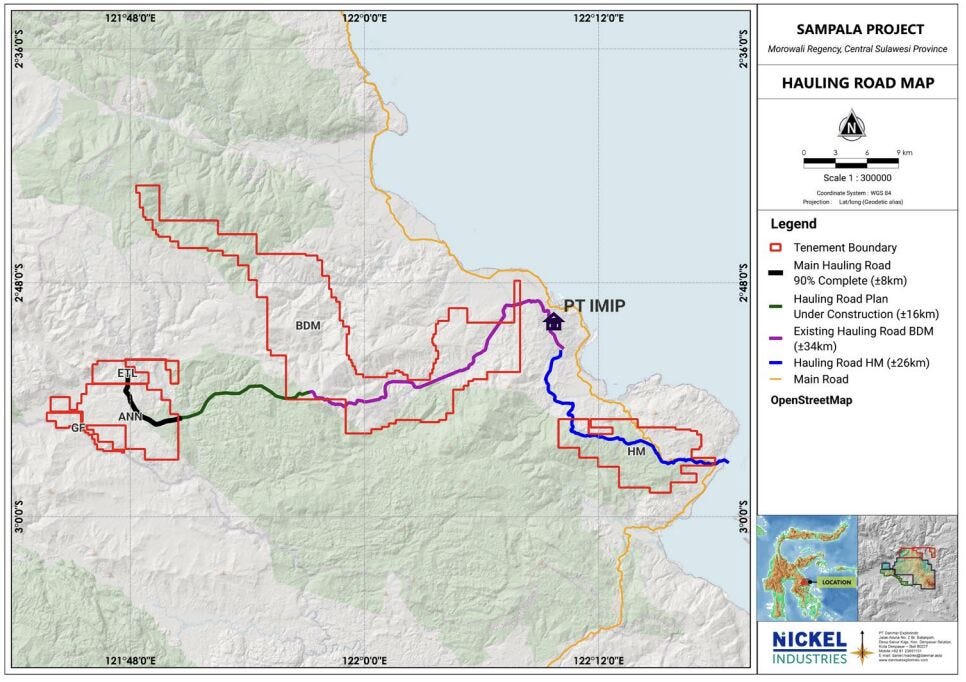
Infrastructure: haul road, jetty, stockpiles, camp, mining fleet, workshops and a limonite wash/feed-preparation plant. The IMIP haul road was completed in August 2023. Ore was previously barged from the Hengjaya jetty up to IMIP.
Pipeline to IMIP: a ~22km slurry pipeline carries the limonite from the mine into the HPAL autoclaves at IMIP. (Finished 2026).
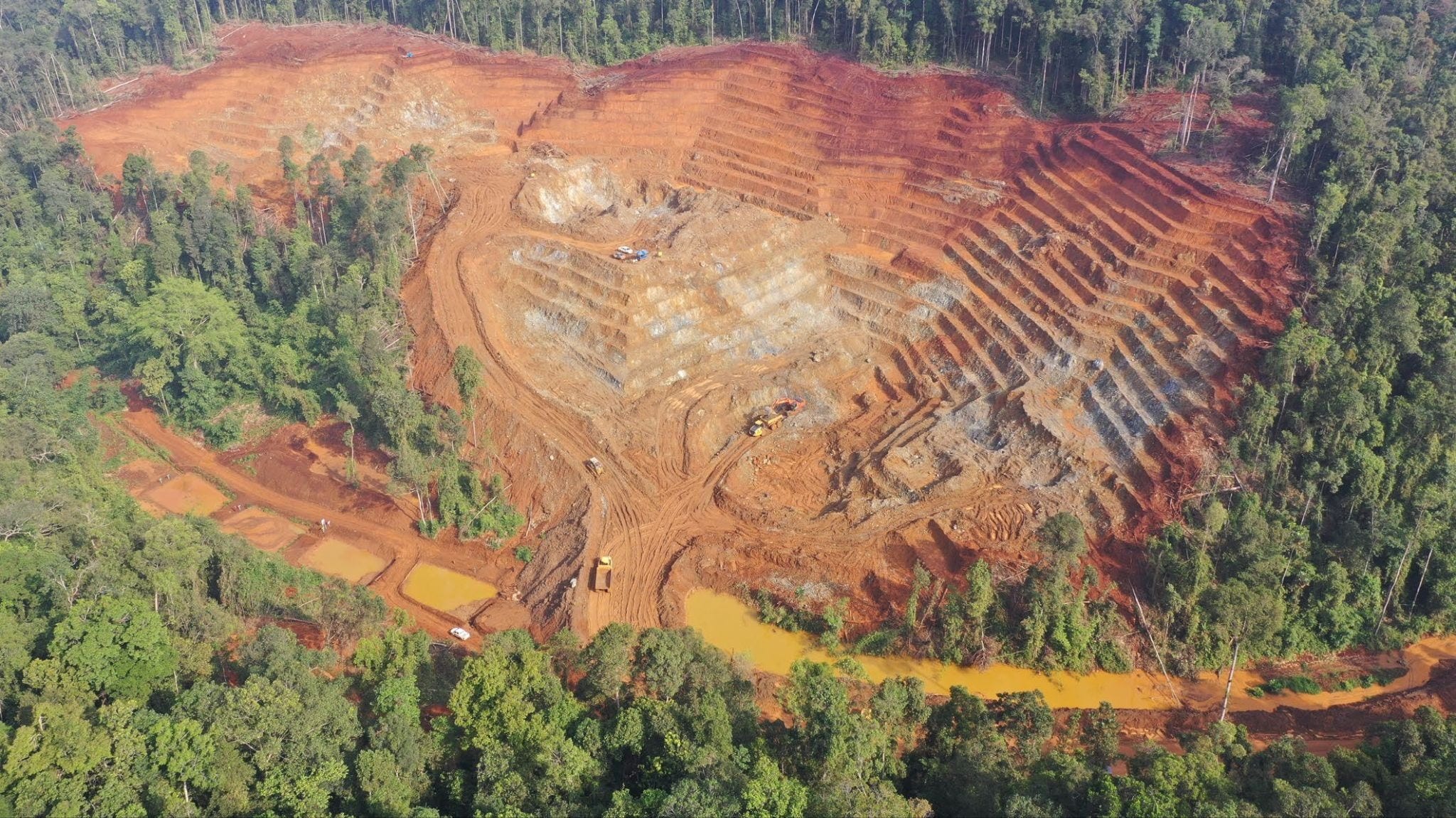
Overall conditions are sloppy, busy, messy, many different workfronts and levels. But probably what you expect for a 2nd world open put load and haul operation.
I would love to see how much of a mess it is in the wet season. Conditions would be risky in heavy rain. Presumably they are very much used to the conditions and managing the risks. Mines look heavily prone to wall slips.
There’s an Official corporate Flyover video over Hengjaya from NIC, but it’s much more entertaining surveying the asset via images employees have uploaded onto Google Maps14.
Production Rates I have extracted from quarterlies and presented below.
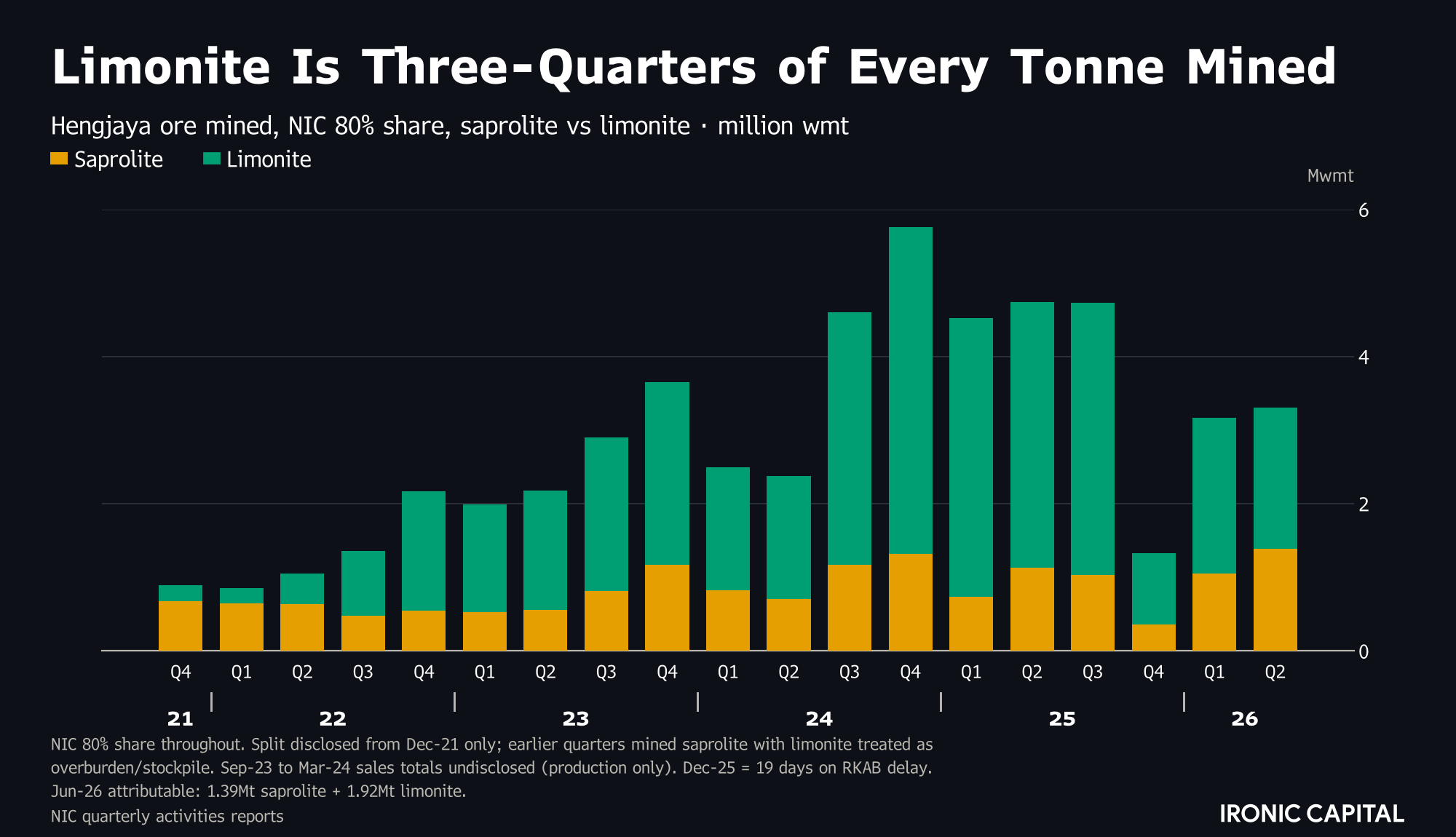
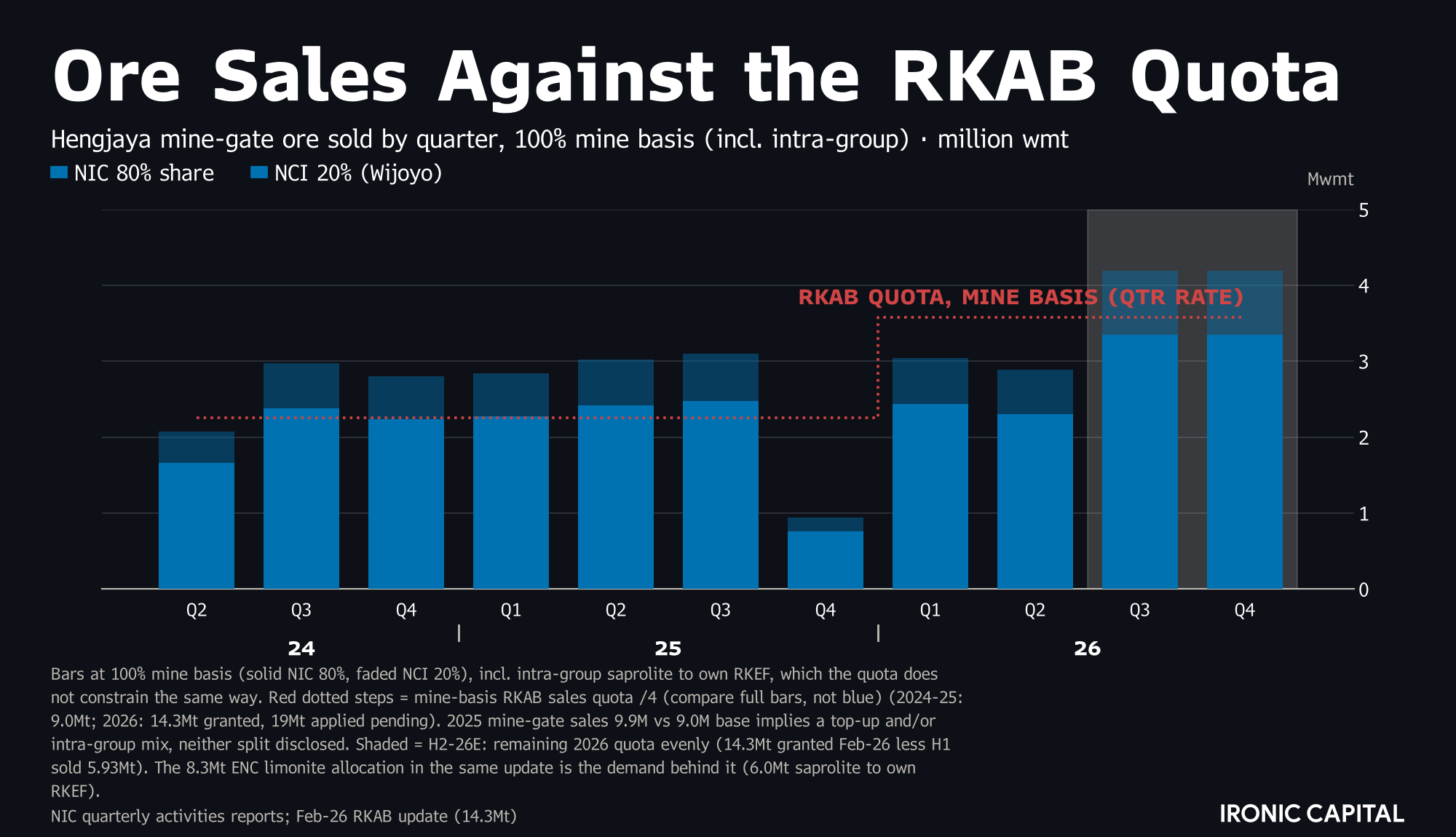
Sales are much lower than Production and contrained against a state imposed “RKAB Quota”. RKAB is Rencana Kerja dan Anggaran Biaya, literally work plan and budget.
It covers production and sales separately. NIC’s 2026 sales quota is 14.3Mt (9.0Mt the two prior years), with windows mid-year and end-year to apply for more.
The government sets a national total and rations it across miners: 319Mt for 2024, 364Mt for 2025, about 260Mt for 2026, against smelter demand near 235Mt. The 2026 cut is deliberate supply discipline, stated goals being environmental outcomes and price stability.
Allocation is political as much as technical. NIC got a 60% increase for 2026 on ESG credentials while peers received under 30% of what they asked for. That rationing is what squeezed ore supply in March and fed straight into the April HPM reset.
There are no separate RKEF or HPAL quotas.
After quarter-end NIC applied to lift its 2026 RKAB sales quota from the granted 14.3Mt to 19Mt, using one of the mid/end-year top-up windows, to cover ENC’s limonite ramp through H2.
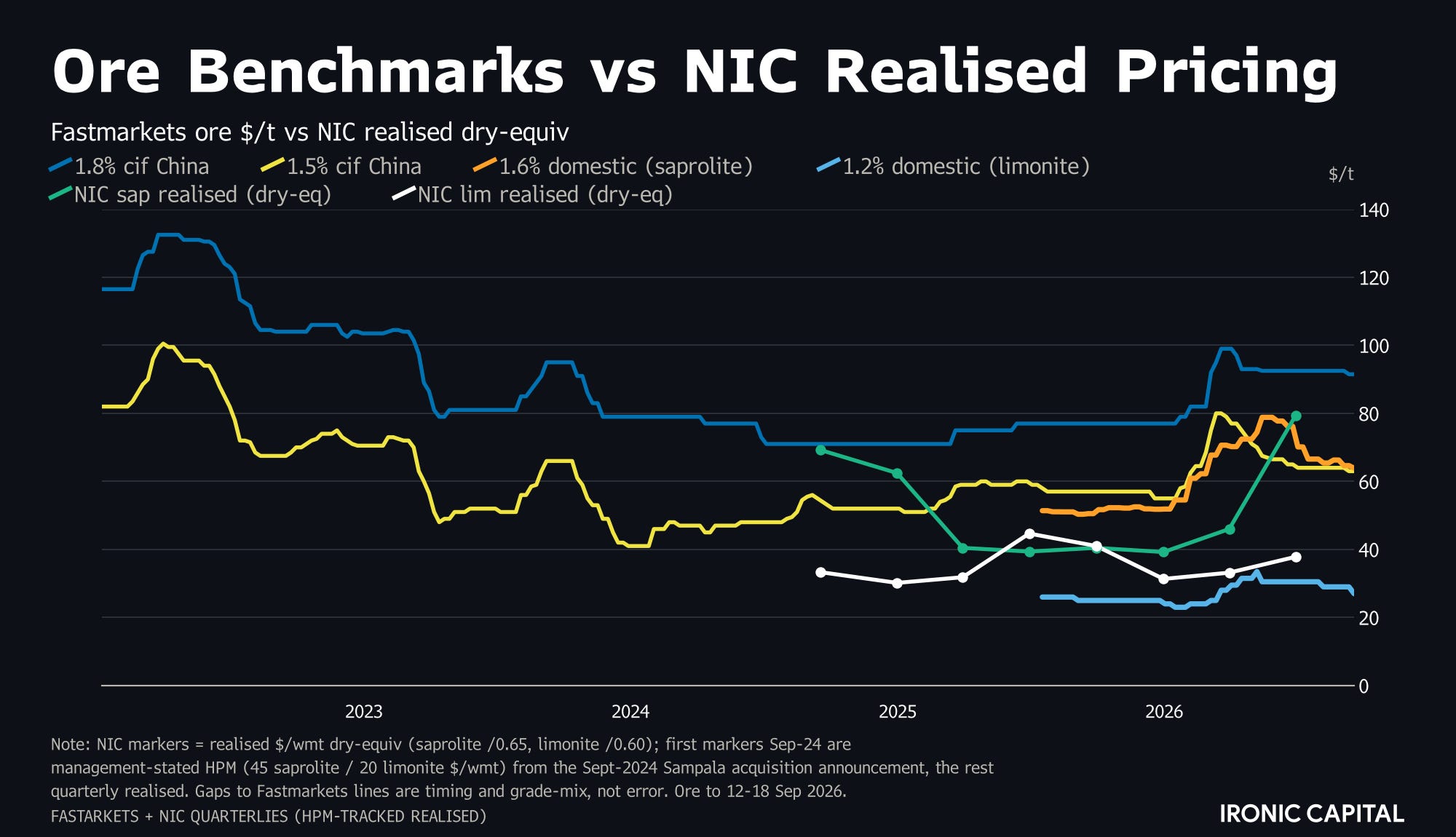
The ore price was historically government set, these are now more transparently seen via the prices for 1.2% domestic (limonite) and the 1.6% domestic (saprolite) markers.
The prices got reworked by the Indonesian gov in April 2026 and significantly bumped up which now considers the contained cobalt in the ore. Incredibly the value of the cobalt in the ore was never recognised by the mines.
I am modelling the ore value vs the following Fastmarkets markers.
Saprolite (NIC ships 1.48%): MB-NIO-0008, 1.6% Ni Indonesia domestic, $/t
Limonite (NIC ships 1.12%): MB-NIO-0007, 1.2% Ni Indonesia domestic, $/t
MHP: MB-NIO-0004 payable % of LME
Sampala Mine
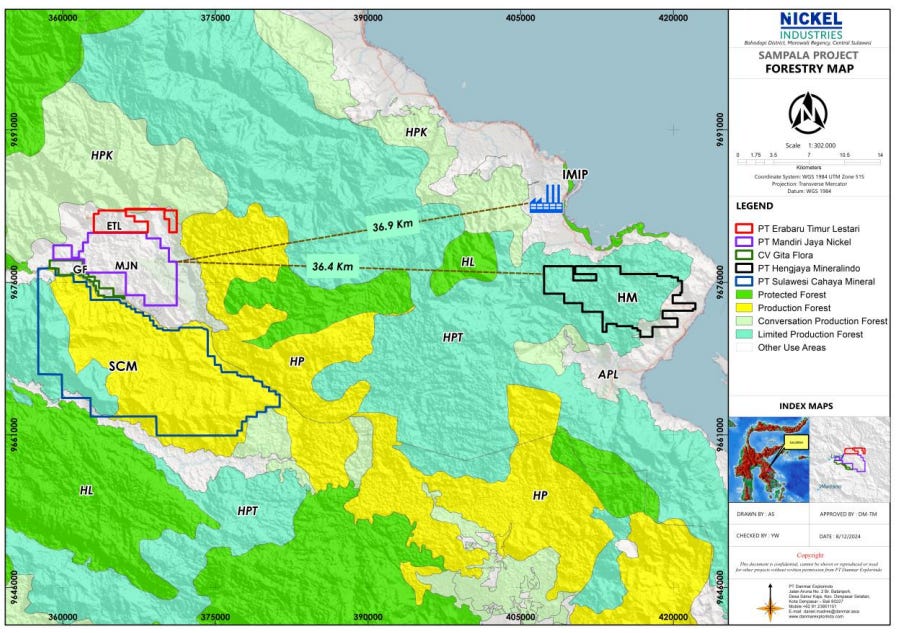
Sampala is a direct analog to Hengjaya, but undeveloped. Call it circa 10 years behind in project maturity. Sampala is bigger in terms of resources, a little more remote being 37km West of IMIP.
It’s a “Tier 1” globally significant deposit, good grades and nice and close to a global Nickel hub hungry for ore. Being on the same Island as one of these Industrial plants is a genuine competitive advantage. The potential to pipeline slurry15 directly into a plant short Nickel is there and has genuine cost advantages beyond its size.
There’s next to no images of the Sampala site available, but there’s also not much to see yet. Only some early civil works whilst the equity ownership settles.
Ownership: 60% NIC (licences ETL + MJN + GF). Acquired for US$144m final payment due April (from operating cash flows), plus US$30m of capex to first production.
NIC is selling down 18% for their CNE HPAL Stake, so the future equity split is looking like: NIC 42%, JAYA 30%, Wijoyo/local partner 28%.
Value: ca US$1.3B in 2026 (100% Basis). NIC swapped 18% of Sampala for 36% of CNE, booked at US$241.6m
Operator: TBA
Size: 187Mt at 1.2% nickel (2.3Mt contained), upgraded to over 1 billion wet metric tonnes at 1.24% in the Q2 announcement. 6,654ha, only ~20% of the laterite area drilled. (Large amount of inferred)
Production Rate (avg): 6M wmt/yr start with ramp up to 20M wmt/yr
Type: same laterite as Hengjaya. Free-dig, bulk load-and-haul, no strip. A second Hengjaya in ground terms, 36.9km from IMIP.
Status: Advanced exploration moving to production in early 2027, per management on the 2026 Q2 call.
Role: exclusive limonite supplier to CNE under a 15-year, up-to-14Mt/yr MOU at market-linked prices.
RKEF Smelters
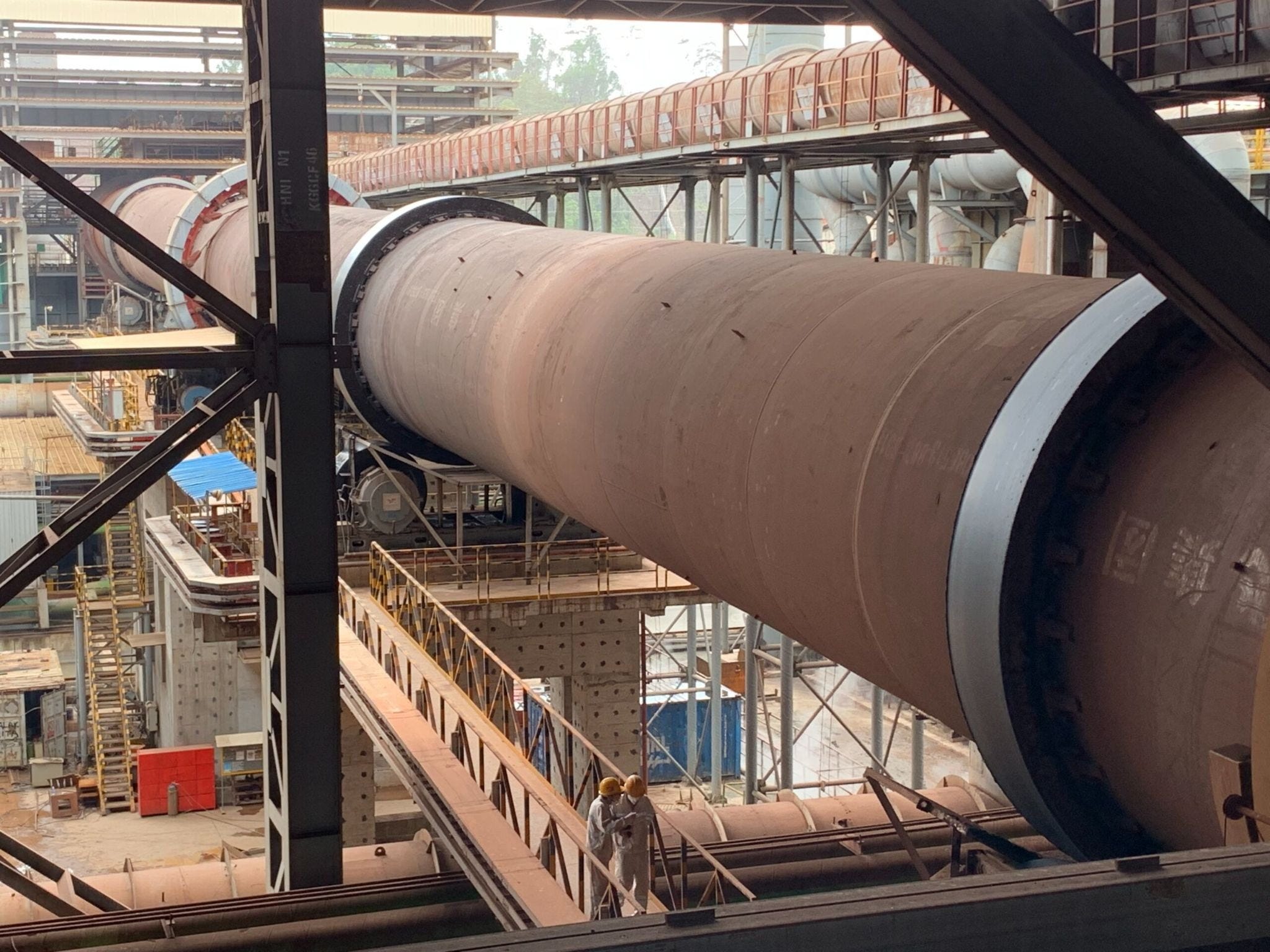
Firstly, what’s RKEF? RKEF is Rotary Kiln Electric Furnace, a processing plant16 consisting of a rotary kiln (a long, rotating steel tube) which dries and pre-heats the ore which then feeds the ore to an electric furnace which smelts it.
Whilst traditional Nickel Sulphide ores are typically crushed, floated and upgraded before smelting; Saprolite can’t be concentrated. The nickel sits locked inside silicate clay at ~1.8% grade, so the only way to get it out is to melt the whole rock. RKEF is brute-force smelting of low-grade ore.
The Basic Chemistry & Process:
Dry: Saprolite arrives at ~30% moisture; rotary dryers drive the water off.
Roast: Straight in the kiln at (~900–1,000°C), the coal burns to Carbon Monoxide, reducing the Nickel Oxide to pure Nickel. The rest of the impurities stay in the oxide. NiO + C → Ni + CO.
Smelt: Calcine goes into the electric furnace (~1,500–1,600°C, submerged-arc electrodes). Everything melts. The metal phase (iron-nickel alloy) sinks; the waste phase (magnesia-silica slag) floats and gets tapped off separately.
Pour: The alloy is tapped and cast as nickel pig iron: ~10–12% nickel in iron, stainless feed, done.
The RKEF output is a large contributor to production volumes and were critical in enabling NIC to get to its current size, but their importance is now diminished with the HPAL ramping in the near future. RKEF is expected to transition from 100% of CY2217 production and 85% of CY22 EBITDA to 50% of Production and 20% of EBITDA in CY28.
NIC’s 4 RKEF facilities are split across 2 vintages and both industrial parks. HNI, RNI and ONI are at IMIP, ANI is at IWIP. All were built by Tsingshan, operated by Tsingshan and were new at the time NIC got involved.
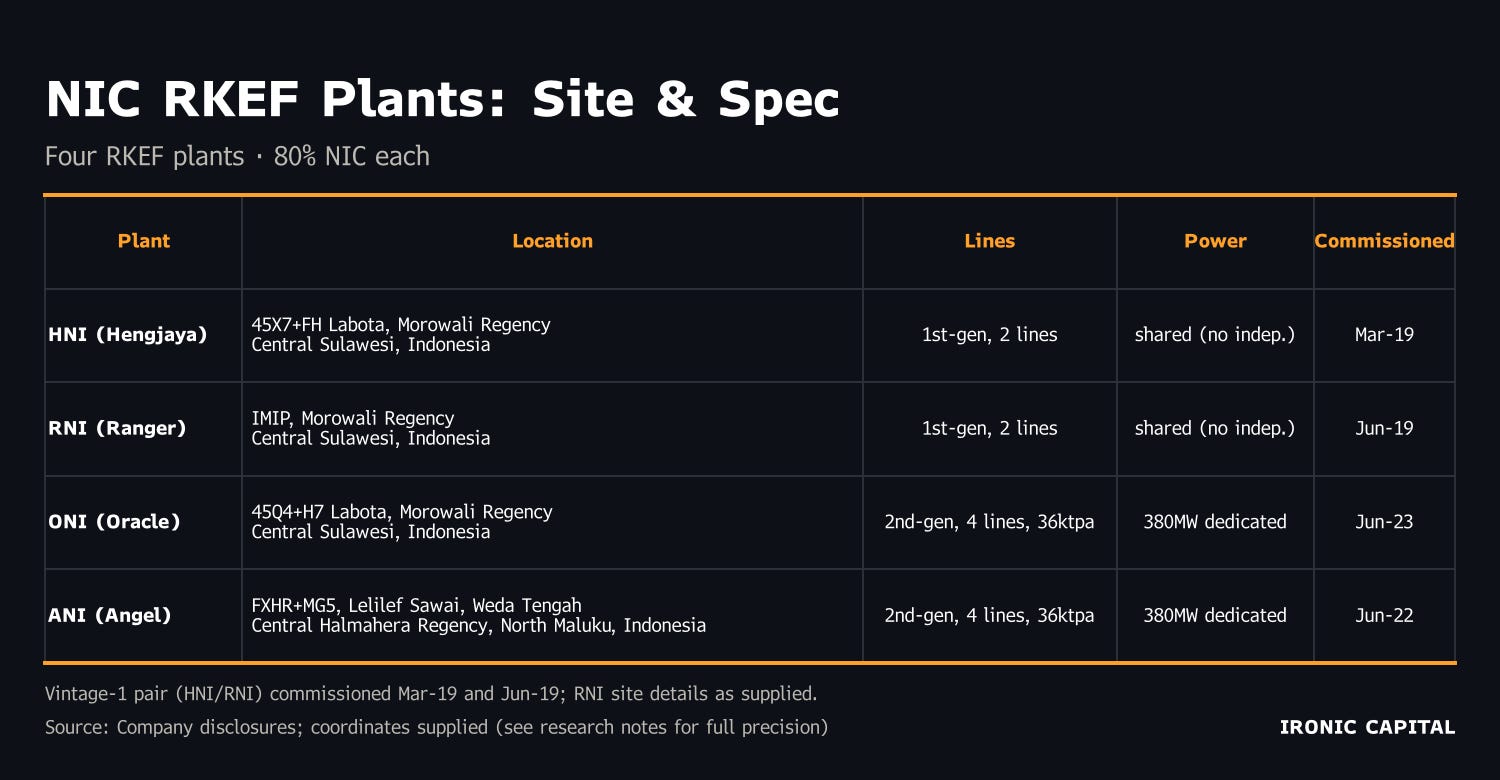
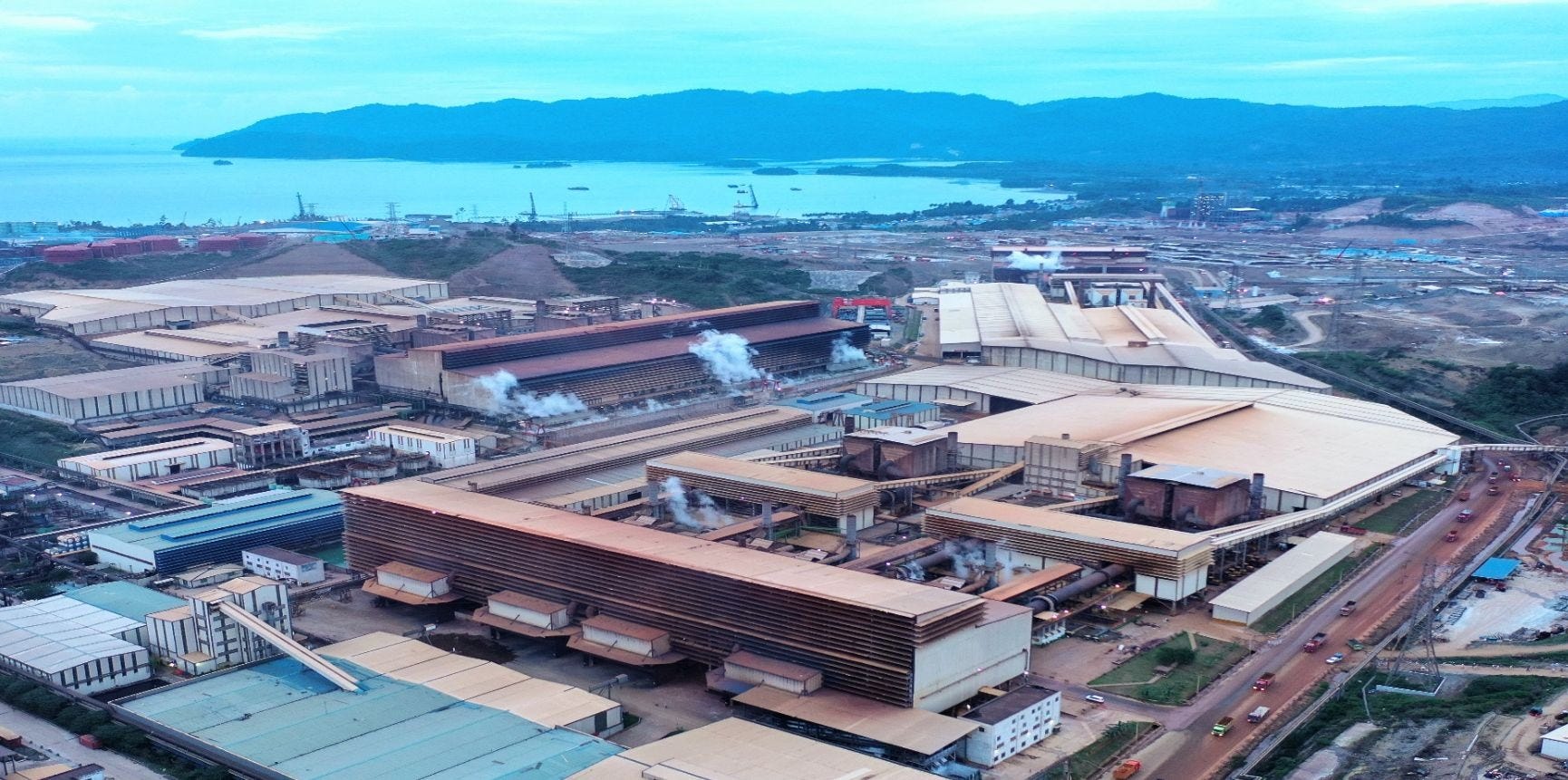
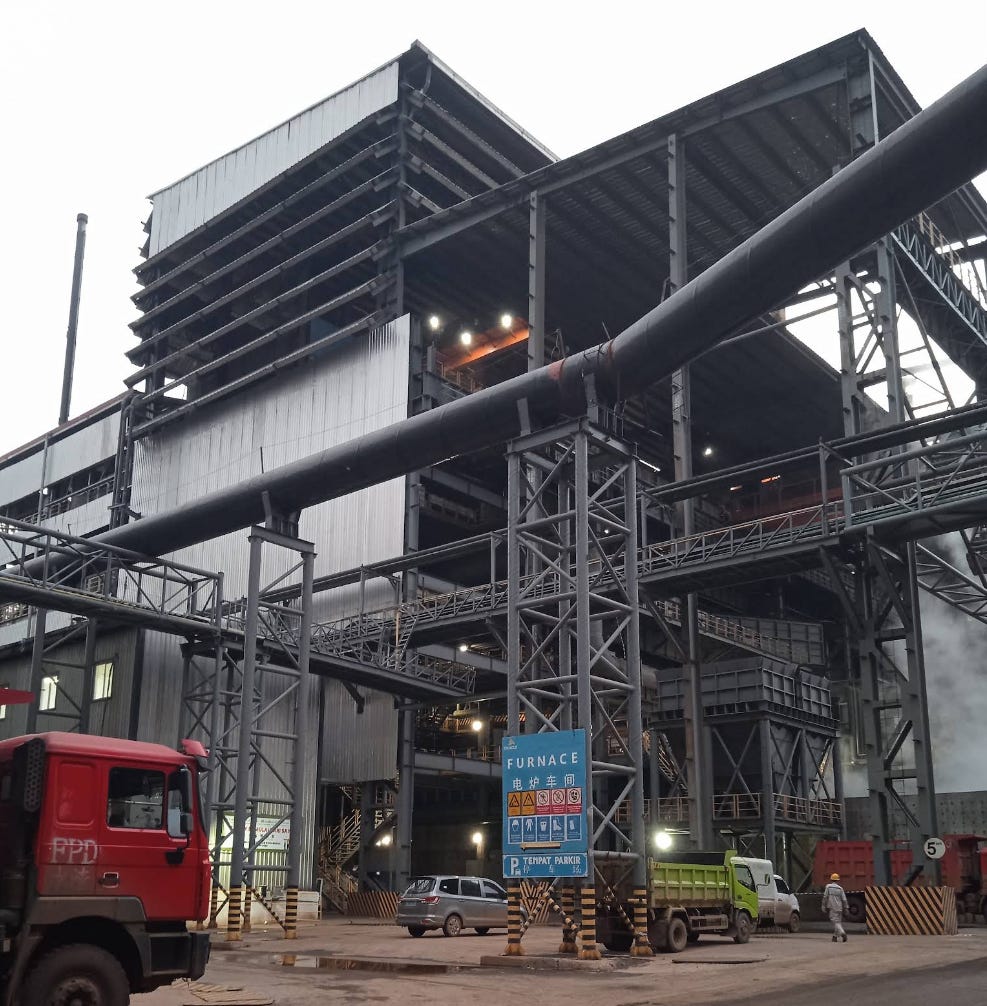
The first Vintage was acquired in 2019 consists of HNI & RNI. These original RKEF plants were needed as the ore shipping ban was put in place. These was largely financed from IPO proceeds18. Later a further equity raise in 2020 topped up the equity share to 80%.
The later “2022” vintage consists of ANI and ONI are a newer generation RKEF with double the number of lines19, much larger throughput and self-contained power plants. These appear to be opportunistic purchases, acquired a bit too early for the maturity of NIC at the time. The financing of both ANI & ONI involved multiple additional capital raisings.
Note that ANI and ONI are on such a scale that they are important to the NIC business, whereas the older HNI & RNI are a rounding error and have outlived their purpose.
ANI (US$558M):
Late 2020: the initial 30% of ANI was financed by a A$363M capital raise.
In 2022 a further 20% of ANI was debt funded (US$137.6M).
Late 2022: Purchased additional 30% for US$210M
ONI (US$600M):
Early 2022: Initial 10% slice secured for US$53M cash outlay.
May 2022: Took another 20% by issuing US$106M in equity, tied into the broader ~A$296M raise.
2022: Injected US$154M to fund their share of the captive 380MW power plant.
Sep 2022: Added a further 40% chunk for US$212M, largely backstopped by a US$225M note facility.
2023: Bought another 10% for US$75M cash, funded from the US$471M (~A$673M) institutional raise (largely for HNC HPAL).
(are you noticing a key problem with NIC here? The number of raises is shocking).
Production
RKEF output has been steady since startup and above plate at every plant. All volumes below are stated at NIC’s 80% attributable share. Fleet nameplate is 81.6ktpa (20.4kt/qtr) and the fleet prints ~100ktpa, holding 110-130% of nameplate with no furnace failures in 26 quarters.
ANI and ONI do ~36.8ktpa and ~36.5ktpa attributable (~46.1kt and ~45.7kt at 100%) against 28.8kt of attributable nameplate each (36kt at 100%).
HNI and RNI do ~13.3ktpa each attributable (~16.6kt at 100%) against 12.0kt each (15kt at 100%).
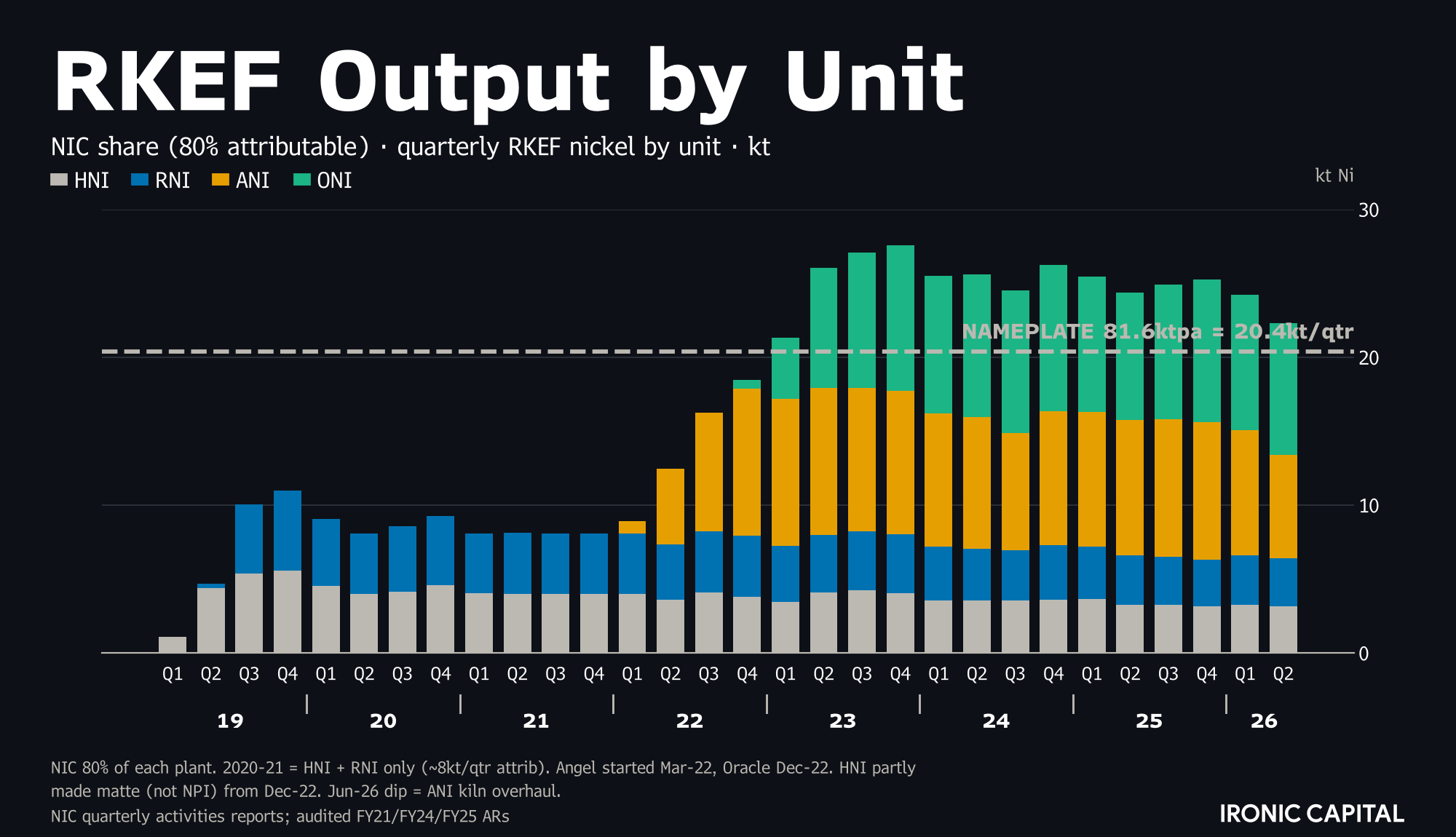
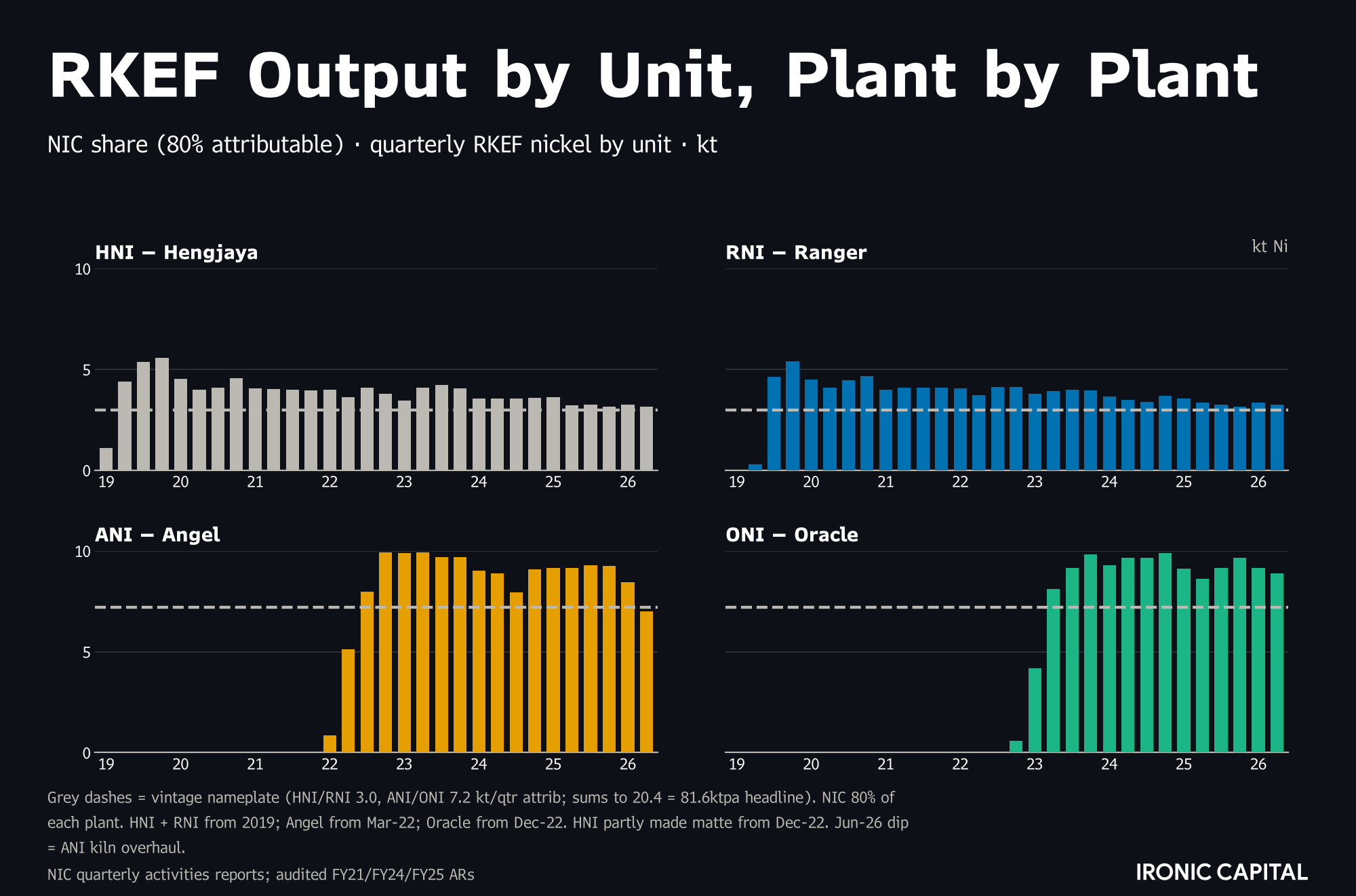
Overall production rates are good but HNI and RNI are very clearly trending down as they age. This is within typical conditions for blast furnaces which generally run at stable rates with a soft decline until a furnace is taken down for repair/reline and output experiences a step-change down, then back up. We don’t have a lot of insight into the conditions of these plants.
HNI has just started a full reline20 so a ~50% dropoff in volumes will be evident from next quarter. It is typical to rebuild & reline any blast furnace every 7 years.
Overall I’m not worried here, there’s lots of independent systems here and a single outage21 only affects a single line in a single plant. Downturns in production numbers all came with basic explanations are outages are generally low single figure US$M outages or less, largely for major overhauls.
The vintage 2 (ANI and ONI) production rates are good and we are getting early signs of decline too. ANI output was lower in the previous quarter due to ongoing kiln reline. That drop will be temporary. ANI had a blip in late ‘24 due to import supply problems (ANI is at IWIP and not part of the NIC owned Mine/Ore supply chain and exposed to external supply). ONI seems to have had no issue disclosed to date. The larger ANI & ONI should only experience 25% drop in output during relines.
Economics
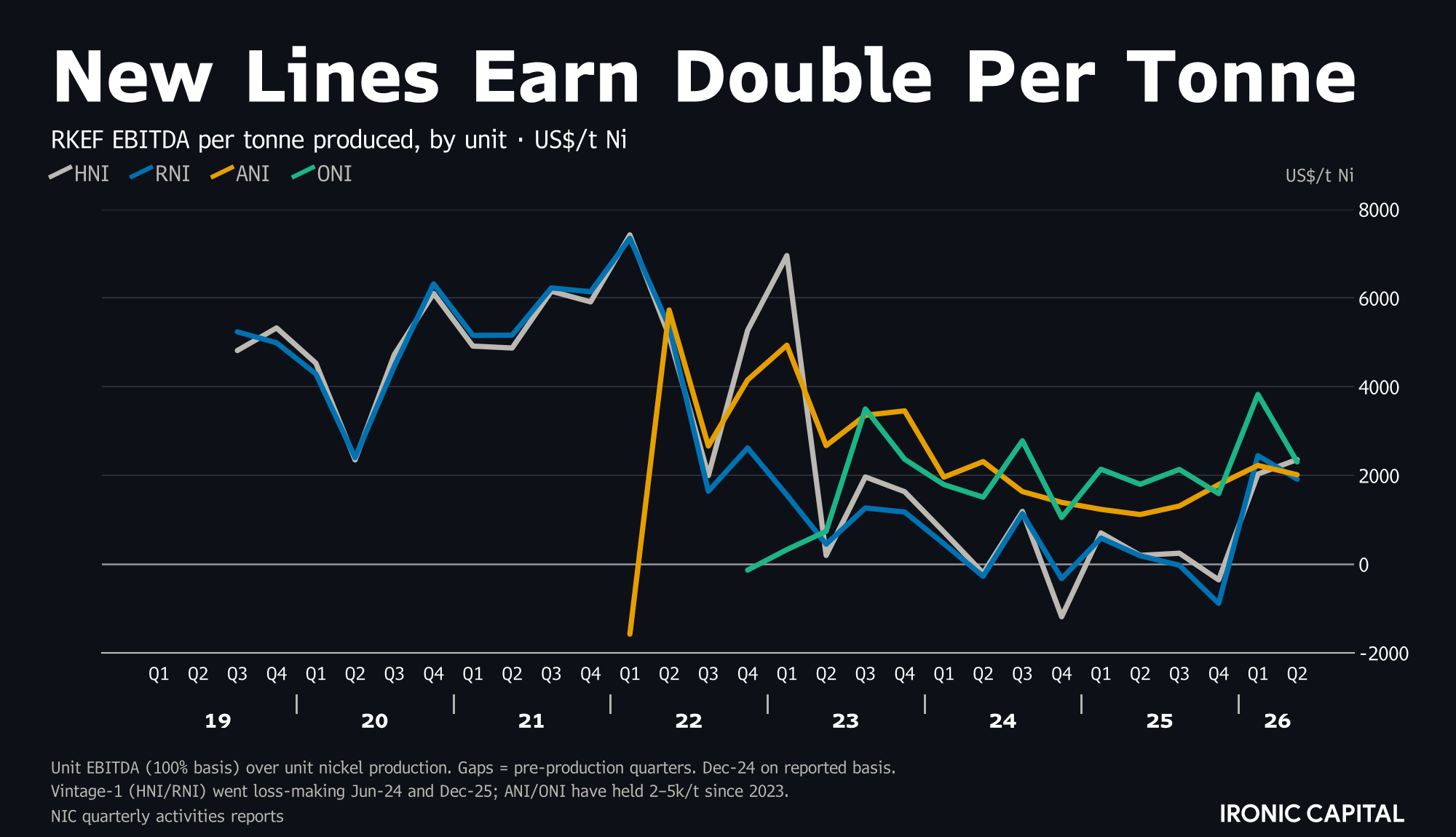
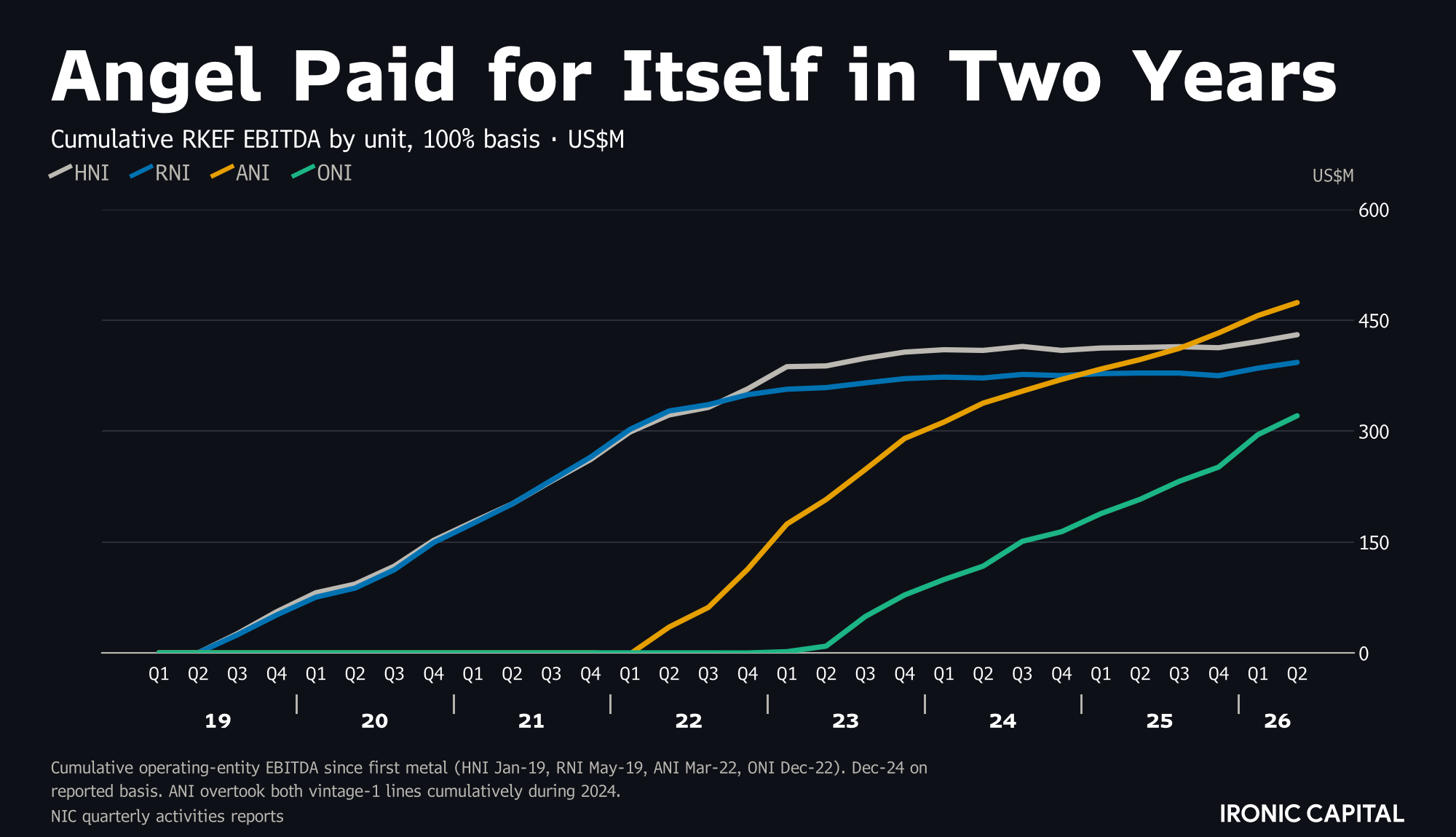
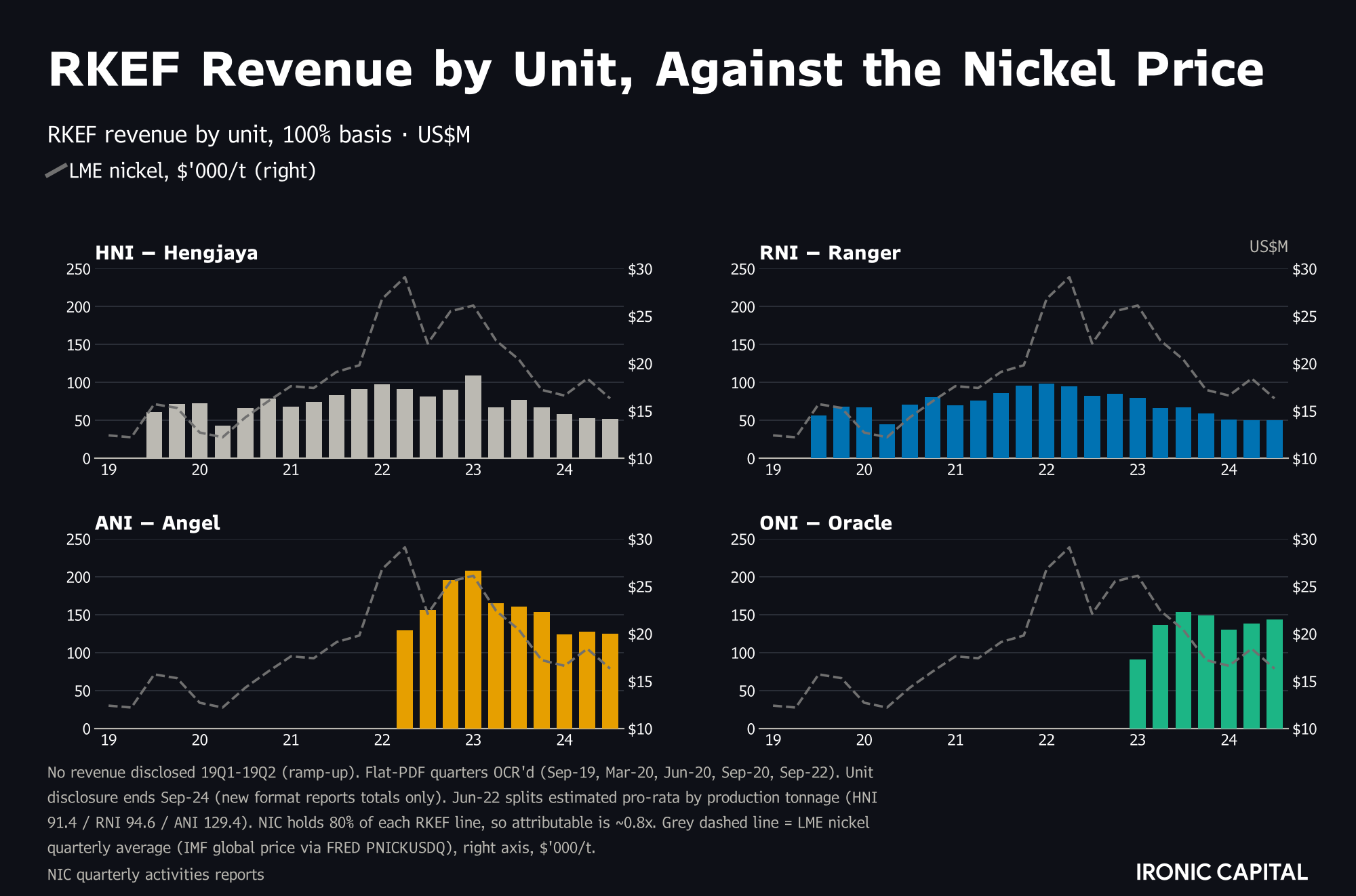
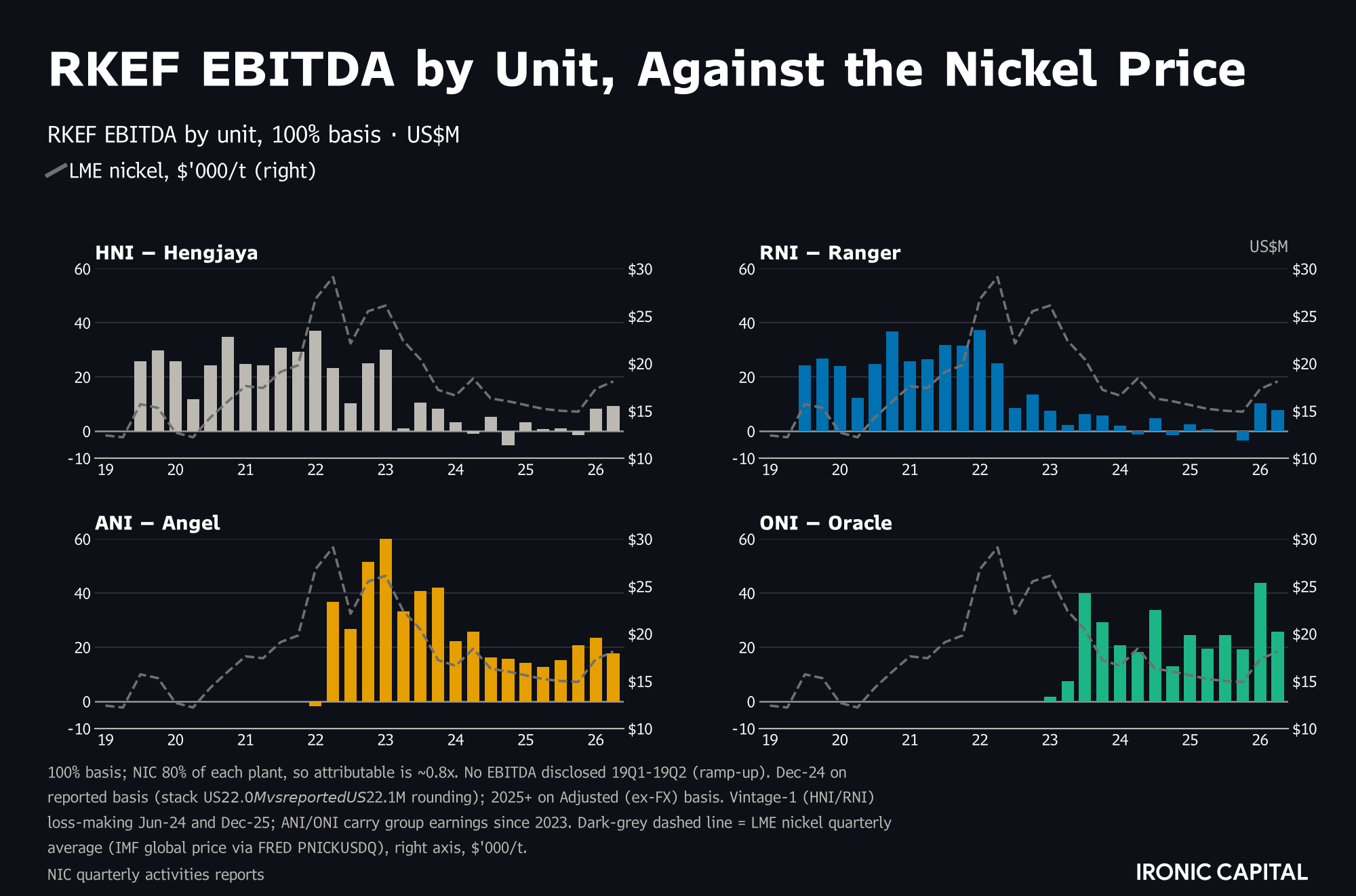
The two generations of RKEF have very different economics. I consider them in pairs below.
Vintage 1: (HNI + RNI)
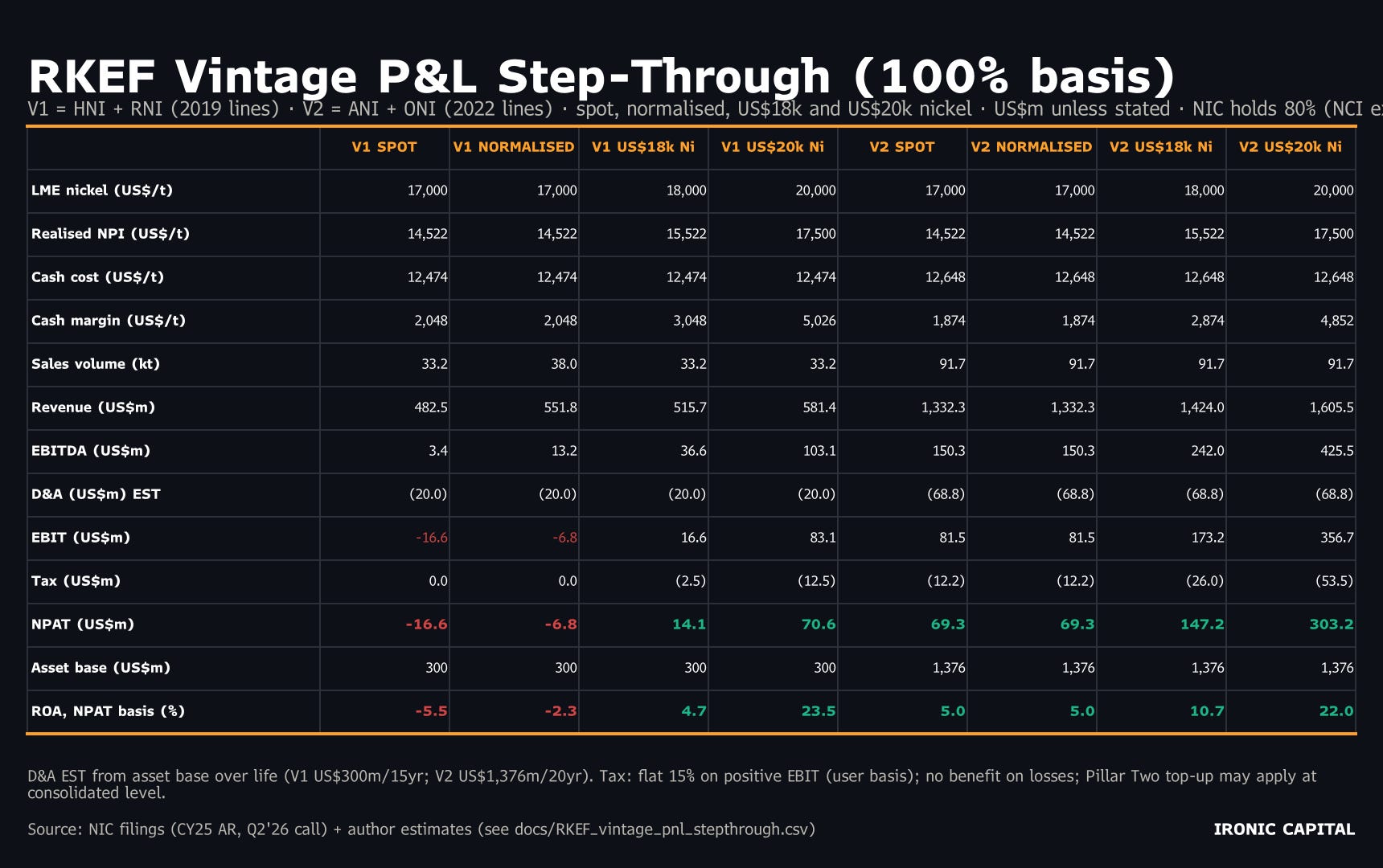
These two plants barely break even at spot $17K/t Ni (CY25: HNI US$3.1m EBITDA, RNI negative US$0.3m).
I haven’t included maintenance downtime (which we have currently on HNI), trying to illustrate an average economic case. The spot/trough pricing economics. Note a small uptick in Nickel prices from here is very accretive to these smelters.
The return on assets at current prices show how poor of an asset this is at this point in the cycle. Sub 5% after adjusting out the current maintenance downtime. There’s a strong case to sell this pair of RKEF for any price22.
Why vintage 1 is so low:
Smaller Capacity, lesser lines and older generation.
Trough pricing + NPI discount: LME ~$17,000/t less ~$2.5k NPI discount = $14,522/t realized. Cash-cost operation has no headroom once royalties, selling and site G&A come off.
No directly owned on-site power.
Degraded furnaces pre-rebuild.
Vintage 2: (ANI + ONI)
Each of these plants has 4 lines, 8 in total. Lower Cash costs, higher margins and higher volume.
Call it “minimum” US$150M/yr EBITDA at current prices, and US$430M/yr at $20K/t Nickel. Returning 10% on Assets in a poor Nickel pricing environment is reasonable, and comparatively extremely good to the most of the Nickel Industry.
HPAL Refineries
HPAL (High Pressure Acid Leaching) is a completely different game than RKEF and it is where all of NIC’s incremental economics sit. Whilst the traditional RKEF process was built around the high-grade saprolite (~1.8% Ni), HPAL turns the formerly unused low-grade limonite ore (~1.0-1.4% Ni) into battery-grade nickel units. A notable turnaround as discussed earlier.
Basic Chemistry & Process:
Slurry: limonite arrives wet from the pit; crushed and mixed to a pumpable slurry at ~30% solids.
Leach: slurry plus concentrated sulphuric acid into the autoclave (~250-270°C, ~40-50 bar). Acid dissolves nickel and cobalt from the iron matrix; the iron then re-precipitates as hematite and drops out, regenerating acid as it goes. NiO + H2SO4 → NiSO4 + H2O.
Neutralise: discharge is still acidic; limestone neutralises the residual acid and drops the remaining iron and aluminium impurities. Nickel and cobalt stay in solution.
Precipitate: magnesia pulls nickel and cobalt out of solution as MHP23: mixed nickel-cobalt hydroxide at ~35-40% nickel, battery feed, done. NiSO4 + MgO + H2O → Ni(OH)2 + MgSO4.
HNC
HNC (Huayue Nickel Cobalt, at IMIP, 10% acquired Aug-23, US$270m) was NIC’s first HPAL exposure. The plant was built in ‘21-’22 by Zhejiang Huayou Cobalt Co., Ltd24 (Huayou25) and Huayou owns the majority of the plant. The plant is in IMIP with 60ktpa MHP nameplate.
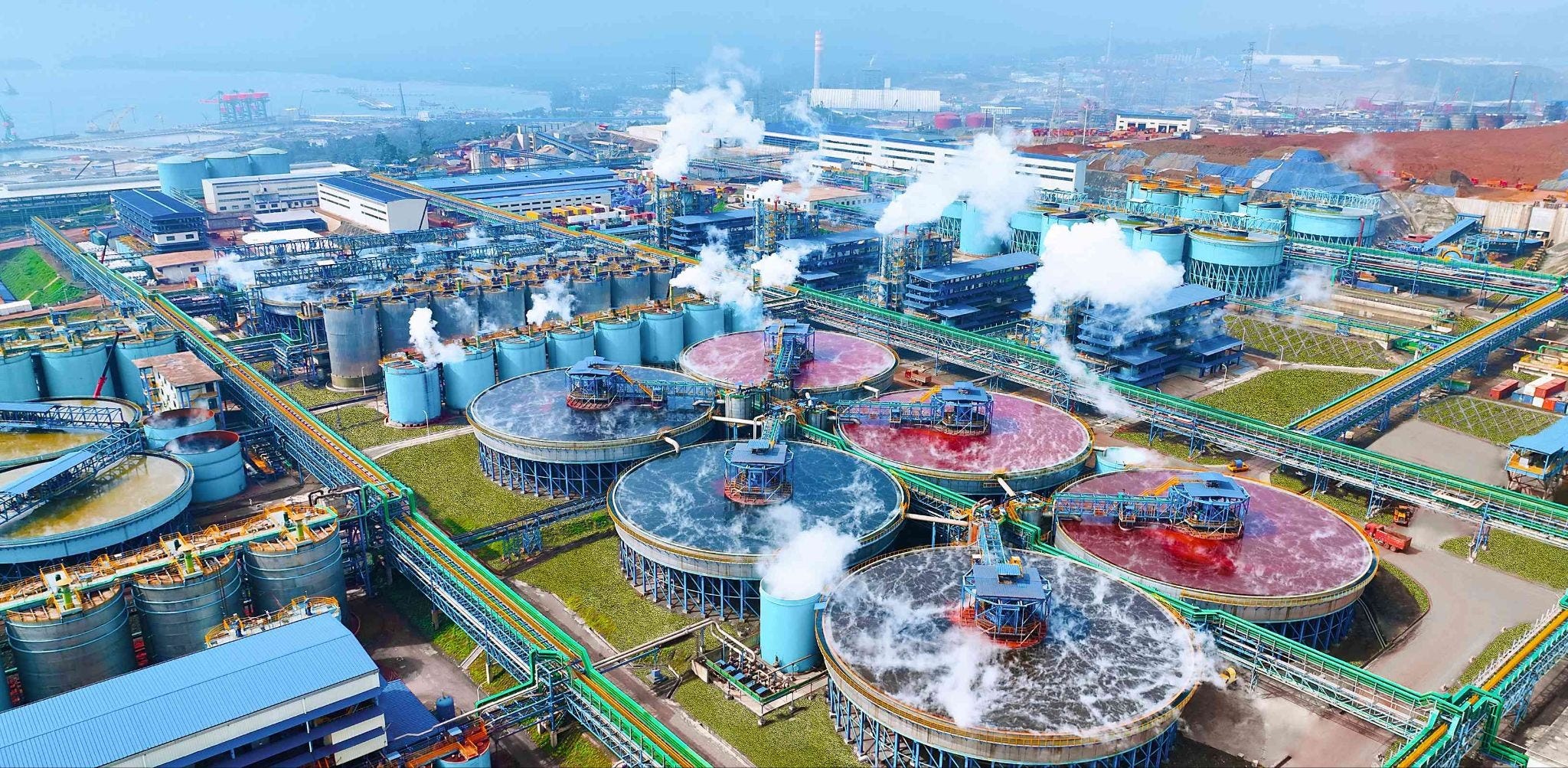
Huayou is listed in Shanghai under ticker 603799 with an EV of ca US$15B. Huayou26 was originally focused on Cobalt in the DRC, pivoted into Indonesian Nickel and has successfully built and operated at least 4 HPAL plants in Indonesia. Huayou owns & operates the majority of all their plants and has a range of different strategic partners across their plants (Tsingshan/CMOC/CATL/Ford/Volkswagen/Vale/NIC/EV Energy/Antam).
When NIC bought into HNC they also bought Tsing Creation, an end products trading business out of Hong Kong. The model is simple buy-and-resell:
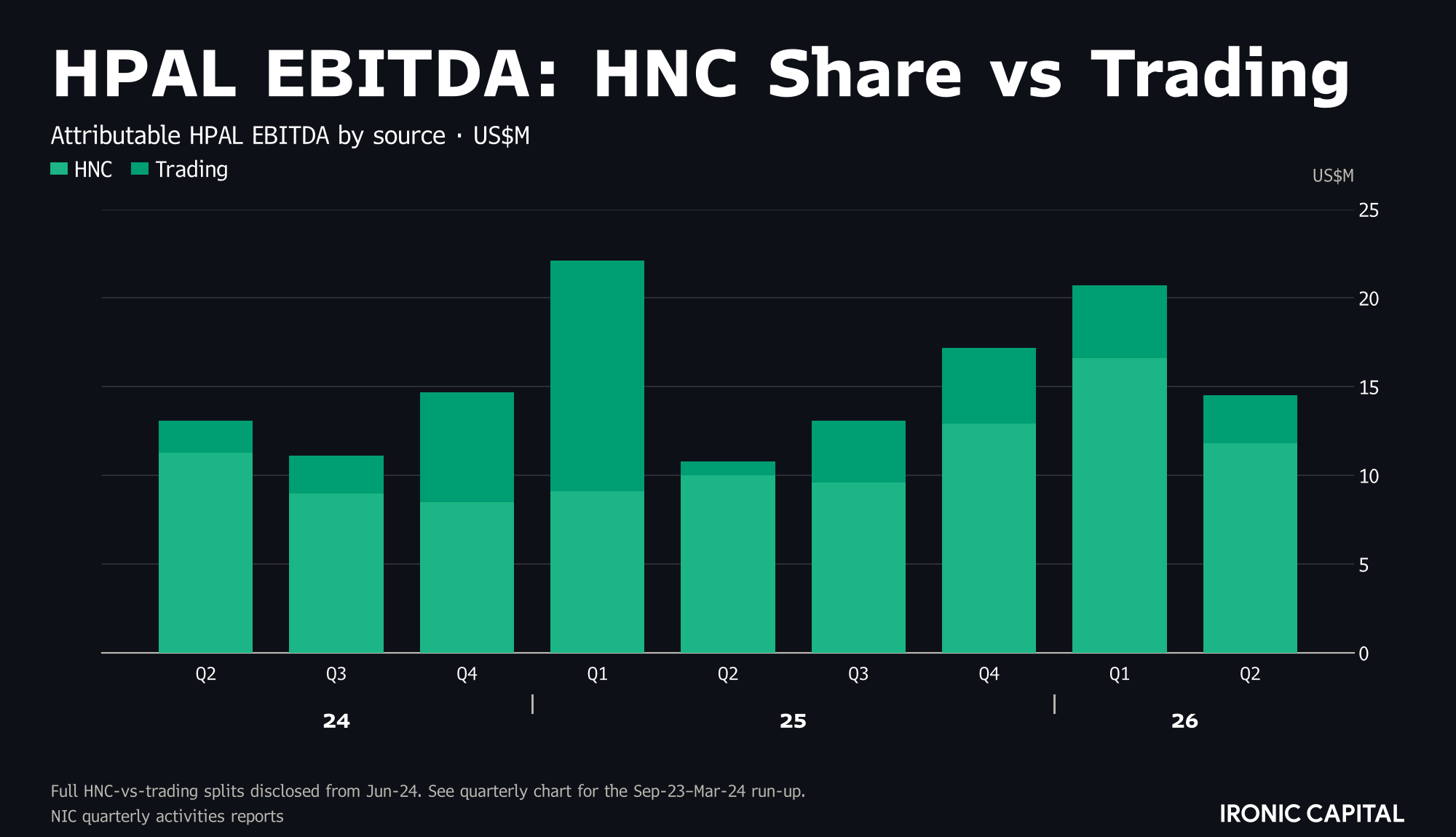
Buys HNC’s MHP output (US$105.1m in CY25), resells to ~10 end customers: IXM, Jingmen GEM, XTC Recycling, Trafigura Asia, Itochu Singapore, Transamine, Minmetals North-Europe, Golden Harbour, China-Base, Hengjaya Holdings SG
Keeps a spread of roughly US$1,400–2,100/t
Earned US$11.5m (CY24) → US$16.3m (CY25)
HNC has been a screaming success.
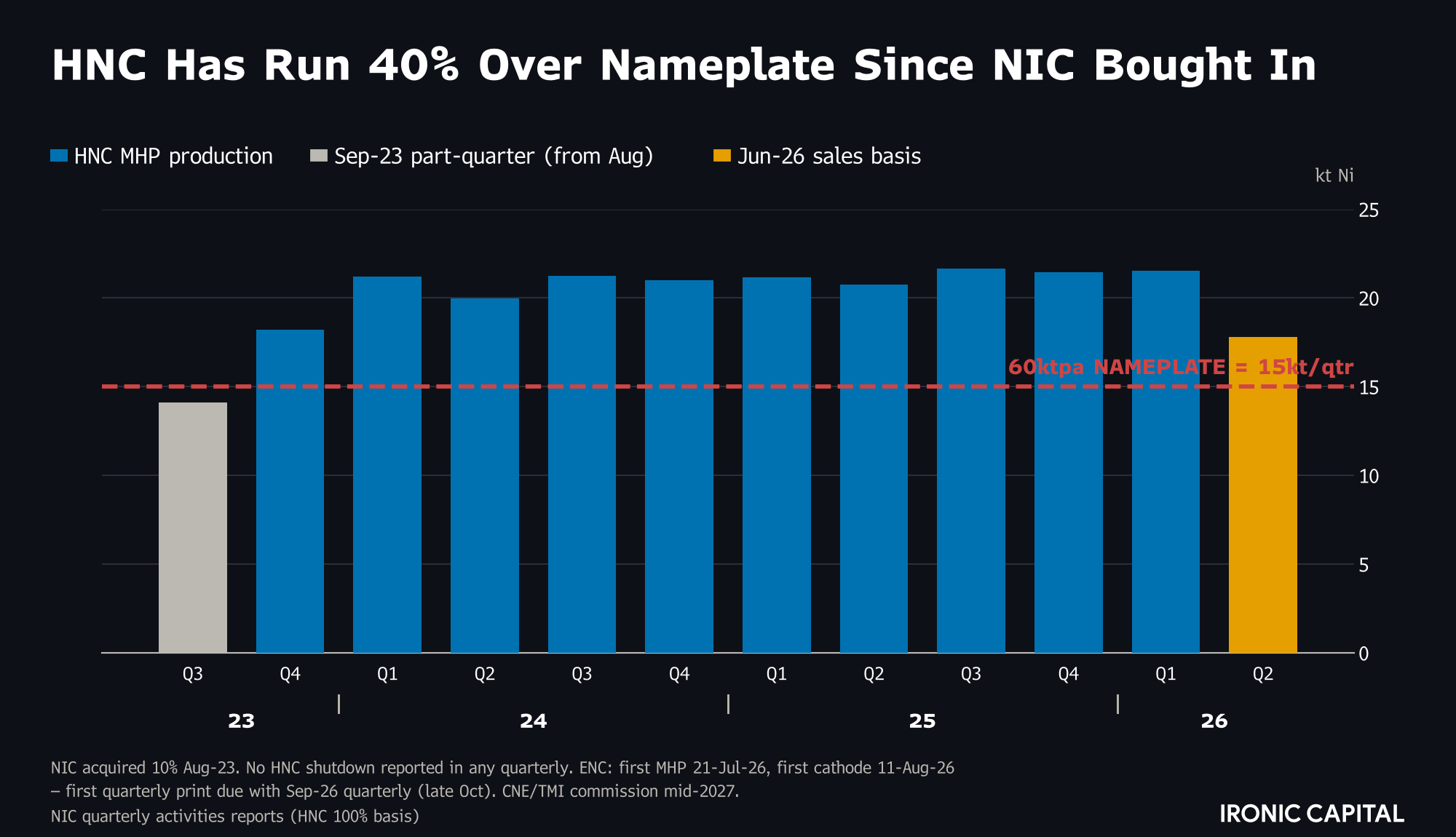
Throughput has held at ~140% of nameplate for most of its history (21-21.6kt/qtr at 100%, ~2,100t attributable to NIC) with no autoclave availability events recorded. The earnings contributions from HNC are also excellent. Project debt has been fully repaid and has commenced paying dividends upstream to NIC.
NIC Attributable EBITDA from HNC are presented below. The asset has returned US$99M EBITDA to date, representing 40% of the original investment in just under 3 years.
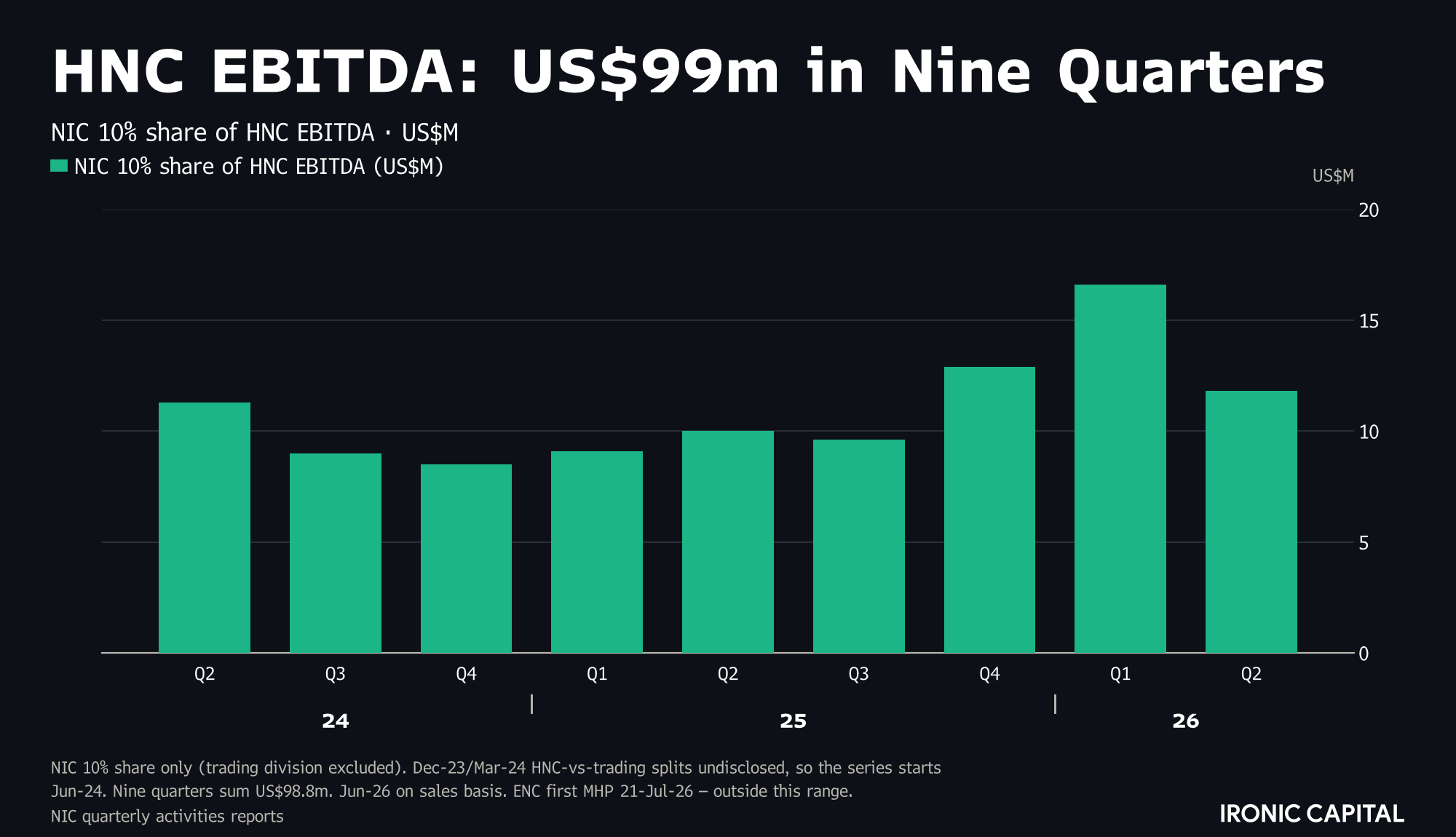
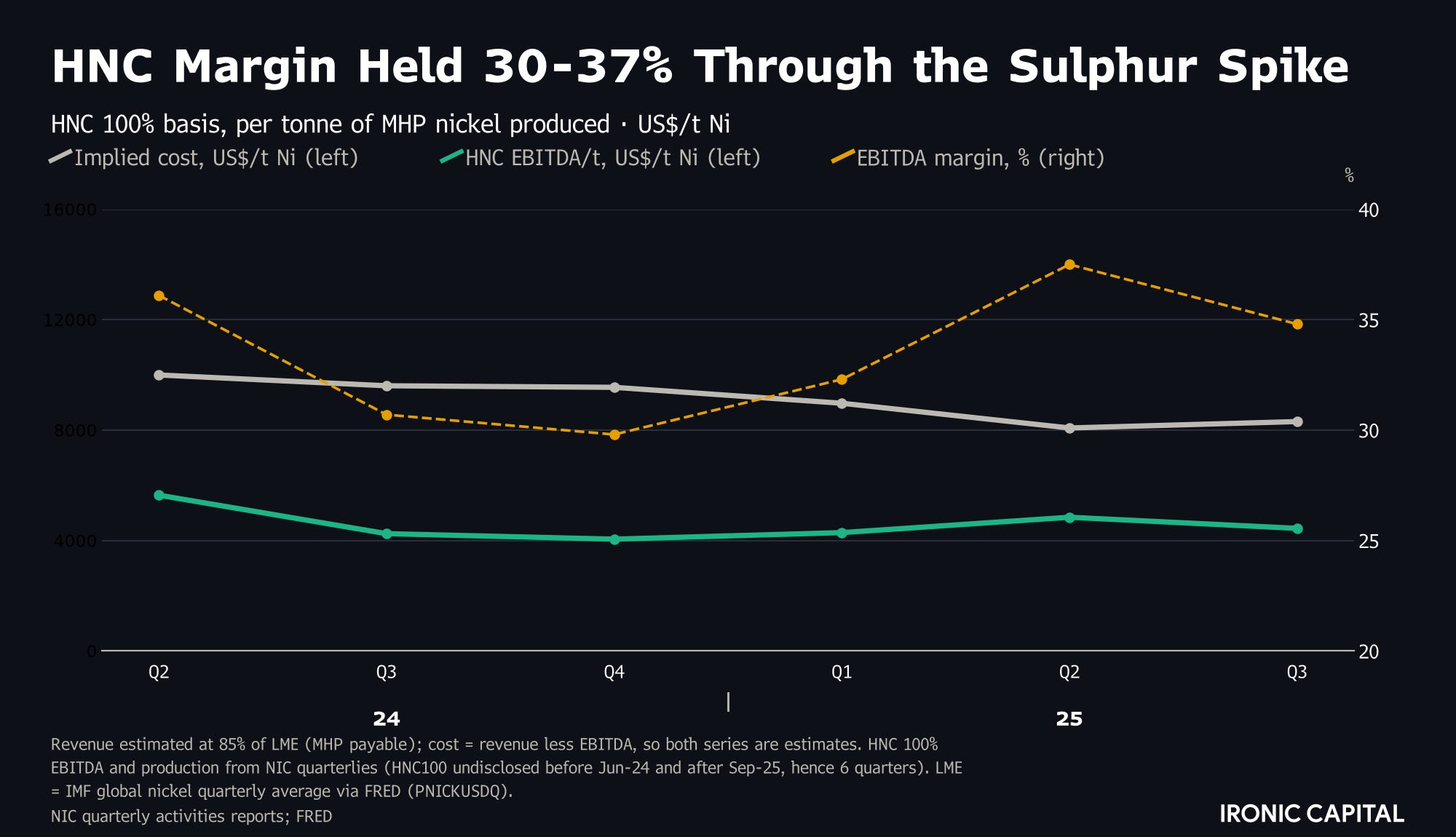
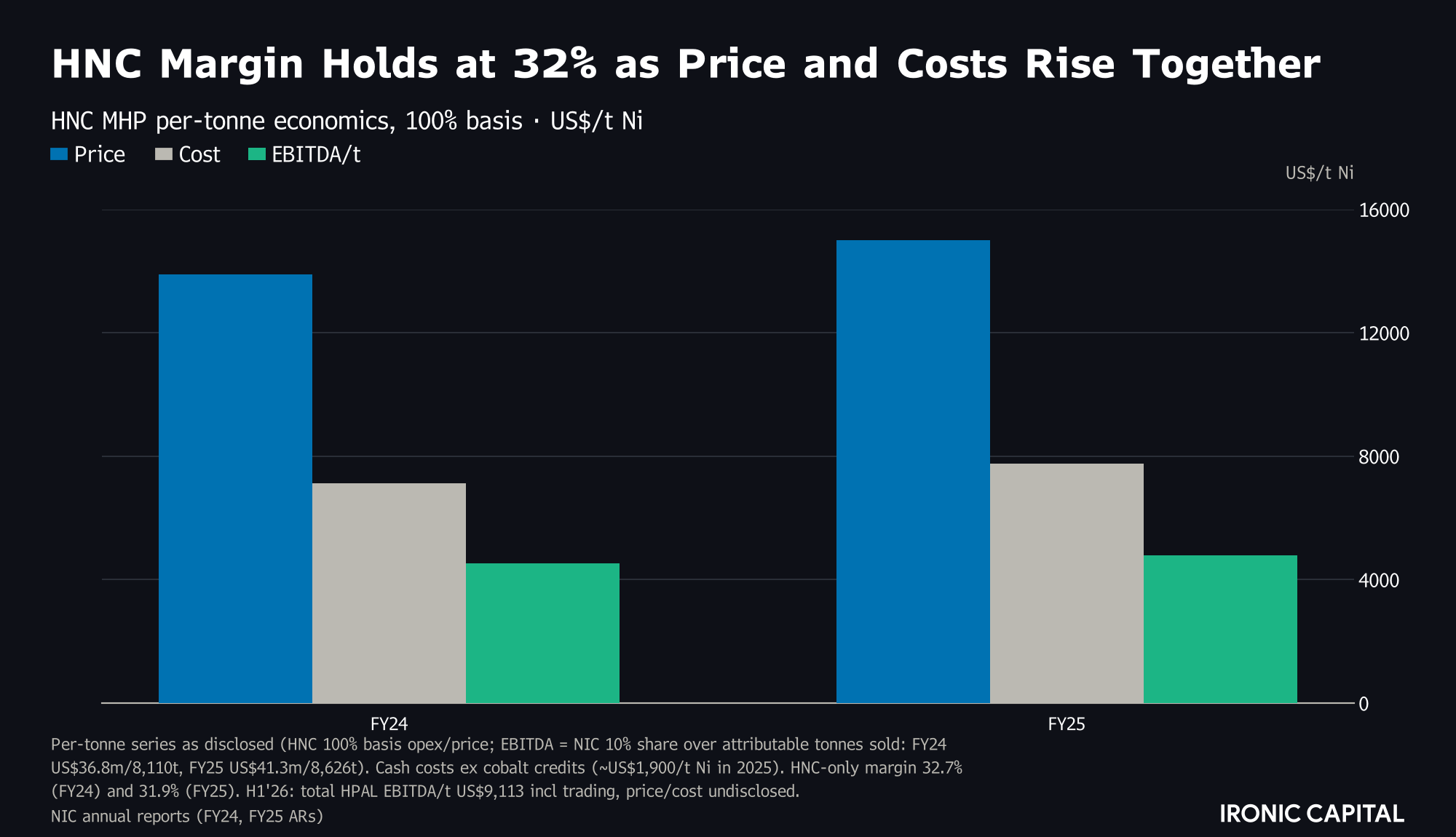
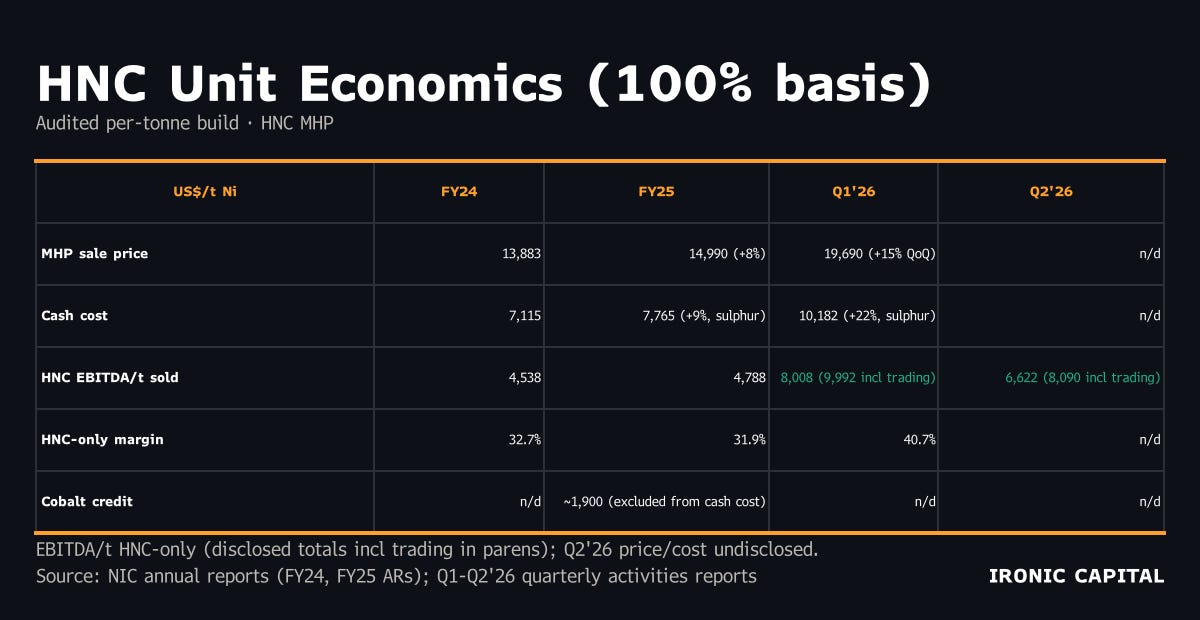
On the audited numbers the HNC-only margin is 32.7% (CY24) and 31.9% (CY25). My quarterly estimates run 30-37% across the six quarters with disclosed HNC EBITDA, so call it low-30s through the cycle.
2026 YTD Figures have been even better than 2025 due to MHP prices. 2026 Q2 EBITDA deteriorated slightly due to Hormuz, where NIC disclosed on the Mar-22 call that Sulfur costs are up 22%.
There’s some concern on margin currently as Sulfur availability is hurting the industry due to the Hormuz Situation. I would bet the Chinese are able to source these at reasonable prices given the scale and relationships involved. HNC gets its sulfur through Tsingshan.
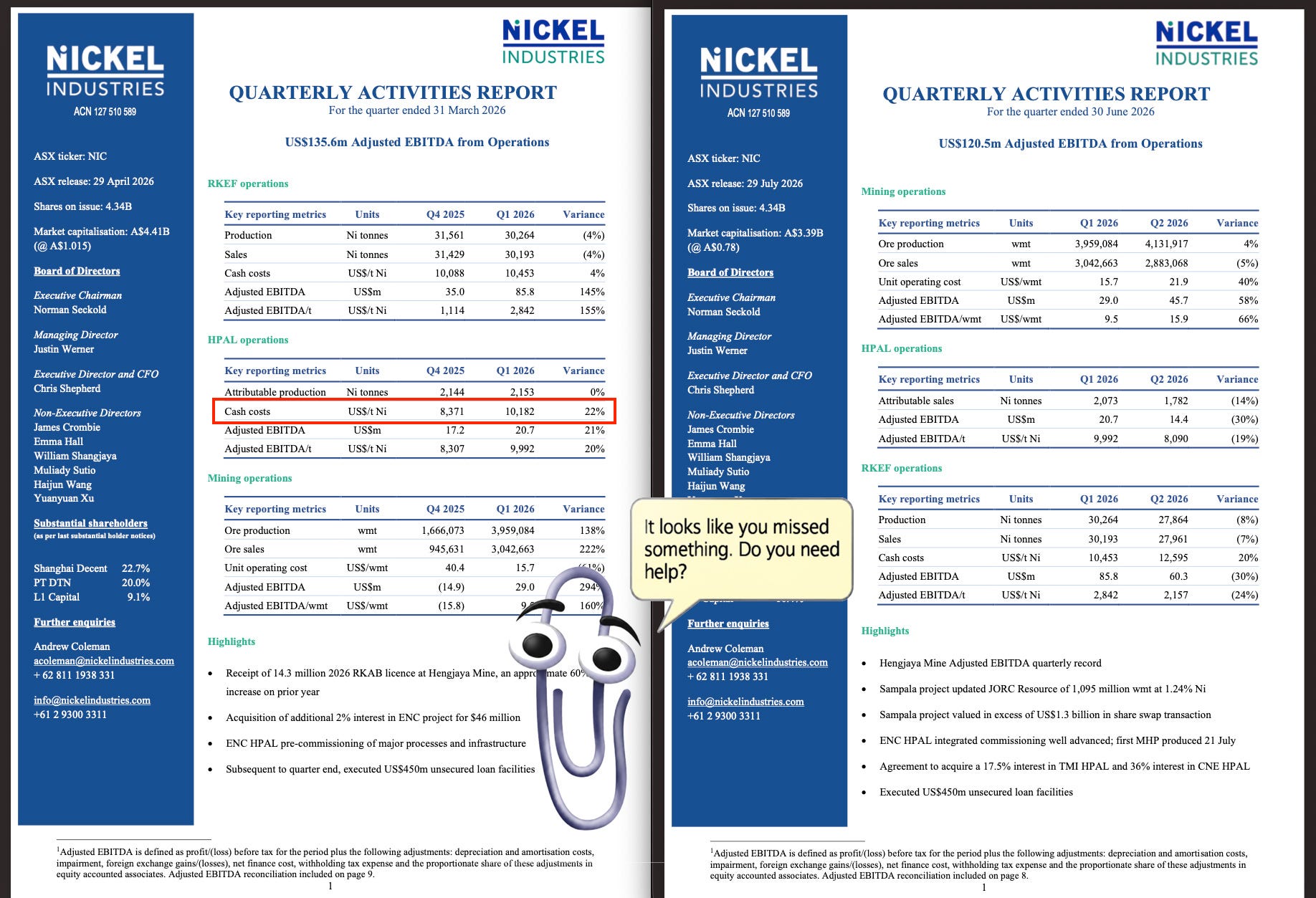
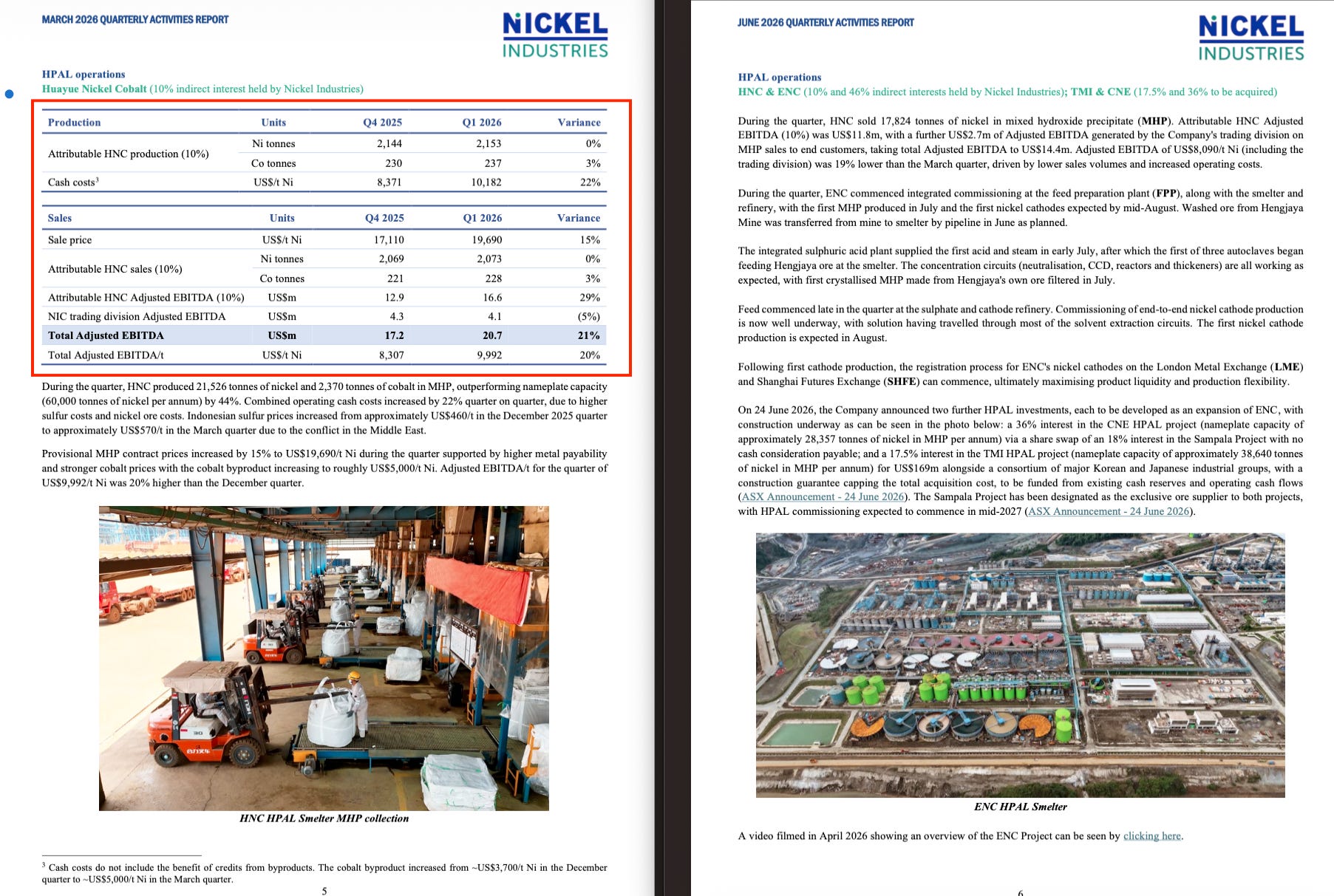
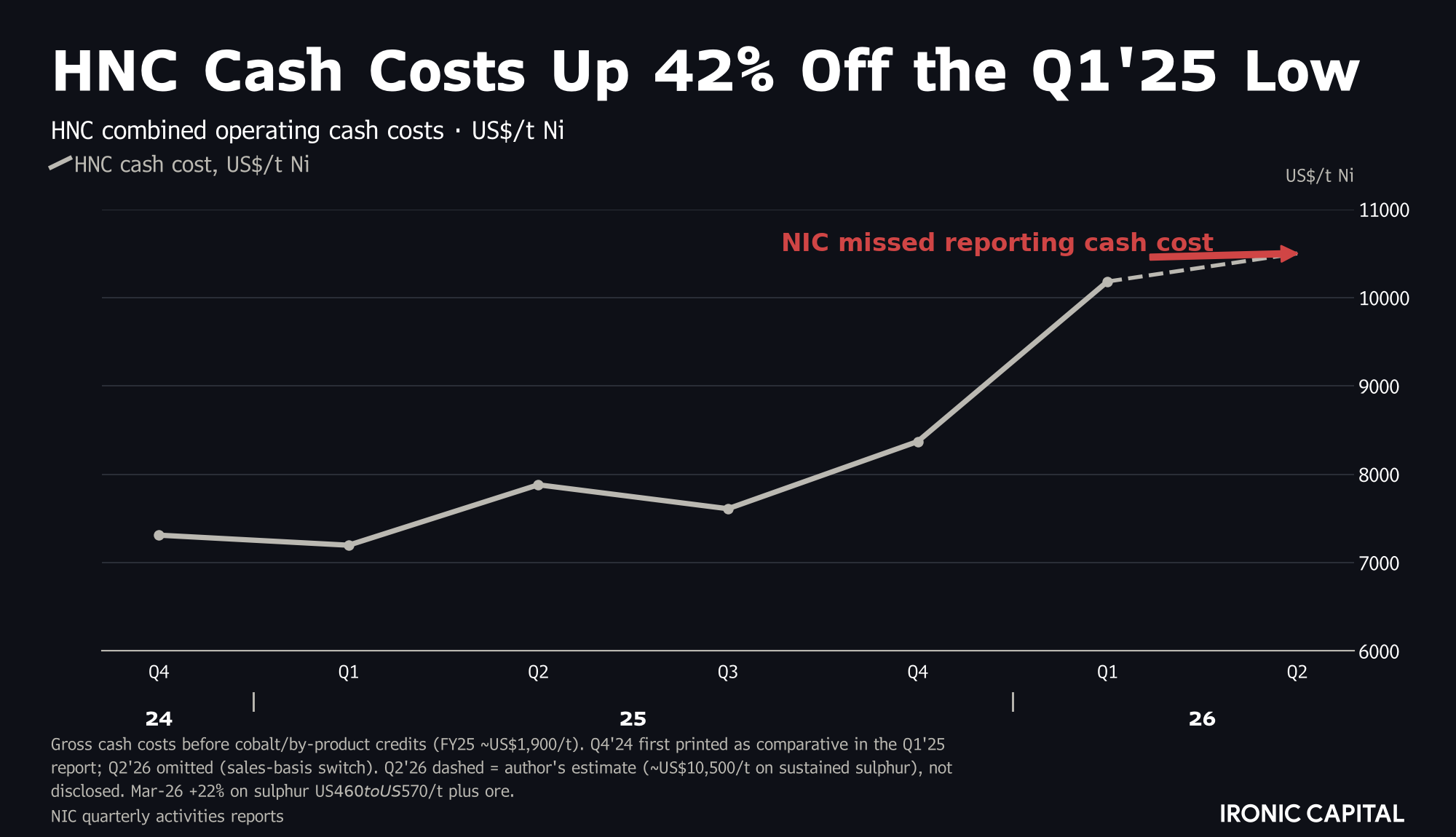
NIC has an inconsistent history on how they disclose the full HNC unit economics. I wish the intent looked like they ‘forgot’, but they have actively removed key lines in the standard front page table and removed the full detail breakdown table on HTAL in their routine quarterly reporting. This omission is repeated in the 2026 Half Year Report.
This is shameful stuff. Understanding the cash cost right now is especially important as it is skyrocketing. The overall margins still look good due to the trading profit and seemingly strong prices achieved for the MHP. This alone is a reason the stock doesn’t deserve to rally.
Let me present to you the problem. The 2026-06 Quarterly and Half Year Report disposed of the standard HPAL operations table. NIC, what are you doing here? This does not look innocent. This would be funnier if NIC wasn’t a ~$3B company.
A $13/month subscription to ChatGPT would do a better job than the NIC IR team.
ENC
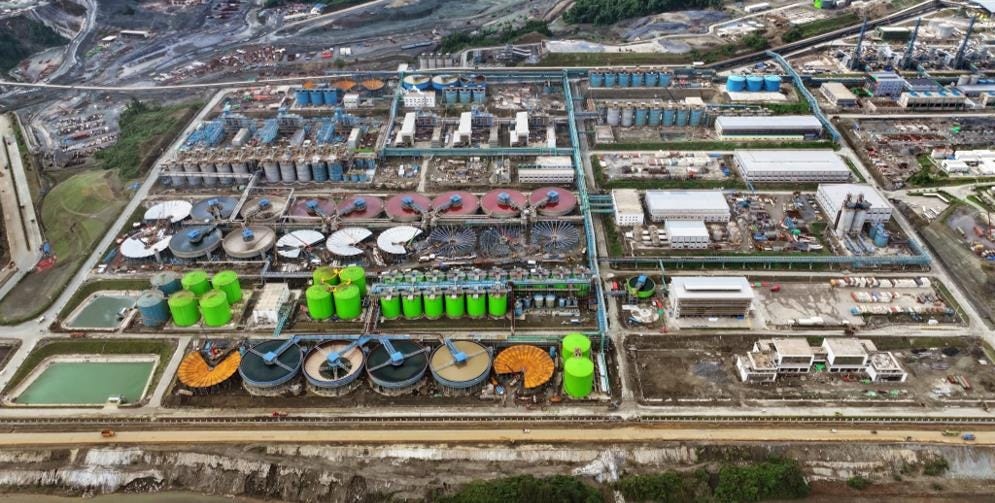
ENC (Excelsior Nickel Cobalt, at IMIP, NIC 46%), is currently in late stage commissioning and is the flagship asset of NIC. The nameplate is 72ktpa MHP.
The plant build has progressed well, however commissioning hit a water availability issue in Q2 2026. Given the success of HNC, it’s implied that ENC should ramp up beyond nameplate.
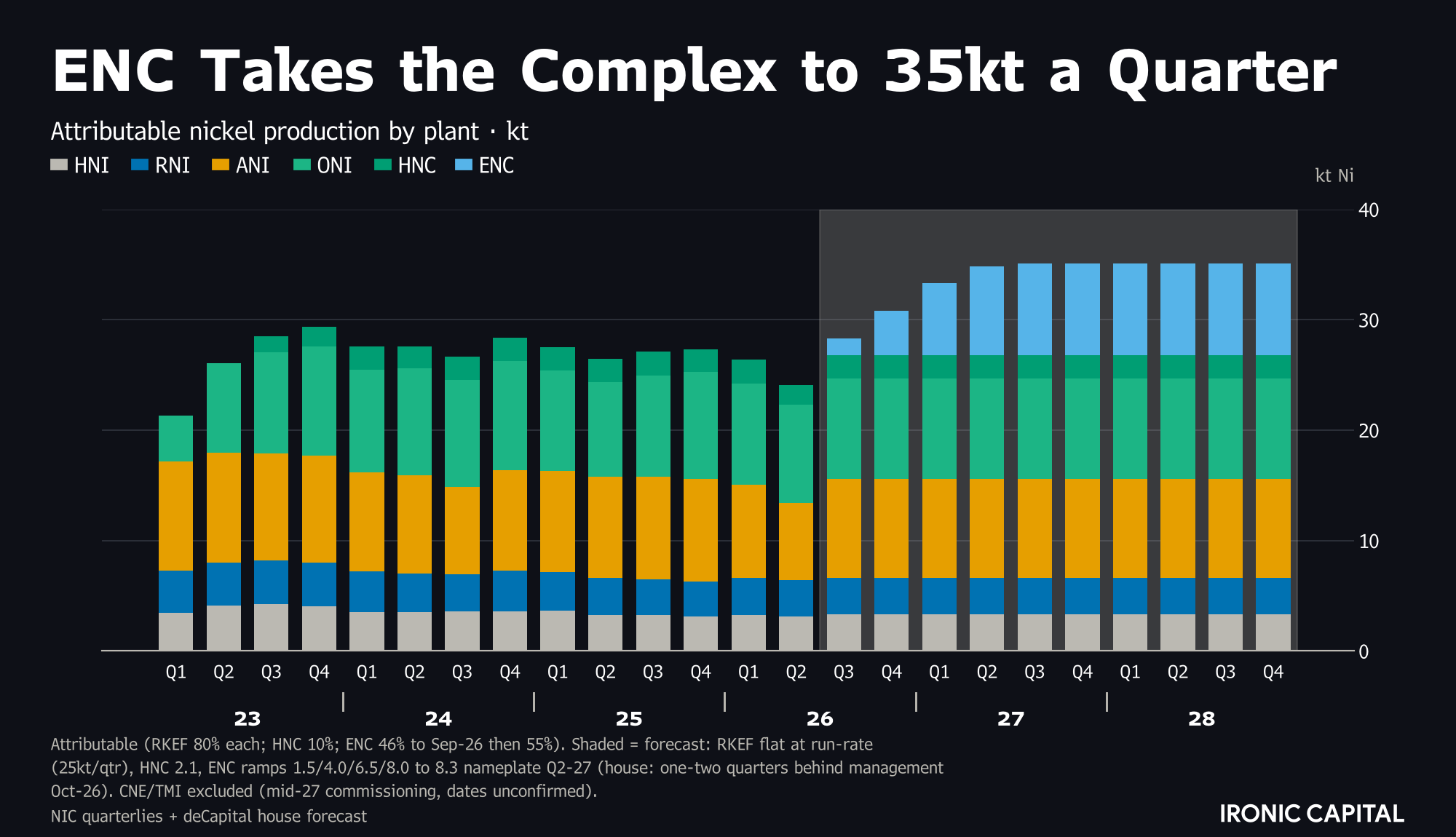
ENC differs as it has a much more complicated flow sheet than earlier HPALs, such that it can produce four Class-1 Nickel products (MHP, nickel sulphate, cobalt sulphate, Nickel cathode). HPAL typically ends at MHP stage. The unit economics aren’t available yet, but will be interesting to follow. There’s a few more levers to pull in the product mix. The Cathode should get 100% of LME Nickel vs the MHP Product which is getting ca 85-90%.
Sphere (Korean) is a 10% partner of ENC. Sphere is a Korean high quality aerospace metals company, and is known for being an accredited special metal alloy provider to SpaceX. Sphere has a pretty promotional website and sales pitch, but they offtake Cathode from the project, lending credibility to the quality27.
Feed at nameplate is ~1Mt of limonite a month, staged from Hengjaya stockpiles first, then will get the supply from Sampala’s as mining gets underway.
Commissioning is ahead of the original CY27 schedule but throttled today by water availability due to drought conditions in Indonesia. The current drought is El Niño related, typically occurring every 3-7 years. This is likely to extend the dry season through January 2027.
First MHP flowed 21-Jul-26
First cathode 11-Aug-26
Nameplate was guided for Oct-26 on the 2026-Q2 Earnings call
The water delay news came out in Sept ‘26
The share price barely reacted to the news of the ~3 month delay to the commissioning to nameplate. There’s barely enough interest in the name for the stock to react much to the newsflow, but this showed how little the market is pricing in ENC.
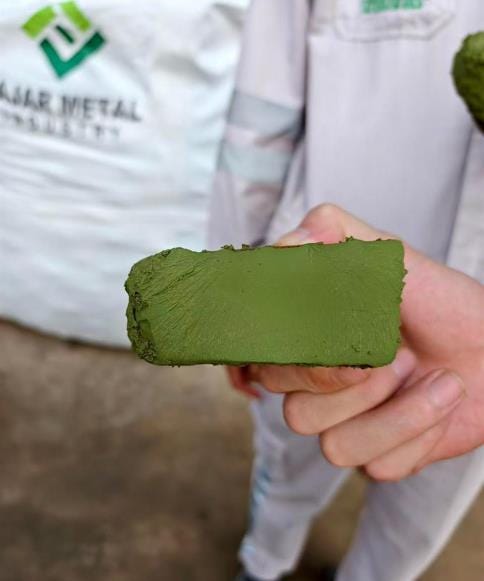
TMI HPAL
TMI (PT Teluk Metal Industry, at IMIP) is a recent equity purchase agreement from 2026-06-24 with payment due late Nov 2026. The deal is US$169 million for 17.5% interest. Other equity partners are a JP/KR Consortium including Hanwa & Sumber out of SG has 10%. Interestingly, all non-Chinese and Indonesian (for a change). TMI was originally built and owned under Tsingshan.
TMI is an Extension to ENC (above) which will also produce MHP. The build cost and timeline is Guaranteed by the Chinese builder, is already under construction and should be at 38.6ktpa Nickel nameplate by September 2027.
The works will include a slurry pipeline from Sampala. NIC is expected to be the exclusive provider of ore to TMI from Sampala.
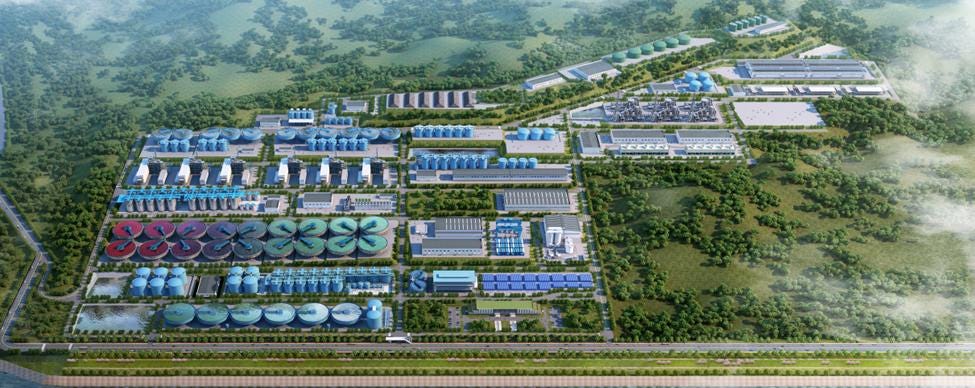
NIC hasn’t released any media of the plant and hasn’t described how the flow circuit works and the level of integration into ENC. We are missing a lot of information on TMI. I found a single image from Hanwa from the same announcement from their side. Can not see anything from IMIP or Tsingshan on the build.
Yes, Ironic Capital is providing more imagery of TMI than Nickel Industries. You’re Welcome.
CNE HPAL
CNE (Chengsheng New Energy, at IMIP) is another recent equity investment in HPAL. Announced the same day as TMI, 2026-06-24. NIC is purchasing 36% of CNE, financed through an asset swap of 18% of Sampala.
CNE is another extension of ENC and will also produce MHP. The nameplate is 28.3ktpa Nickel. Construction is already underway and commissioning due to start in mid 2027. Sampala also supplies CNE.
The CNE asset swap for the Sampala stake marks Sampala’s value at ~$1.3B, meaning NIC paid only $44M for the implied $241M value of NIC’s CNE Stake. Not bad.
That is literally all I can find out about from CNE online, including all IR releases from NIC. I can not even tell where the plant is or what it looks like. Lacking…
There’s one last nugget on TMI/CNE from the 2026-06 Quarterly call at 0:35:03, on the question from Cindy Huang:
Second question, at this stage, do you anticipate that you would increase investment or your interest in TMI and CNE going forward? Or any investment or working capital required to bring it up to nameplate towards the middle or second half of next year? Thank you.
…The 72.5% is held by the Korean and Japanese consortium, and obviously the 17.5% is Nickel Industries. That’s fixed. There’s no changes to TMI. We expect no further investment there. In the CNE HPAL, that’s an annual cash investment for us. We don’t expect any further investment.
I think when Justin did the presentation last month on the Sampala Project monetization, we believe we’re finished doing our investments into HPAL. Given that there are no further licenses being given out by the Indonesian government on HPAL. We’re very well and truly at the end of our investment cycle.
This last little nugget should be on the front of the IR deck. This will mean a little more once we go over the financing.
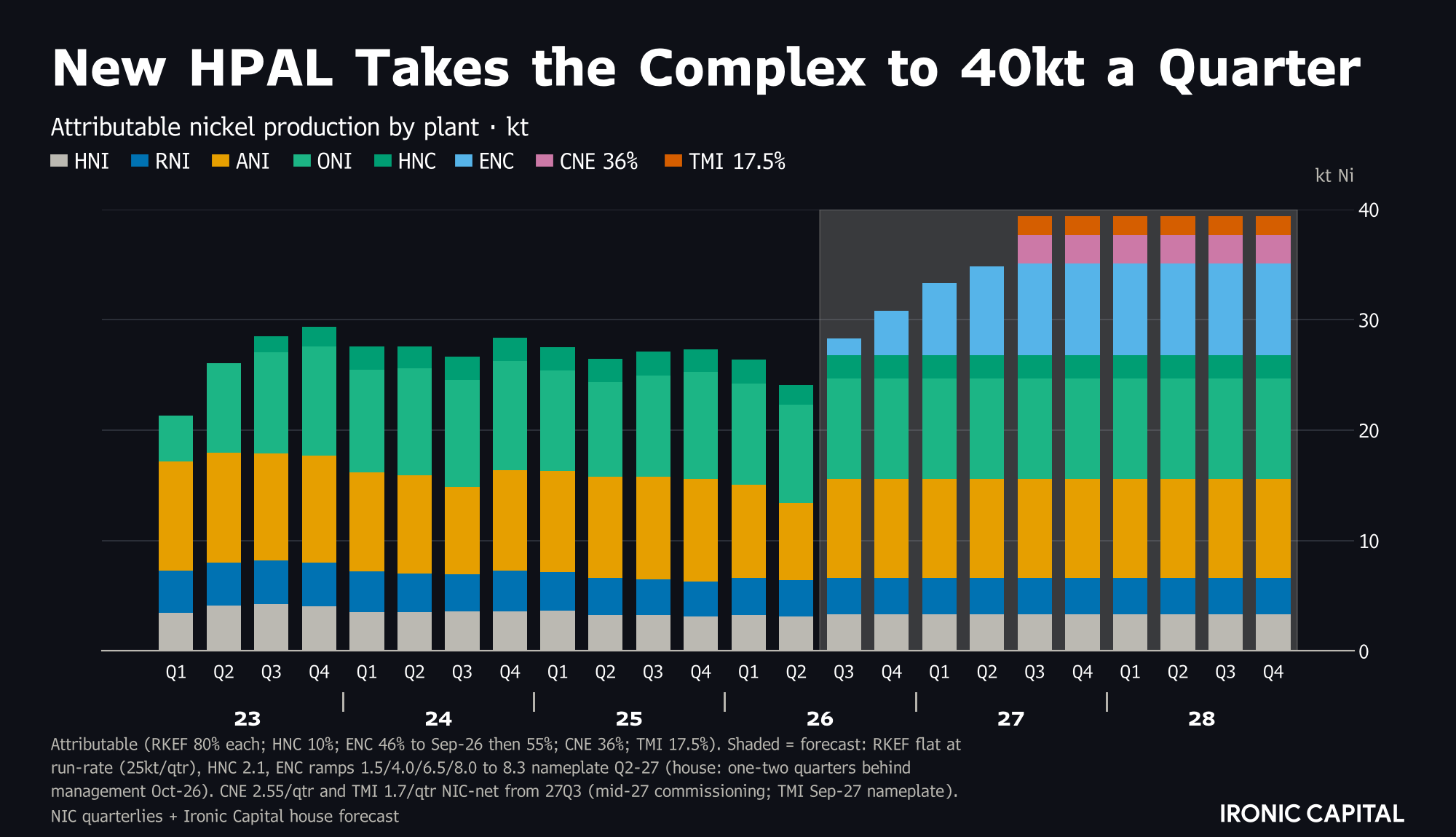
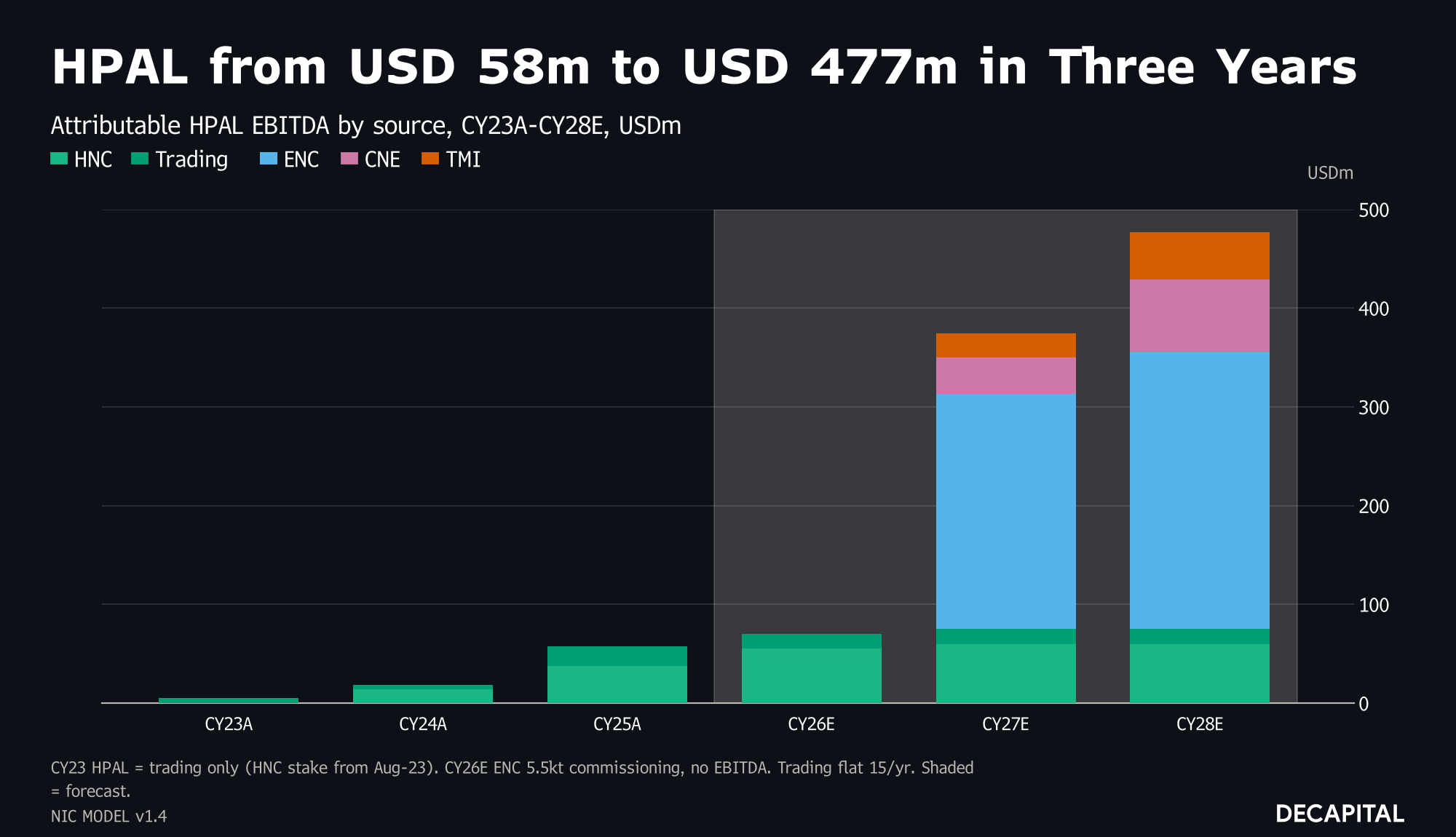
Ok, I think I’ve covered the operational assets enough… We will come back to the forward HPAL economics later.
Financing History and Capital Structure
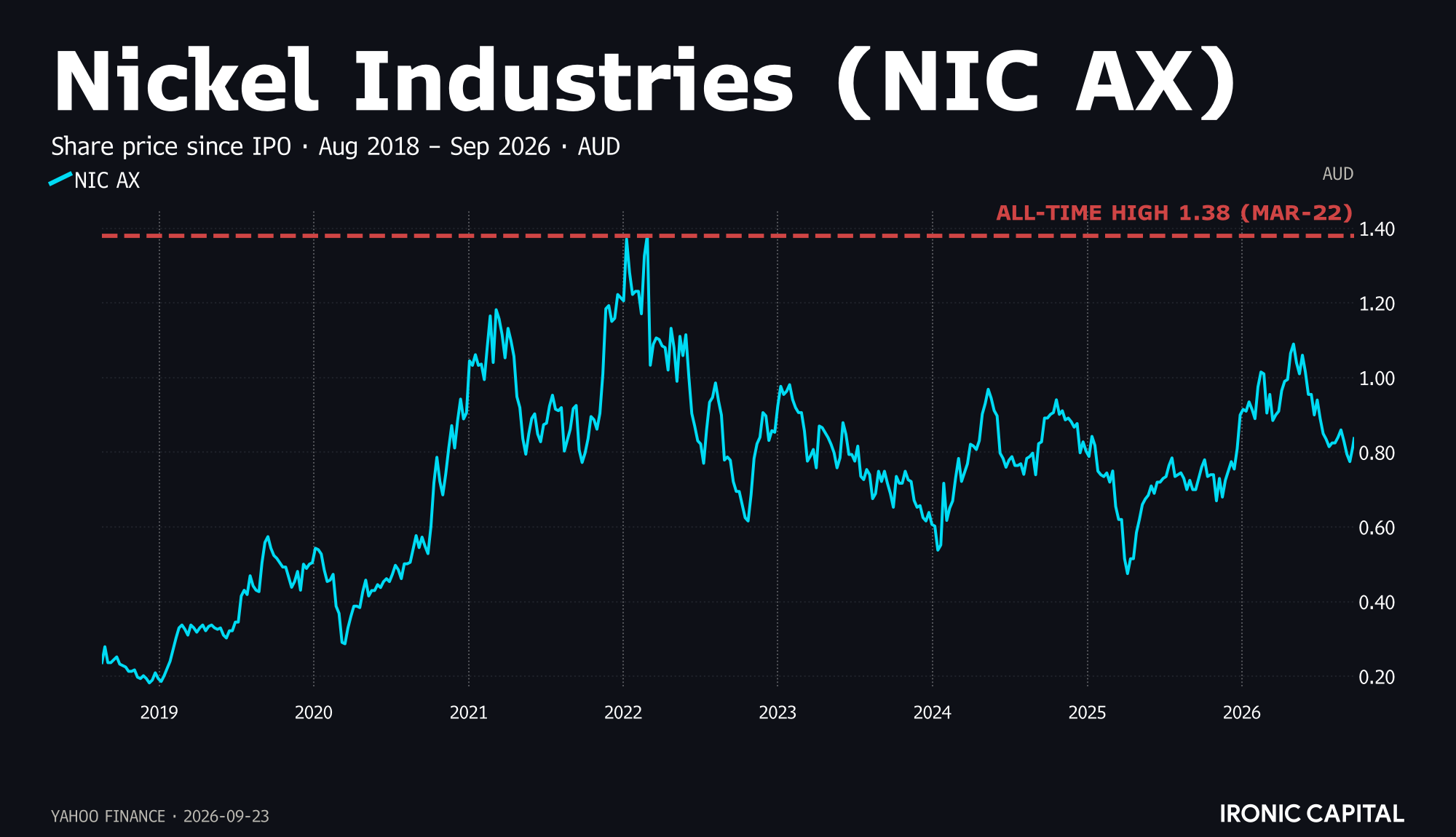
NIC went public in 2018 with 1.4B shares at A$0.35/sh and now has 4.3B shares at $0.80; A near tripling of units outstanding.
Dilution is a term that NIC shareholders are probably more familiar with than the ~20 employees inside Nickel Industries.
There’s a huge disregard for the equity and a raise at any price attitude visible. Bad for past holders, opportunity for future holders.
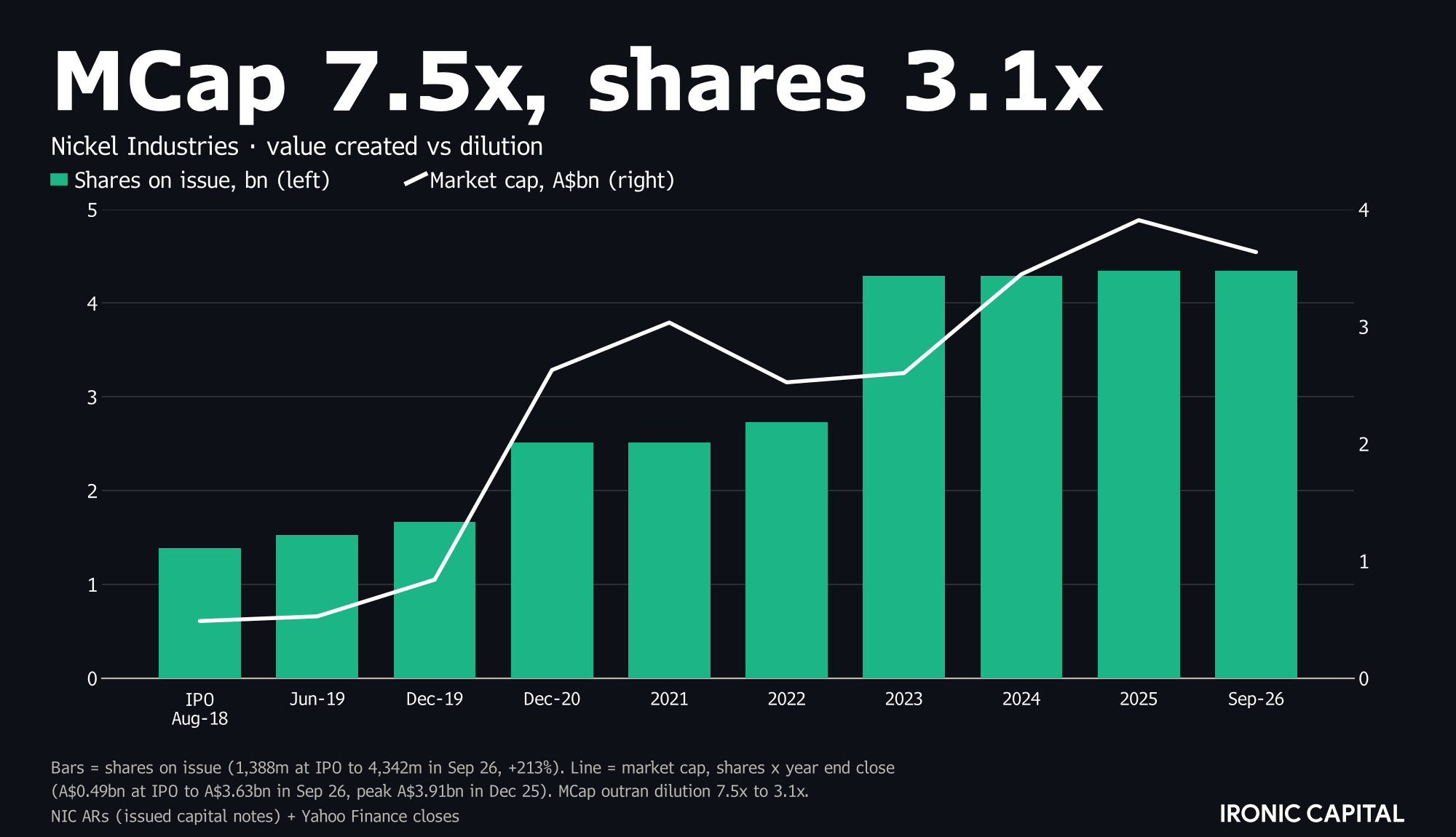
Not only that, the market cap is essentially flat since 2021 with the units up 50%. The share price has been within the same range since 2021 too.
Market cap is ca A$3.5B, with A$1.4B Net Debt, so EV is A$4.9B.
I’ve only come across NIC recently, but the impression I get is that they needed to adapt downstream to survive, and they just kept on going hard as the local Industrial Plants grew and grew. The speed of these transactions might end up being a good thing in time, but these came at significant cost to equity holders.
Basically no one has made money on this stock holding it the last 5 years and had to experience 3 large drawdowns to just breakeven.
That said, there was a certain survival necessity to some of these raises which I have some sympathy for. But the company has simply expanded faster than it has had appropriate financing for.
I’m guessing there’s a lot of burned former shareholders of this name. There has been a lot of mistrust for the company equity among a sea of better opportunities in the past 5 years. Cash sitting on the sidelines has drastically outperformed these boys playing around in 2nd world Nickel. Not going to be a name punters at the local pub are going to be talking about whilst their kids made money on literally everything else. Seriously, is there an equity class, theme, or collectable that has done this bad outside the renewables industry?
I’m getting ahead of myself here, but let’s be clear: The Dilution track record I’m about to go over is a disaster for anyone who holds this name, and for anyone wanting to get into this name. There are many reasons this stock trades cheaply, this is a key one, and presumably rightly so…
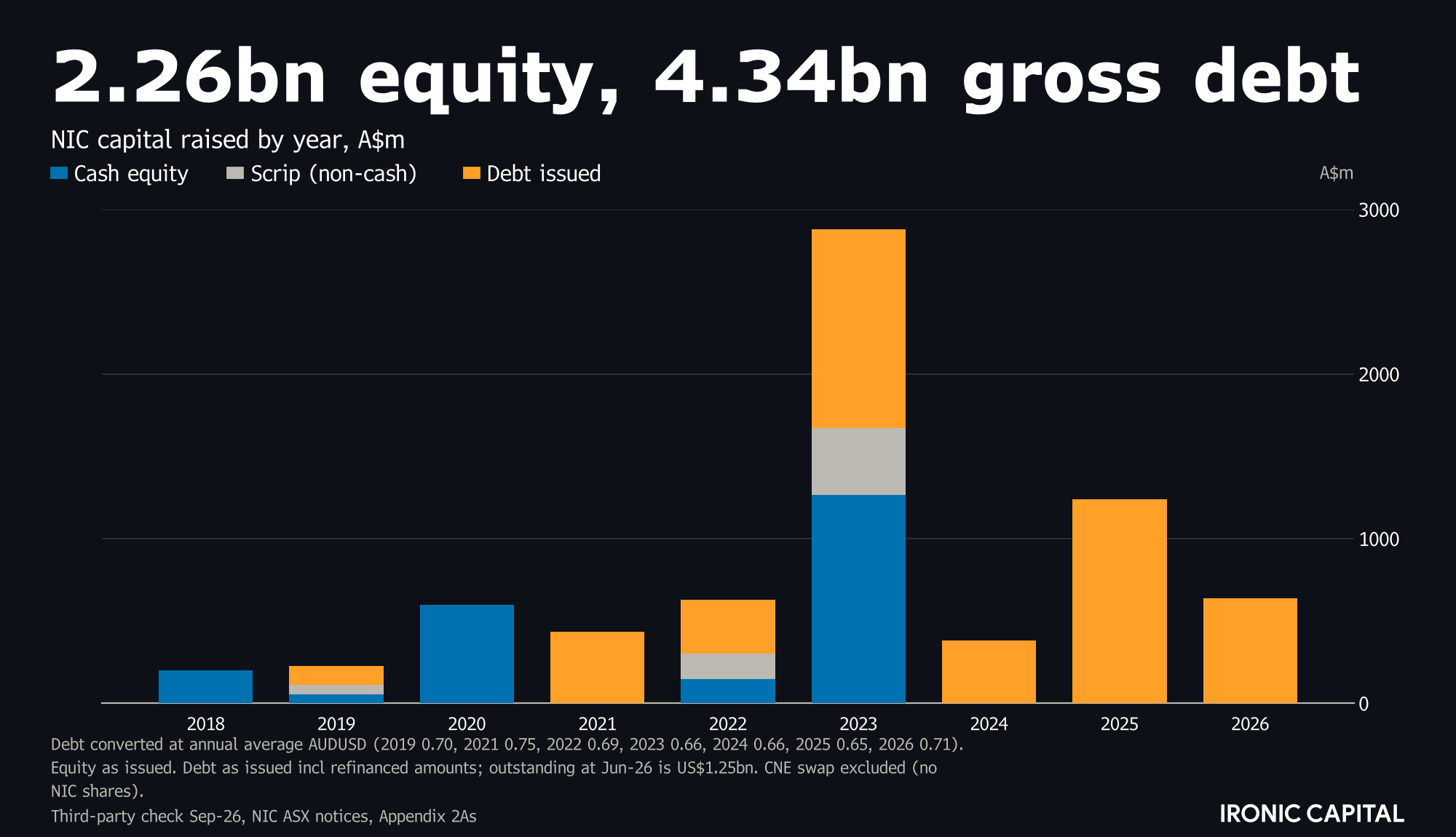
Capital Raises: A$2.3B Cash and A$600M Scrip
Aug-18: 571.4m @ A$0.35 = ~A$200m - HNI RKEF stake (IPO).
Jun-19: 137.5m @ A$0.40 = ~A$55m - RNI 60%.
Aug-19: ~140m scrip @ ~A$0.41 = US$40m - RNI 60% (with US$80m Decent debt + US$1.4m cash).
May-20: 462.6m @ A$0.50 = ~A$231m - HNI/RNI 60→80% (1-for-3.6 entitlement).
Dec-20: 386.9m @ A$0.94 = ~A$364m - ANI initial 30% (2-for-11 entitlement).
Feb-22: 108.1m @ A$1.37 = ~A$148m - institutional placement funding ONI initial 10% (cash).
May-22: 108.1m scrip @ A$1.37 = ~A$148m/US$106m - ONI 10→30% (non-cash placement to Shanghai Decent).
Jan-23: 259.1m @ A$1.02 = A$264.3m - institutional placement funding HNC, ONI and related options.
Mar-23: 33.9m @ A$1.02 = A$34.6m - SPP (oversubscribed).
Jul-23: 21.2m @ A$1.02 = ~A$21.6m/US$15m - Wanlu conditional placement.
Aug-23: 383.4m @ A$1.02 - HNC 381.4m (US$270m scrip) + Lochtenberg 2.0m (US$1.4m cash).
Sep-23: 857.0m @ A$1.10 = A$942.7m - United Tractors 19.99% strategic placement at a 27.2% premium.
Jun-26: 18% effective Sampala interest exchanged for a 36% effective CNE interest, transaction value US$241.6m each way (non-cash asset swap; Sampala interest originally acquired for an implied US$44.7m).
Debt Raises:
Aug-19: US$80m senior facility - RNI 60%.
Mar-21: US$175m 6.5% notes due Apr-24 - ANI 80% second cheque.
Sep-21: US$150m tap 6.5% - ANI.
Aug-22: US$225m 10% secured notes due Aug-25 - ONI.
May-23: US$400m 11.25% notes due Oct-28 - refi 2025 secured + 6.5s tender.
Oct-23: US$400m BNI facility (US$350m term + US$50m RCF) - ENC.
Mar-24: US$250m term loan - ENC.
Sep-25: US$800m 9% notes due 2030 - tender 11.25s, repay bank loans.
Apr-26: US$450m syndicate (US$350m term + US$100m revolver) - retires US$398m bank loans.
Or to summarise:
~A$2.9B of equity raised for a company trading at A$3.5B Market Cap. P/B around the 1.1-1.2x mark. A$1.4B of (net) debt outstanding. EV of A$4.9M.
IPO/raise to avoid the raw ore export ban and initial move into Downstream via HNI RKEF.
More RKEF, followed by a double down and a triple down on RKEF.
Since 2023 all the money is HPAL related, with HNC equity financed, ENC & TMI debt financed and CNE swapped from Samapla equity.
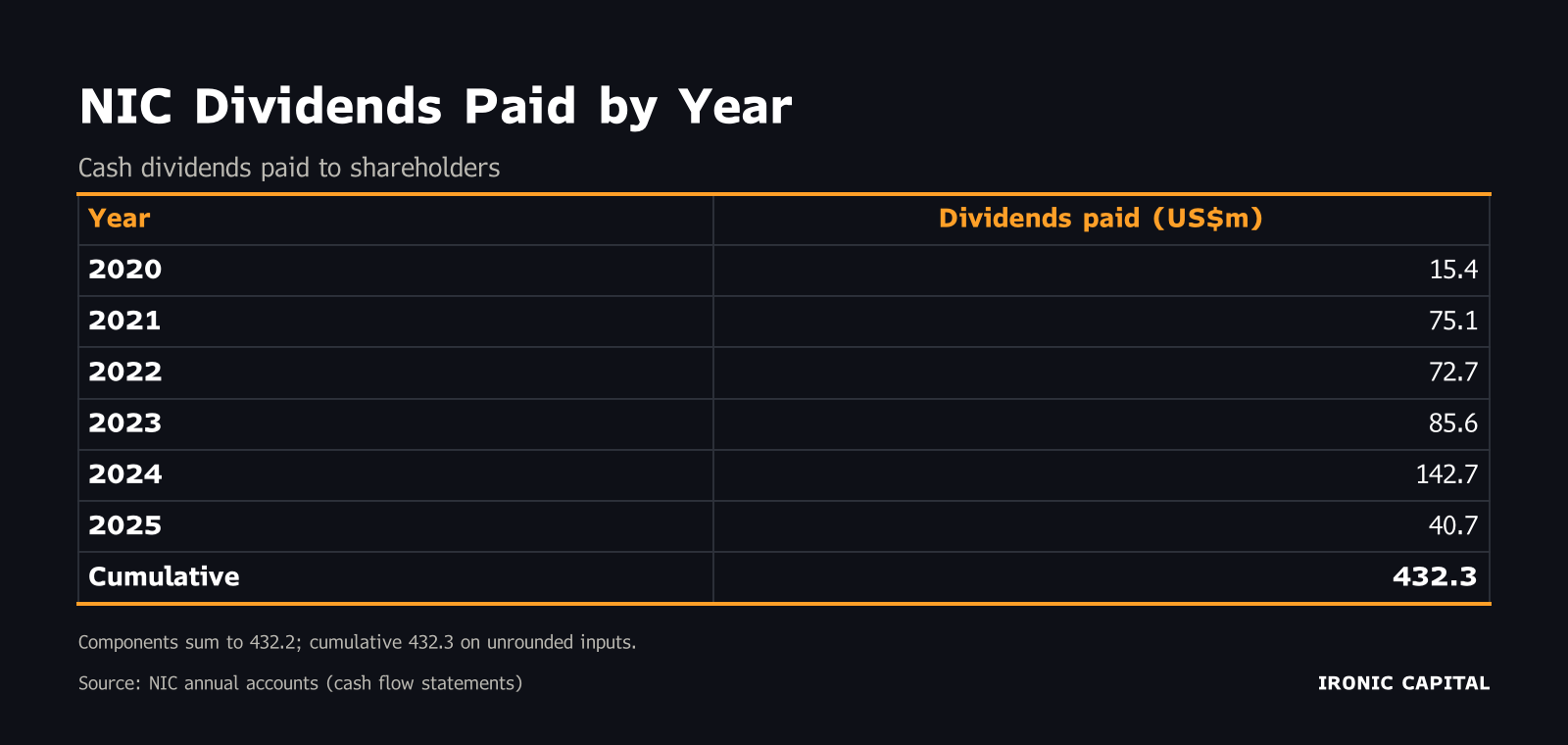
Meanwhile US$432M was paid out in dividends…
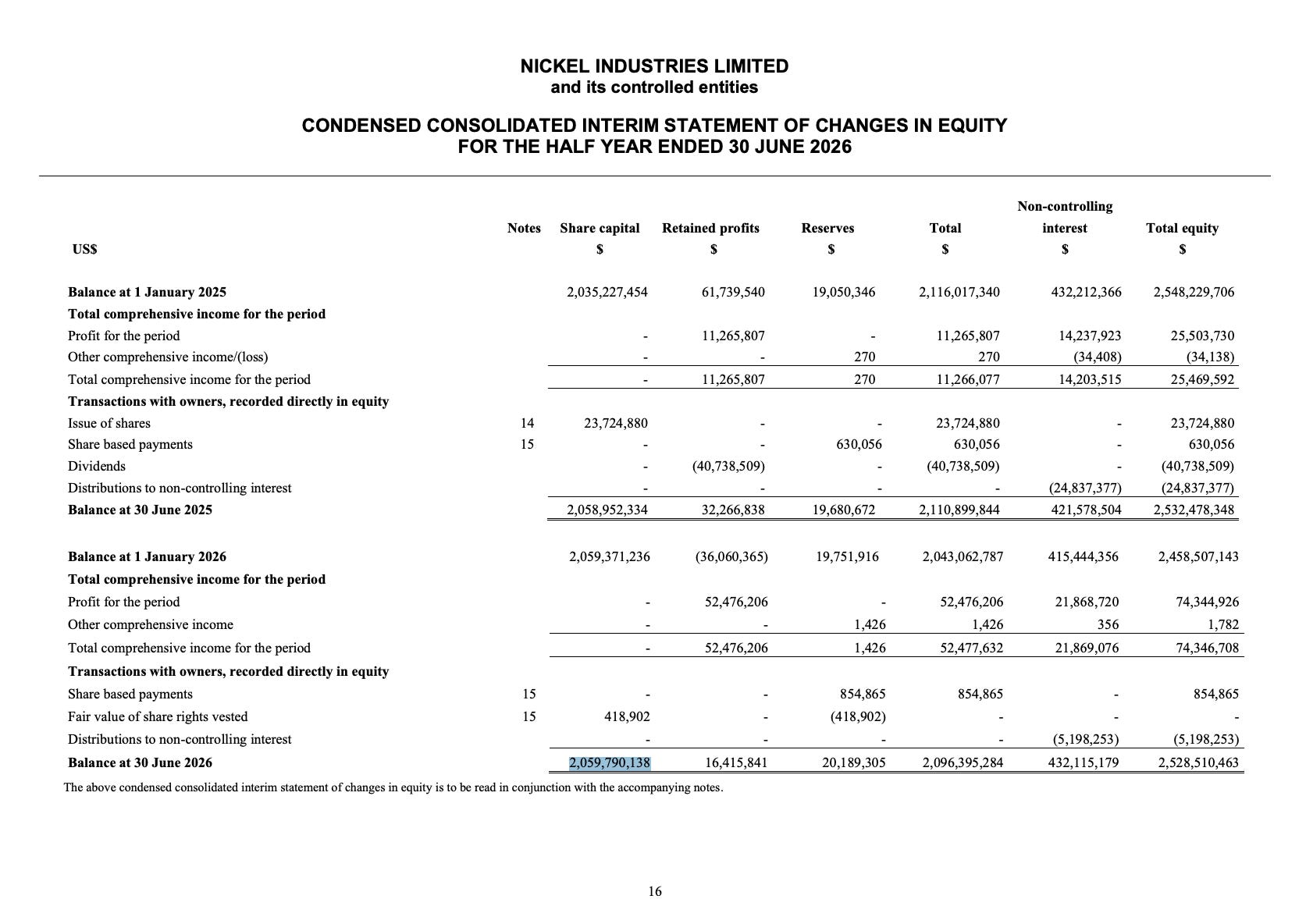
The ~US$2B of raises is carried on the books as share capital, and there’s just $16M of retained profits on the books. Shockingly low. (NIC currently trades at about 1.05x Book Value).
There’s been ~$432M of dividends paid out, which has been the primary mechanism of returns. All the cash got paid out as dividends right at the time they needed the capital. OK then. And we wonder why this trades cheaply?
Putting these together, we can see an average 21.8% cumulative return on equity since IPO. Not exactly a lot of return over 8 years for a globally significant Nickel producer. Oh that’s not a fair way to measure ROE? Take a look at the other mid and large cap miners on the ASX and let me know how many have book values so close to their market caps.
Again, this is a bad result for previous holders, but an opportunity for new holders. Let’s not do a Terry Smith and start using previous raises for a reason to sell the stock today. All these Indo’s, Chinese and Aussie’s have done all this work and the market is giving
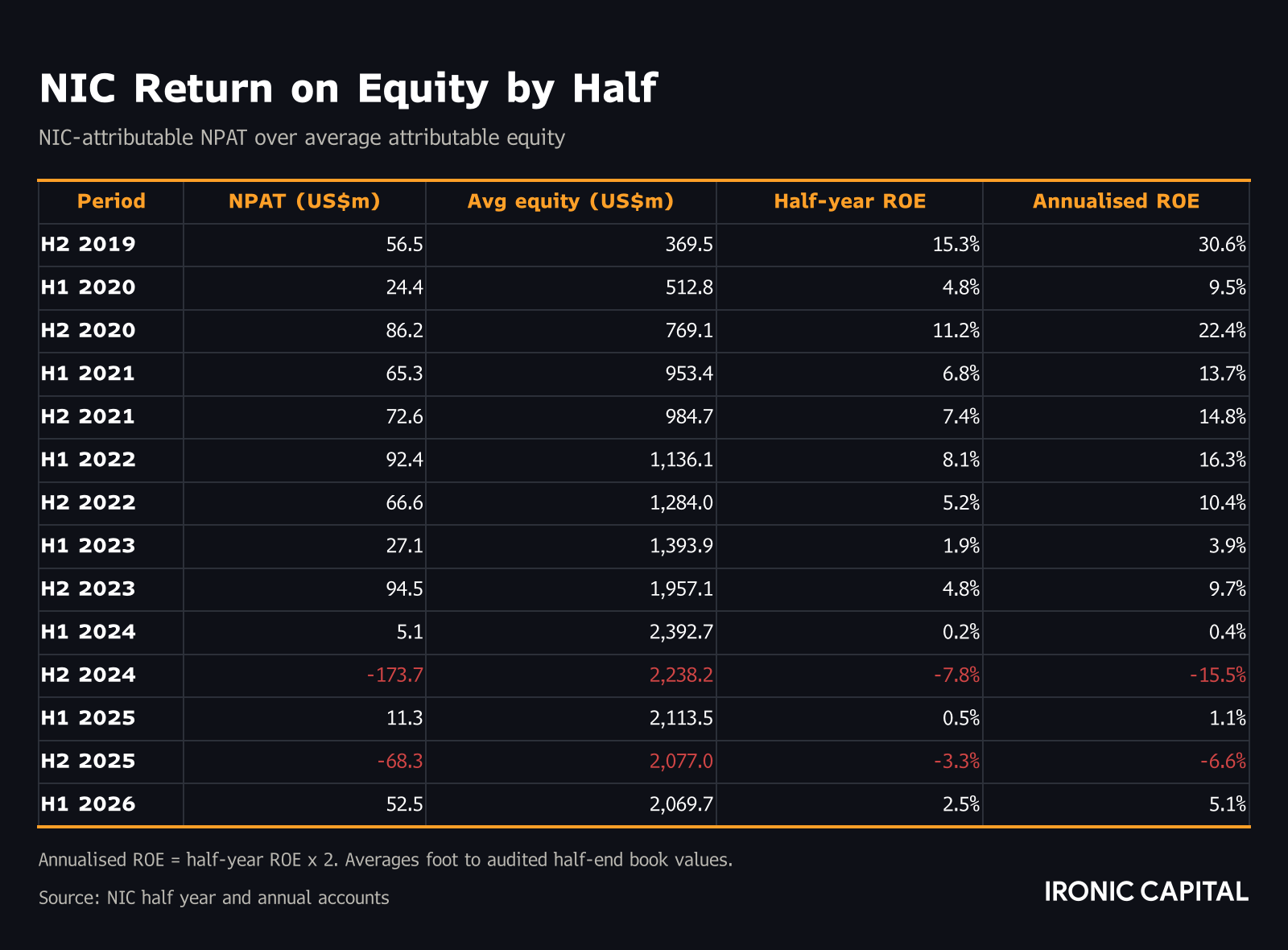
For a more conventional measure of ROE, we can take the H1 2026 $52M NPAT over the $2B equity and get a 2.5% return for the half. Noting that of course Nickel prices played a huge part in this result and not just the dilution. That said, ROE’s in 2023 onwards would be much more reasonable (10%+) if the book didn’t double. C’mon boys. Better hope those HPAL bets pay off…
It has to be said that the company has shifted to fully debt financing in the past few years. Hopefully we have turned a corner in level of net raises. Current debt outstanding is US$1.2B and it isn’t due for refinancing until 2030.
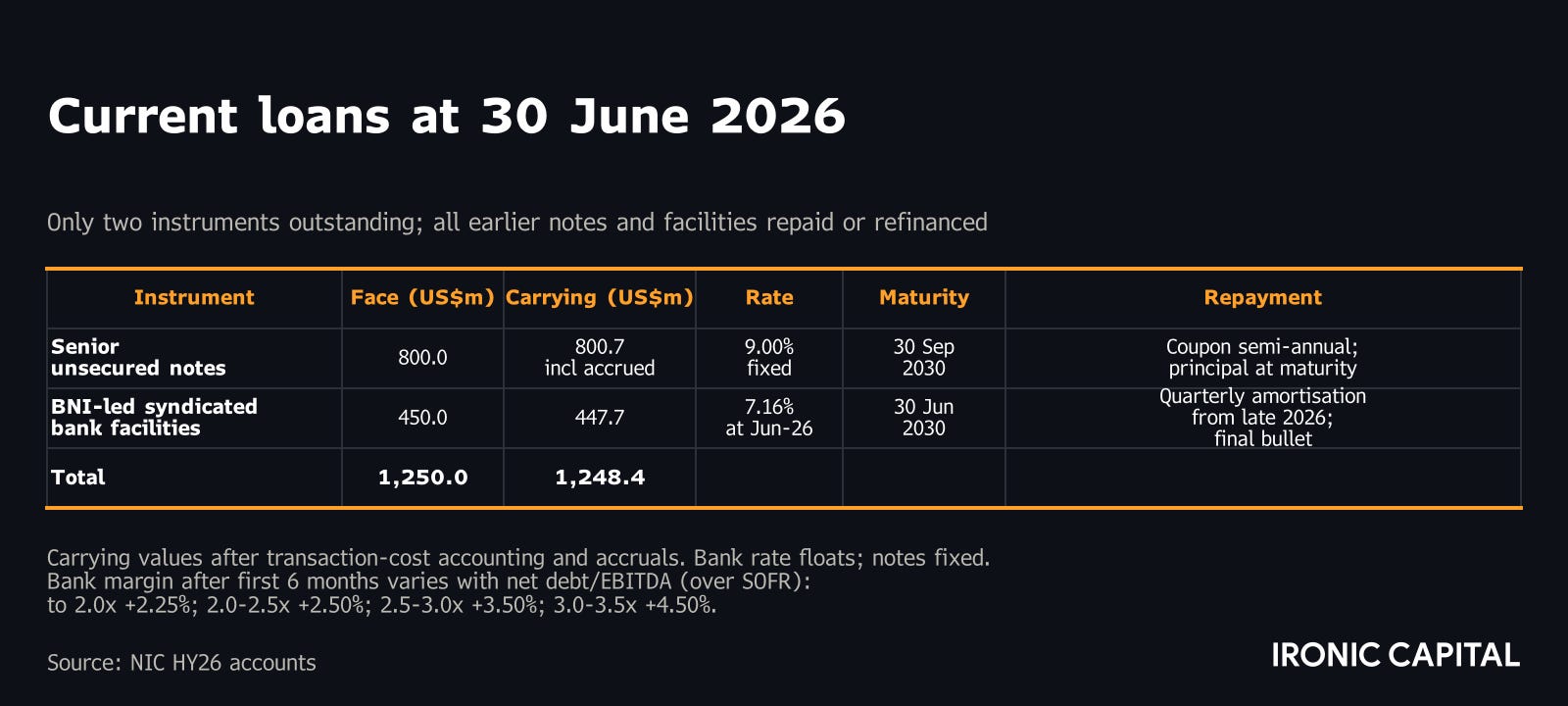
Financing costs are significant, talking ca US$100M interest expense a year and another US$80M/yr in repayments. There will also be an additional US$169M for the TMI Equity payment in ca Nov-2026.
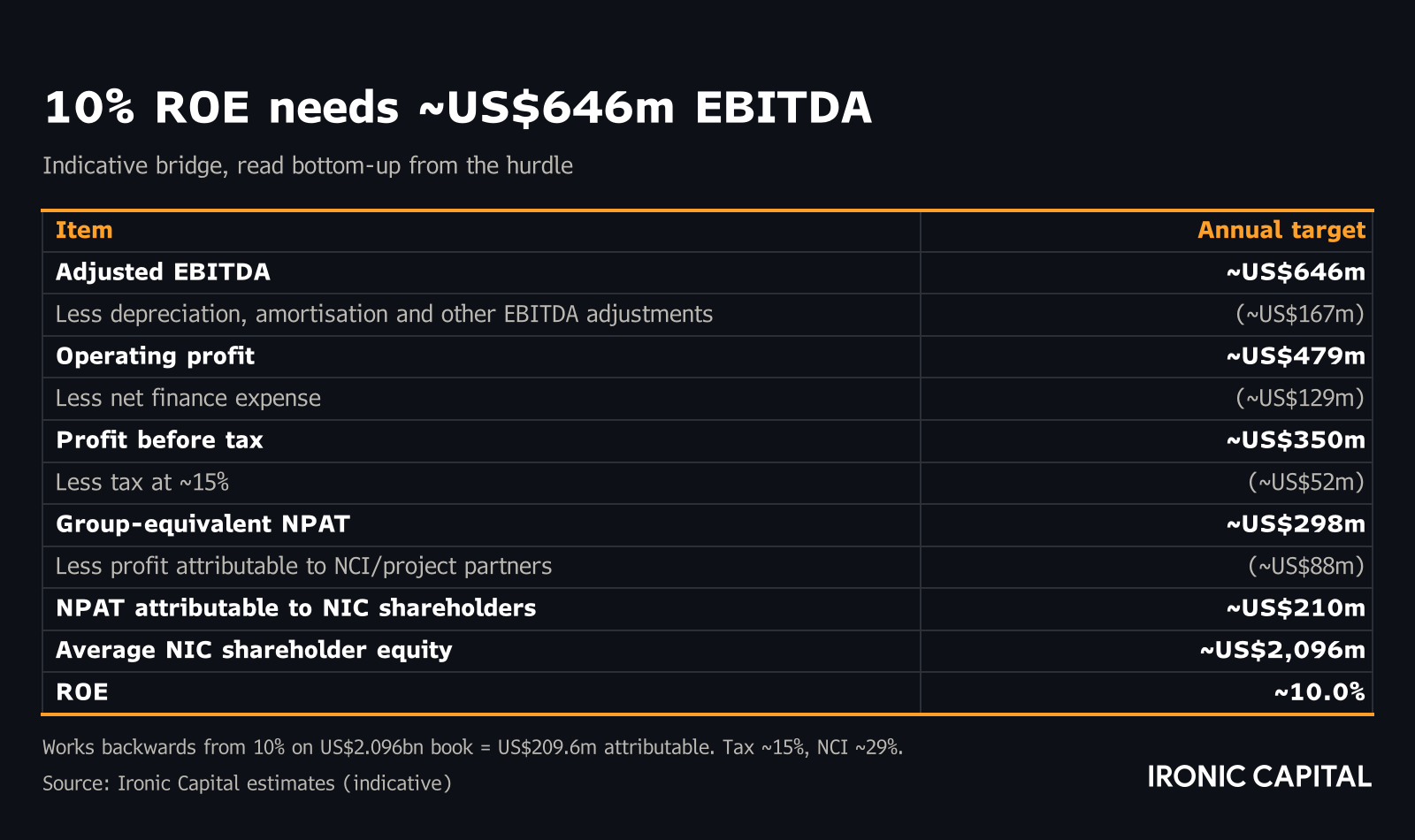
Working backwards, for a 10% ROE hurdle rate, we need to see US$210M NPAT annually. For NIC this is approximately $650M EBITDA assuming a 15% tax rate, or closer to $700M EBITDA at a 25% tax rate.
15% tax rate seems about right given the facilities currently have sweet-heart tax holidays from the indonesian government, the Pillar Two OECD 15% min global tax and the tax rates disclosed in recent reporting.
Sum of the Parts Earnings Expectations
Looking forward, the ENC ramp is central to the NIC earnings story and there is expectations of a huge uptick in earnings coming in the near future.
CY27 is a big year for NIC. We have ENC, Sampala, TMI and CNE all going into production. CY28 I model all these assets in steady state production and available the full year.
Short of some local disaster or large shock to the business, NIC is at an exciting point where all the build out is nearly done28 and the assets can be left to cashflow.
As always in commodities, you live and die with the commodity price. In the case of owning some of the best Tier-1 Nickel assets globally, any disaster/widespread problem that affects the area and causes production losses29 will have some shock-absorbing impact on the underlying commodity price.
ENC’s near the end of its commissioning period, and these plants are now nth of a kind and can ramp up fast. (There’s also the likely ability for it to ramp over nameplate which isn’t priced in anywhere). TMI and CNE I’d say the same thing for, just with lower equity shares. Sampala is free dig as soon as the pre-works are ready.
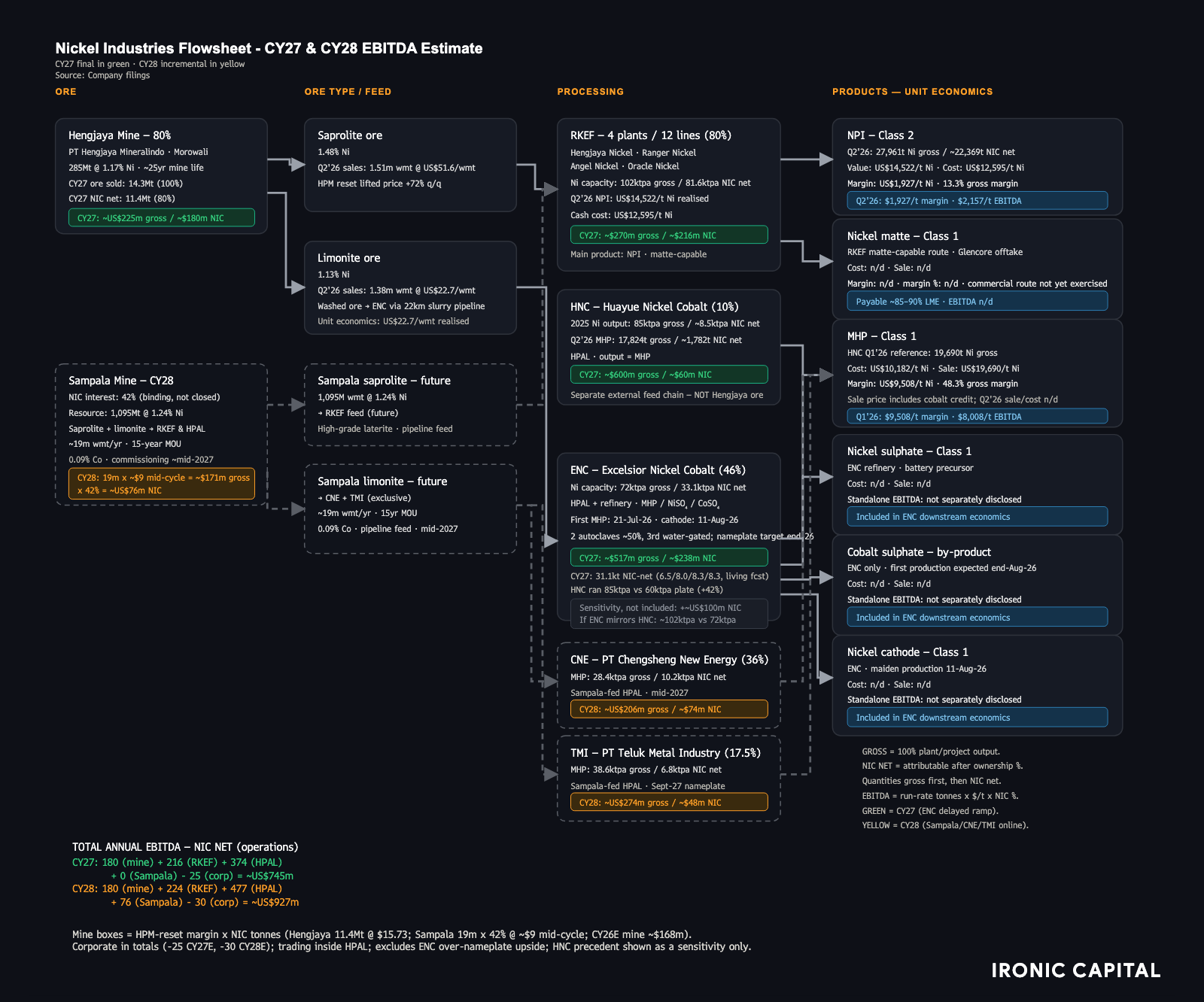
I have CY27 EBITDA of ~US$745M and CY28 EBITDA of ~US$927M.
I have a one page map of all the asset’s earnings contributions and when they each turn on. CY27 incremental earnings in green and CY28 incremental earnings in yellow.
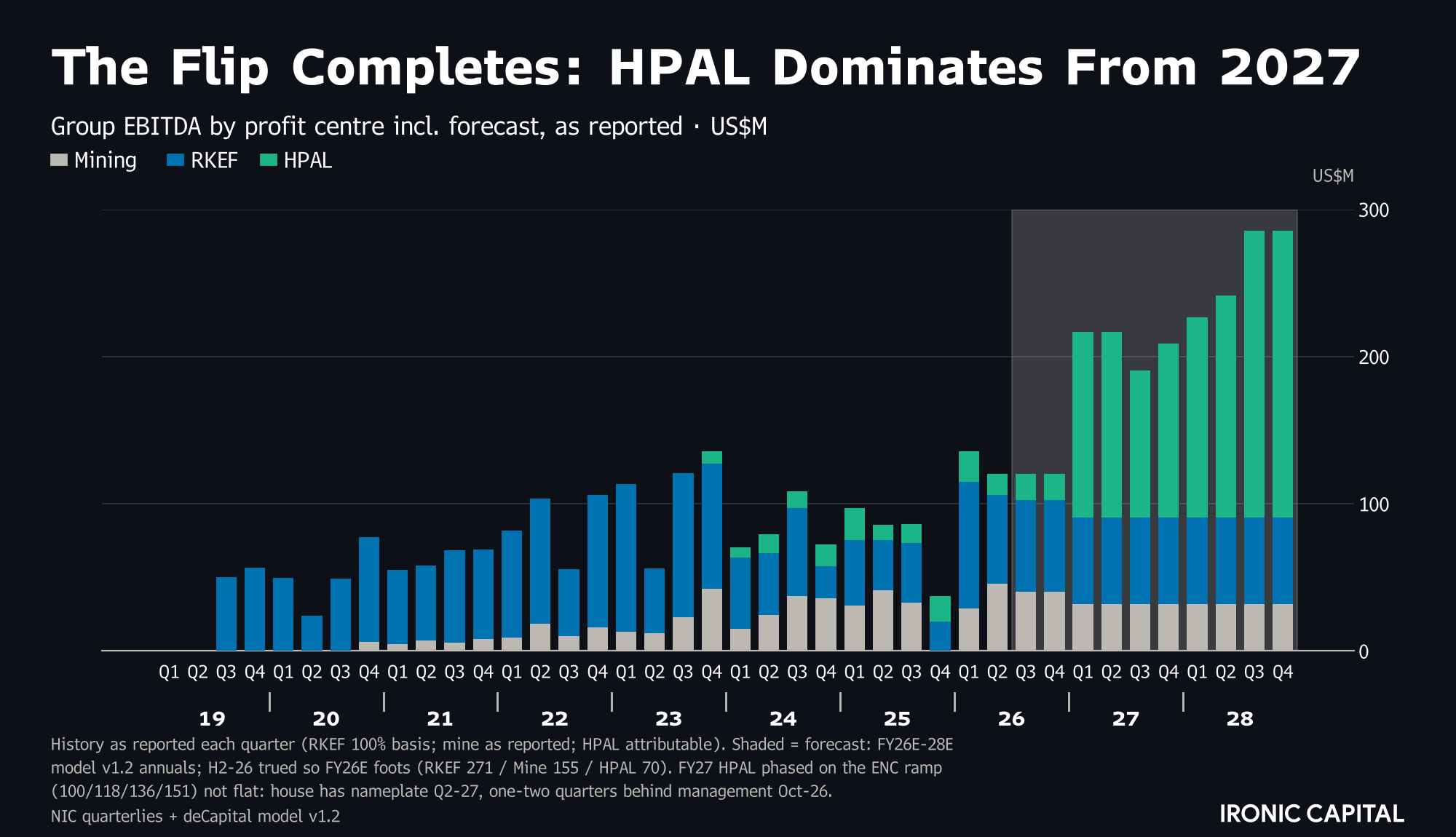
This cashflow profile illustrated on the below earnings forecast chart. I’m really going against my own principles here presenting a chart with such a strong hockey stick upwards, but I believe it.
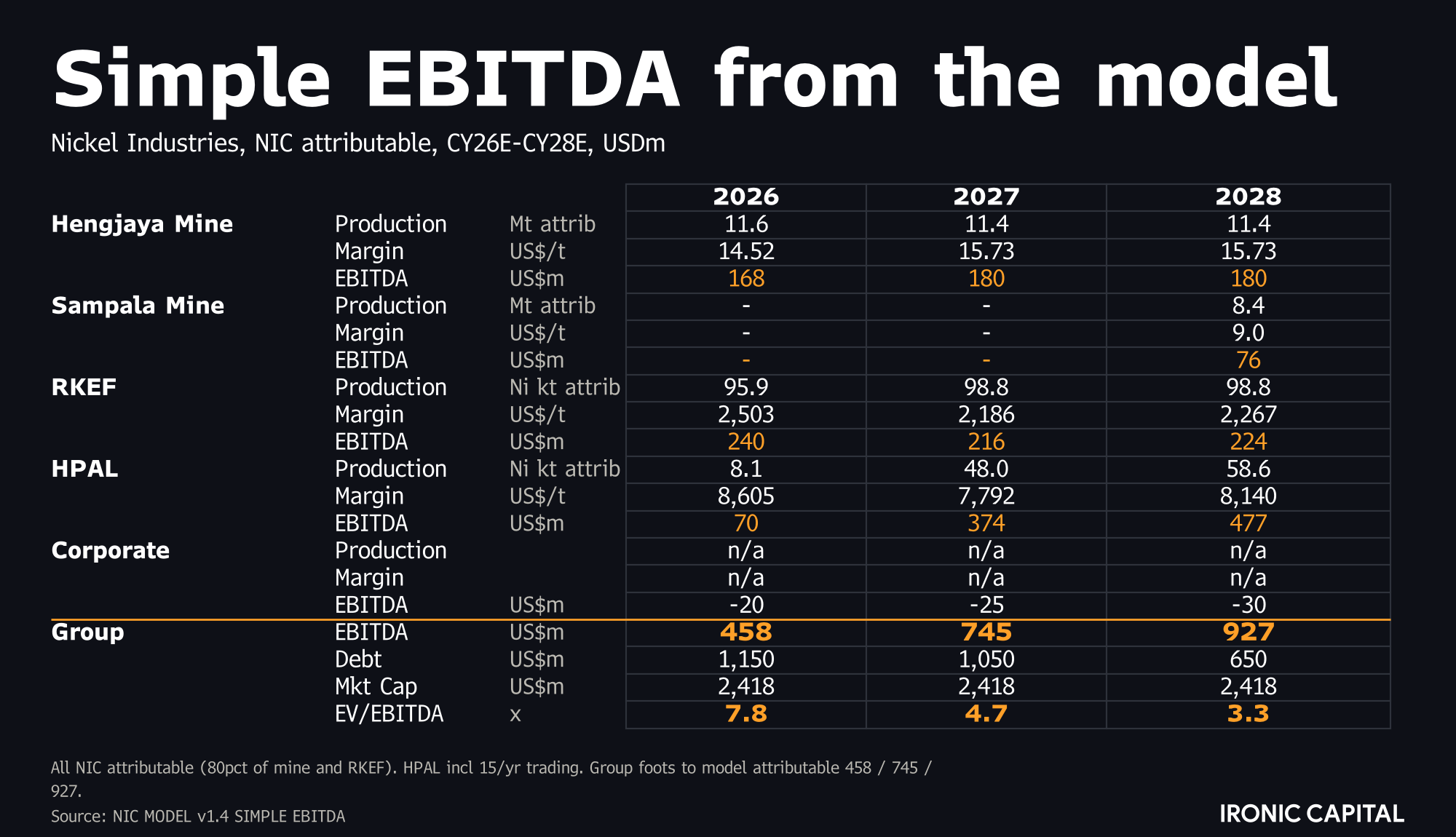
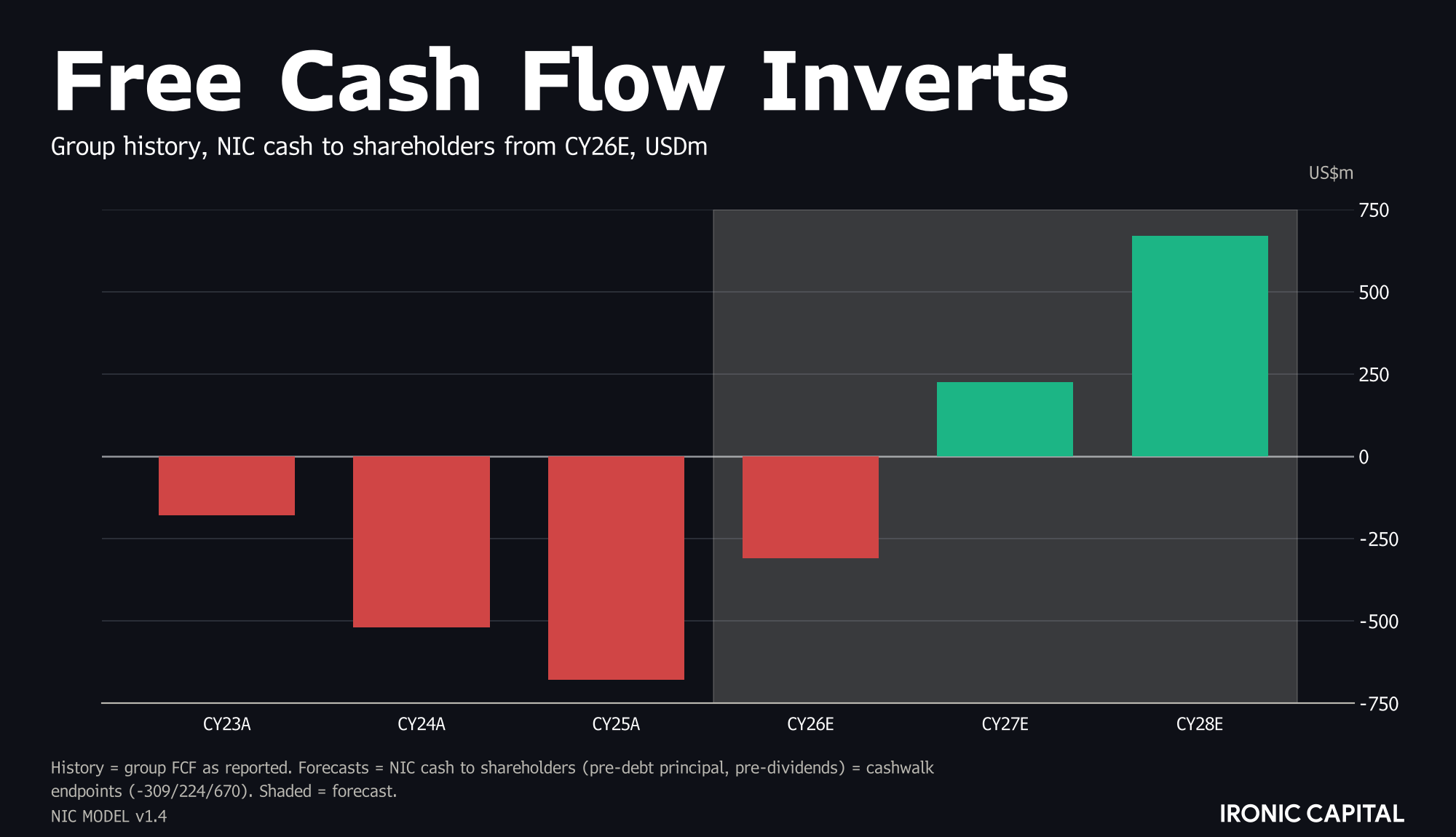
Finally, my model30 obviously adjusts for depreciation and interest expenses, taxes and capex to get FCF. The near term FCF is significant, ca A$1.1B or A$0.25/sh through 2028. $0.07 in CY27 and $0.18 in CY28.
Given these assets should have long tails, 2029 onwards “should” look similar to 2028, and we should get half our cash back in under 3 years.
Here is what my model has and my waterfalls:
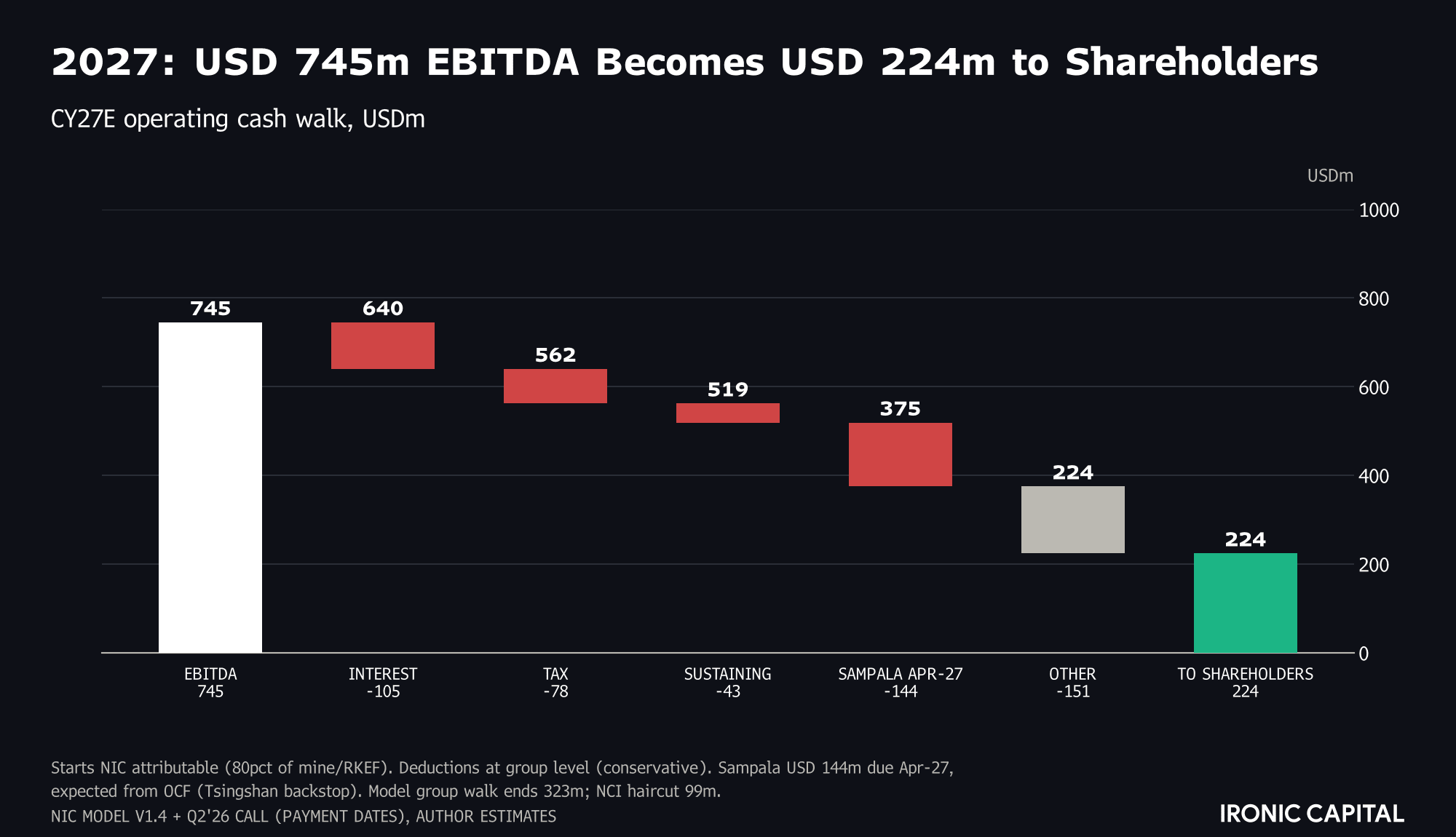
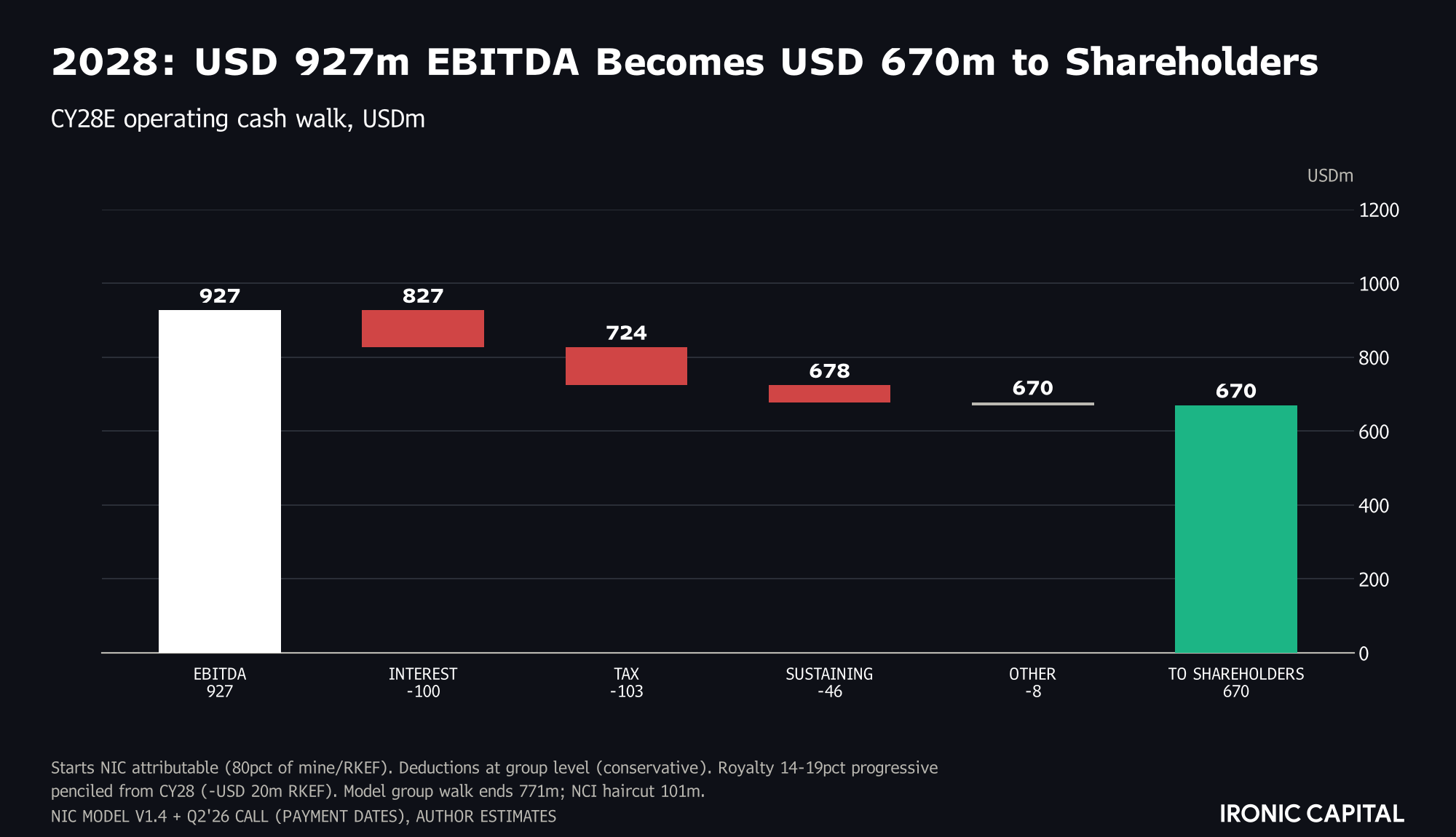
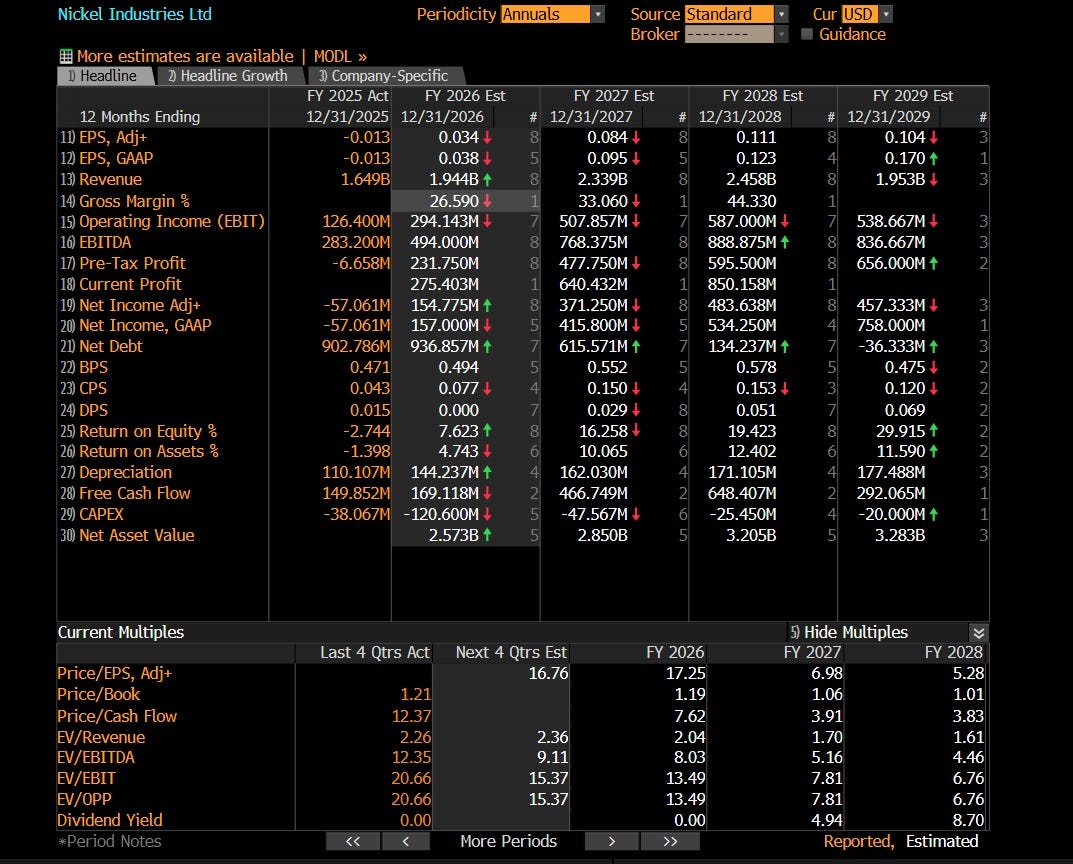
Bloomberg has similar figures, demonstrating the earnings uptick (whilst being more conservative on the EBITDA expectations). This brings us to valuation.
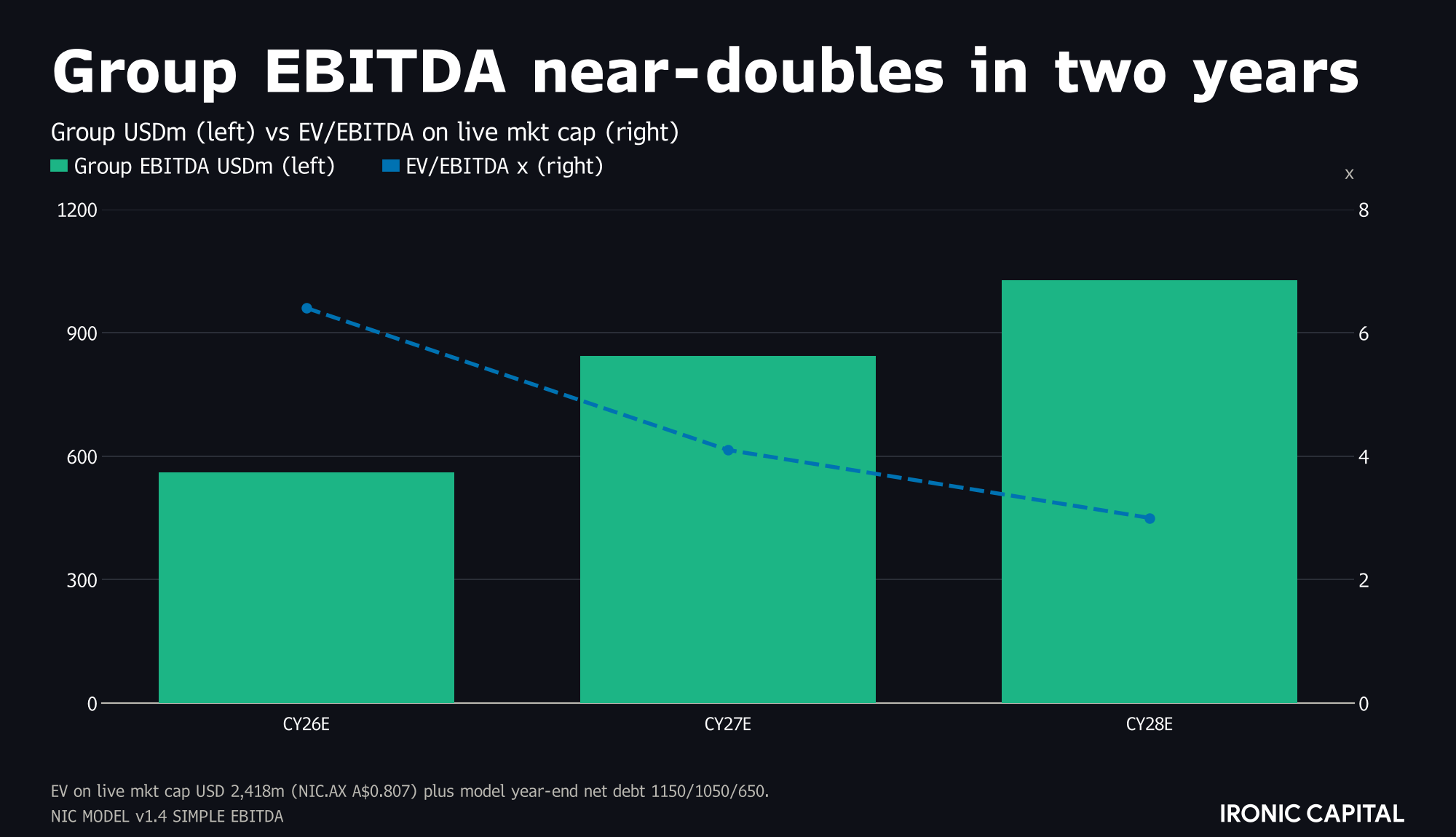
Valuation
NIC’s story and share price problem isn’t one where the valuation is opaque. NIC’s story is the lack of trust in the juristiction, lack of interest in owning Nickel assets, and lack of trust in the managment for stewarding the equity responsively.
The consensus numbers above are already extremely attractive and I think they under model CY28 somewhat.
I have this on about ~3 EV/EBITDA for CY28 following all the assets being ramped.
Risks
NIC’s operations and management are fraut with risks. Here are the key problems I see:
Nickel Price, obviously the #1 concern.
Sub $13K/ton Nickel will decimate the ecnomics. Obviously playing the tier-1 side of things we would eventually get a supply response.
$15K/t+ Nickel is fundamental to the investment case.
NIC management’s preference to play Nickel building games as opposed to making decisions in the best interest of the equity holder. There’s a propensity to think in the ‘long term’ interest of the shareholder, but when you are priced at only 3x forward, and with min 10% cost of capital, what happens 10 years out is a rounding error.
When’s the next raise boys? What you buying this time?
Indonesian Government changing the rules. They are essentially playing god of the global nickel market. Indo is absolutely the global swing producer and too much power in the Nickel Market. So far they have been very supportive of the industry to fuel its growth and to also keep it profitable. This isn’t only a one way risk. NIC’s stake is in the ground (and diversified) across the value stream. So a change that hurts the processing rules can help the mining terms and vice versa.
To date, the Indonesian government has been way more supportive than a hindrance. There are large gov vested interests in maintaining a ‘somewhat’ profitable industry to fuel the local economy via capital and labour.Change is bound to happen, but what knob is going to be turned and when?
Quote changes, new plant approvals, new royalties, tax holiday changes, permitting hold up. The potential list is endless.
Large significant holder sell down.
L1 has long suffered in this name and may be wanting to sell this down if the shareprice reaches closer to their breakeven, I’d expect $0.90-$1.00. They have been in it for 5 years, and this sort of earnings inversion might get them finally paid, get them out of the red and get the capital to their new ideas.
There are large Indo/Chinese holdings in NIC. There’s a large element of control in a few hands. Are the owners more interested in Socialising the value creation ahead of taking the profits?
Operational issue. Much less worried as there is so many independent processes here, the Chinese plants seem to be the most reliable part of the company. Welcome to the new China. How Ironic.
ENC ramp risk is there, but they have the key circuits working and producing MHP, so I am not worried. Also highly doubt the current El Nino will last longer than the typical El Niño and hope to see the rain come back in Jan.
Their local weather report is here and there’s also a visualisation of rainfall across Sulawei too.
Natural Disaster / Wider global economic downturn.
Will leave this to your own risk departments.
Investment Case
Whilst there’s always risk in the Nickel price going forward, the current pricing environment and sentiment is super low.
The name is at this point in its life where its essentially blocked from spending much more, has an imminent earnings inflection, lowering its leverage ratio and in turn slightly lowering its loan interest rate. The revenue/earnings/profit increases should eventually make good headlines. There’s a good story here. It trades closer to a bulk miner multiple and yet is fairly vertical.
We also that that nugget from the CFO on the 2026-06 Quarterly call: “We’re very well and truly at the end of our investment cycle”. Cap raises are seemingly out of the question in the medium term.
The current share price has come off recent highs. Post April 2026 it was closer to A$1.10 on the back of the (positive) Ore re-pricing, only to be brought back down presumably by Sulfur prices.
It’s dangerous to say, but we are probably closer to a bottom in the price than a top. Further drops in the Nickel price will have further supply side responses, which in turn should improve the Nickel price outlook. The Indo Tier-1’s will continue on.
The structure of the Nickel market have been forever altered by the competitiveness of the wider Indonesian operations. Huge spikes aren’t going to be likely with all this Indo processing online.
The earnings are inflecting from ca $100M/quarter now to ~$200M/quarter in CY27 and ~$250M/quarter in CY28. The HPAL margins should similar to what we see at ENC, but I believe the market is waiting to see the earnings before they are priced into the equity price. There’s huge opportunity at the current point in time.
There’s further operational upside with the propensity for HPAL to produce above nameplate and Nickel prices may increase.
There’s large economic incentives to the host nation to keep Indonesian Nickel profitable. The analogy of ‘The Saudi Arabia of Nickel’ is fair. They also hold the supply lever, so there’s a put under the Nickel price somewhere.
Given the low multiple only the very near term is important to at least get my money back within a few years. The assets seem of good quality, at current spot prices the economics work well and the revenue will generate enough earnings to cover the debt, taxation and adequate returns on equity.
I provided the bridge from a 10% ROE to a ‘minimum’ required EBITDA earlier, and I believe the ca US$650M-US$700M EBITDA required is very achievable. The underlying units have very good standalone ROA’s and we can buy the stock for close to its book value.
I believe the downside is fairly taken care of31 and there is lots of upside potential. The stock barely reacted on the recent ENC commisioning delay news implying little downside. A delay to such a key asset should move the stock. I find it unlikely that the market is fully expecting this name to sit at 3x EV/EBITDA with all these assets online. This is a niche name, has little focus on it outside a few dozen Aussie’s and is fairly under the radar.
If you don’t believe me, take a look at the 2026H1 call where the JP Morgan head of metals doesn’t seem to get where the US$1B EBITDA potential is and the NIC MD had to run him through all the unit economics of the operations one by one.
The nature of the assets are all very long lived too. There’s no part of the company that won’t be good for another 20 years. The company is somewhat reminsicent to me of the West African goldies. Simple high returning assets with long lives, priced as if they will only exist for the next 3-4 years at current rates, a dictatorial style government where the main concerns are juristicion risk and tax/royalty increases. A game of chicken of how much the asset makes vs how quickly it can be ‘Nationalised’.32 Gotta hedge your dictators.
Remember BHP’s Blackwater mine had a mine life of 40 years in the 1980’s, and today still has a mine life of 40 years.
In the case of NIC, there’s also large Indo/Chinese aligment on the register, so its not all ‘westerners’ on the equity side and ‘locals’ on the operating company and taxation side. Simply hurting the equity doesn’t tip the scales towards the locals (like in West Africa).
The impression I have is that an investment here at ~$0.80 receives a farily quick (few year) payback via earnings yield once all the assets are commissioned and turned on. Pathway for the assets to delever is clear and the assets can run for decades. The company is no stranger to paying dividends so money can flow out of the entity too.
The company isn’t too far from ASX100 inclusion if the next couple years go well. Then we can leave this to your mum to be the marginal buyer of this name in her superfund.
If the Indonesian Gov start talking about ‘super-profits’ or ‘fairness’ like the Aussie’s do this investment case can blow up spectacularly. NIC is a sitting duck.
Message to Management
Apologies in advance, but I’m working on the assumption that you are interested in improving your share price performance. If this is not the case just skip to the bottom point.
Stop issuing new equity.
There is no need. I do not care if the opportunity to buy all of Weda Bay comes up.
Cashflow the assets and build trust with your shareholders.
Be Disciplined.
Show consideration for Metrics per Share. Don’t just report EBITDA or Earnings, report EBITDA/share or EPS. You fell into this trap on the most recent AGM on slide 7 where you talk about how good your earnings and production are despite the Nickel price dropping, yet completely disregard the 72% increase in shares outstanding.
The business looks in good shape, the equity does not.
Your previous raise history has damaged company trust. 2023 was a disaster, the market cut you to sub 0.8 P/B and instead of investing in your company below book you invested above it… Might want to get an equity guy in your head count to sit around all day and help you avoid major fuck ups like this one in future.
There is no point investing in anything significant with an current EV/EBITDA of ~3 on likely near term revenue. Learn to Invest in your own stock.
You have run this thing for a decade and the Book is ca 1.1x-1.2x. The market is laughing at you.
Maybe don’t issue record dividends when your growth capex is sky high?
Get the debt payments under control.
Appreciate there’s been a large build out, but slow down and get net debt down. The assets will naturally do this for you, stop fighting it.
The debt rolling off will also naturally help your EV and the market will reward the equity instead of the debtholders.
Focus on FCF.
Get your cash going out to shareholders.
Make people want to own this. Let your profit from ENC do the talking.
You have had the FCF tropes in investor comms, but you don’t use FCF as a metric. The market is tired of and sees through tropes such as “Compelling Financials”, “Strong FCF Generation”,
Run a Buyback constantly, adjusting it for available FCF.
There’s such little interest in this name it trades poorly on bad days and bad macro. Just soak up a small amount of the excess volume each day. Get your mates at Bell to do it for you. Even a few $M a year will help.
When there’s more surplus cash, run the buyback hard. Your stock is so cheap and fundamentally so close in value to the underlying assets you invested in, you should be buying back hard. It shouldn’t be hard to get the current EV/EBITDA up closer to 4.0 (a + ~30% for your long suffering shareholders who backed you on the HPAL move), and a 5x EV/EBITDA in CY28 is probably not out of the question. A 5x multiple would be closer to a 70% SP appreciation from today’s $0.80.
Note that if the buyback works, it will do almost as much heavy lifting as you have in 8 years getting the SP from $0.35 to only $0.80 (lol).
If you don’t see the buyback doing anything it means you haven’t done enough.
If you do it right, this weird mathematical effect might even help you have a LOWER share count in future.
All of the above will help get the equity into the ASX100. Your eligibility isn’t far off now if the current debt was converted directly into equity. With a bit of help with the multiple
Get a stable dividend out to shareholders.
I get it’s not perfectly efficient, but do it. People need to see cash coming out of other jurisdictions and into ours. It will help with your multiple too.
Look at selling the 2019 Vintage RKEF plants.
They got you where you are now, and you no longer need them.
Their returns are low and don’t stack up.
They will be the first to shut in in a lower Nickel price environment, further reducing their value.
They add unnecessary complexity and risk to your operation.
It almost doesn’t matter what you get for them. Cash into buybacks.
Spend more effort on Story Telling of your company.
Quit with the fake looking renders of plants and EV’s. Look at the large Aussie miners in how they demonstrate their businesses and their brand.
The best videos of your assets are all uploaded on Google Maps by Indo locals, walking around your assets. There’s even a guy smoking in a truck cabin in one of the RKEF facilities. Might be time to fix this and get some better material out there. They also have more views than your videos on your own youtube channel.
There’s barely a high res photo of any of these assets. The best we have is some dated drone flyby videos and some photos with “Send from Whatsapp” in the filename.
Where are all the details on TMI and CNE?
NIC has agreed to $400M of commitments into these and hasn’t even released a flashy rendering of either?
Bit too much “Adjusted EBITDA” in the reporting.
As NIC moves out of the build phase and into the cashflow phase we need to see real profit metrics and FCF.
HNC HPAL Cost reporting is poor.
Why did you not report the Detailed HNC Sales & Production costs in the 2026-06 quarterly? This is critical fine-grain detail at an asset hurt by Sulfur prices.
Why did you remove the Cash costs line from the 2026-06 Quarterly report?
Please upgrade your Appendix A in earning statements to disclose HPAL Unit Costs and get your team to be consistent across quarters. There is some sloppy inconsistent template work in the IR disclosures.
Might want to fix this up before HPAL becomes literally half your multi billion dollar company.
What is the point of NIC?
Are NIC holders better off having these assets sold into Tsingshan where they are a natural fit?
What value does NIC add to these assets?
Summary
Let’s finish on a softer win. Despite the concern’s of environmentalists, there is a hugely positive economic story going on in Indonesia around the Nickel industry. Literally hundreds of new large processing facilities employing nearly 200K people, attracting global capital and trade flows is a huge win for the Indonesian people who are going to live better and longer lives through their additional wealth.
The millions who will escape poverty due to this Industry is not a headline we will read in our local papers. But alike what happened in wider Asia, is one of the most important factors in the world over the past 50 years.
I heed little worry about environmental impact in a tiny part of the world, with such density & efficiency and its global importance. High density is a good thing, as it means we are affecting the least amount of land required.33 You think your local economy didn’t need large scale land clearing and resource use to support improved human lives?
It’s amazing a developing nation can create such value at such a speed. It’s something we can all learn from.
Long Nickel Industries from $0.80.
Ironic Capital
Finding value in the strangest of places.
hi@ironiccapital.co
@ironic_capital on twitter
Notes
These pieces take me way to long to research and write. They is no ongoing coverage.
I admit I tried to write this with an LLM and it was beyond terrible. Unfortunately I had to painstakingly write it the old fashioned way. I did liberally use an LLM for the planning, charts/imagery, core model, financing history/lists and QC. All sources are referenced and apologies for my grammar.
Shout out to the boys that helped me on this. JG, JoG, AGdR.
I’m also on twitter in a more casual form. There may be some intermittent coverage of NIC there.
Disclaimer
The preceding is for informational purposes only and presented “as is” with no warranty of any kind, express or implied. Under no circumstances should this report or any information herein be construed as investment advice, or as an offer to sell or the solicitation of an offer to buy any securities or other financial instruments. The information herein is for discussion purposes only and is not a trading recommendation or endorsement. Investors are encouraged to do their own work before transacting in any securities mentioned. Investing in the stock market includes risk, including the risk of loss. Investing in securities mentioned involves significant additional risk beyond the average stock and may not be suitable for most investors. Please consult a financial advisor before making any investment decision.
Note I do not take money for this research. It’s literally not possible to support me financially.
Adobe, ServiceNow, ICE, Intuit and SAP all flipped from high multiple growth-bro stocks to value names but what can I add beyond the obvious?
The whole oil sector is just beta to Crude, it’s really hard to buy or discuss anything new here. That said, I did plan to write up AkerBP in December’25, but spent too much time at the Cricket instead.
Saprolite is a crumbly green weathered rock you dig and throw in a furnace; Limonite is the rusty soil on top that needs acid to dissolve; both come from the same nickel-bearing rock in tropical climates.
In this case referee’d by the President of Indonesia Prabowo Subianto. The Authoritarian son-in-law of Indonesia’s previous Military Dictator Suharto.
We are not talking Western Environmental or Safety standards here.
Not a concern at Nickel Industries Assets, but a real concern across the wider archipelago. Visible Nickel all over the shoreline on satellite and overhead photos.
I’m not even joking.
Excluding Siduarsi, an undeveloped mine in far east Indonesia, near the border with PNG. Book Value ca $5M
Owned by Tsingshan Holding Group (51.2%), Eramet (38.8%), and PT Antam (10%). 36.5 Mwt in 2023, 17% of World Output
I swear NIC has never acknowledged the precise location of ANI, I have only inferred it from this image.
Note this was made before the TMI & CNE Purchases.
NIC outsources all of the day to day operations of all of their assets. Would be hard pressed to find a single hard-hat with the Nickel Industries logo on it outside of something left behind a management visit.
Formerly known as Nickel Mines Limited
A bunch of workers on Sulawesi are “Google Maps Contributors” half of it is in-advertent and there’s a surprising amount of video available at Hengjaya too. Guys smoking on site, relaxing in cabs. It's borderline hilarious.
Funded as part of TMI, discussed later.
Term Smelter/Facility/Plant used interchangeably. Noting RKEF is not technically a refining process.
Calendar Year (CY), which is the same as their Financial Year (FY). I may use them interchangibly for NIC.
To 60%
Lines are independent parallel process loops.
Q2'26 call (late Aug): "commenced a full kiln and furnace rebuild at the first kiln at HNI", 4 months apiece, then rolling across the other 3 HNI/RNI lines over ~12 months into mid-2027. At 4 months from a Jun/Jul start, line 1 completes ~Oct 2026.
Short of a natural disaster
Obviously some Generational Nickel Price bull run would invert the economics hard (to something returning 30%pa) and my sale suggestion looks silly. Welcome to commodities.
Nickel Mixed Hydroxide Product. A wet green filter cake. A mixed nickel-cobalt hydroxide solids precipitated out of HPAL liquor. Mostly Ni(OH)2 with Co(OH)2 and trace manganese, magnesium, sulphate. Ca 35-40% Grade.
not Tsingshan for a change
For Short
0% State owned. Noting this calc was done at ¥33/sh. This name is down from ¥77/sh where the EV was US$27B
Even the NIC IR team get into bat for the Sphere deal, with the obligatory space rocket imagery.
Only thanks to the Indo government literally banning more building.
Say like an extended drought, no water, and IMIP gets ramped down.
There’s obviously many degrees of freedom here. I’m not going to dwell heavily on my model of this complex. So much can change.
Famous last words…
Kind of me to not say ‘stolen’’.
Something our counterparts in the renewables industry are yet to realise.